When you click on links to various merchants on this site and make a purchase, this can result in this site earning a commission. Affiliate programs and affiliations include, but are not limited to, the eBay Partner Network.
Engine Mechanical TopicsDiscussion for motor builds, cams, head work, stripped bolts and other engine related issues. The good and the bad. If it goes round and around or up and down, post it here.
Going higher lift actually lowers issues for ramp's on open and close.
I agree with what you're saying. This is used to get the valve train under control after you decide on what you're opening side is going to be. If you design your cam based on what the head flows [among other things] where & when the valve opens & the lift where the demand is greatest sets up the opening side. Now you might need more lift to get it under control. Now you want to decide how fast you're going to close it. Then how you're going to catch it before it crashes into the seat.
My point was that low lift flow is more important on small cams & not on big cams & showing the flow relationship between the cam & the head would help you see what's happening. In Dynomation it will run thousands of iterations to pick the cam timing for the inputs given. With your cam test stand graphing the lift against the crankshaft degrees & the head flow #'s you can see where a change a few degrees one way or another can have an effect that would help explain why some cams look the same on paper look totally different in action.
I've played with the Dynomation 5 cam stuff.. When done it only gives seat to seat specs.. Seems to liker wider LSA cams too..
Part of the reason I wanted to do this additional analysis was to be ale to compare noisey and quiet cams.. I had to add a section that allows me to read old data files and generate new reports.. That is done and working.
There was an issue with one build where 48s were having issues with valve tick and heavy springs. This pick show and overlay of the Andrew 48 (Bright) and Andrews 55 (dim).. White is Lift. Red is Velocity, and Green is acceleration. The 48 seems to have steeper ramps... Also notice that the 55 seems to have a different set-down ramp than the 48. 55 has about 0.004 more tappet lift for the slow part of the valve setdown..
A little more.. First pic is the M8 stock exhaust cam lobe compared to a stock 02 tc88 cam.. Faded color 02 rk, bright M8..
Notice that the set-down ramps are about the same.. Acceleration (green) is about the same.. The M8 has about 0.002 more set down ramp which is not much..
Look at the lifting side when lined up.. The M8 cam has way more shallow ramp and a bit less acceleration.. I would guess it's because the M8 has to accellerate twice as many valves. On the first pic, springs are what accelerates the valves on close..
Swapped out cams and lifters only on my 02 RKC. The heads have the lighter AVnV beehive springs (which are still pretty heavy) and 1.675 roller rockers. I was using crane H290s and with those cams I was changing lifters about every 20K.. Valves would get noisy at idle and collapse some at Rs.. I swapped for Andrews TW55 and new lifters.. Nice and quiet.. Better than new lifters with the H290s for sure. Here is a pick of the exhaust lobe for both cams.. The white is the 290 and the tw55s are grey.. I've set the cursor on the set-down side of the ramp.. You can see that the tw55s have about 0.005 more set down ramp..
Top to bottom, lift, velocity, acceleration, jerk.
Last edited by Max Headflow; May 20, 2017 at 06:38 PM.
Reason: Add.
Crystal ball when looking at cam profiles.
We've had a cam profile program here for some time, but not one that physically measures the lobe.
Next will be solenoids/electrics to open/close the valve?
Scott
While this stuff is cool. I really wonder when it will be viable.. How long does the system last? When closing the valve, how to they control slowing the valve to set it gently on the seat? Or do they simply let it bang shut? There is quite a bit less mass to bang but is it enough? Good thing about the mechanical setup is that valve velocity can be slowed easily..
Very cool Bruce, I was following on the other forum when you built this. I know when I degree cams they are rarely dead on with the cam card. I'm not sure if that is due to manufacturing or on purpose. It seams like casm that come from the manufacturer (i.e. Andrews) are usually closer to the advertised specs than cams from a vendor (i.e. S&S). A device such as yours would be very helpful for tuning. Power Vision has IVC and IVO setting that are available for those of us that have BETA testing software. When you get the right setting in it can bring the idle kpa down lower which gives us a lot more usable ares of the MAP to adjust. TTS has the ability through the cam analyzer.
Now now, it's not BETA testing software at all, it's simply whether they want the general public access to those tables/settings (just had that very email exchange with Roy again last week or so, lol)
Its a couple of settings, not rocket science ...although how to use them for best results is maybe open to discussion
Slideshow: Jason Momoa's latest restoration project blends 1920s Harley-Davidsons with modern electric technology, creating some of the most unusual hybrid motorcycles ever built.
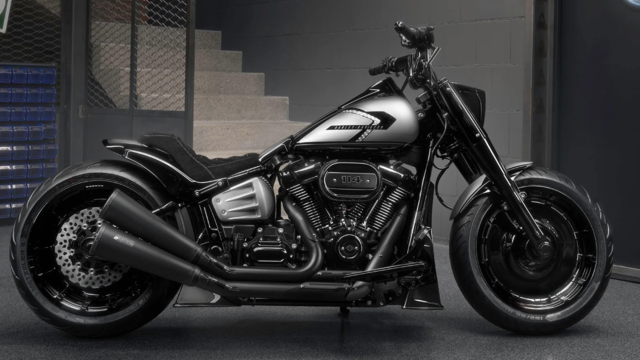
Harley-Davidson Fat Boy Becomes a Dark, Decepticon-Inspired Custom
Slideshow: Killer Custom's latest build relies on styling changes rather than performance upgrades, giving the cruiser an entirely different personality.
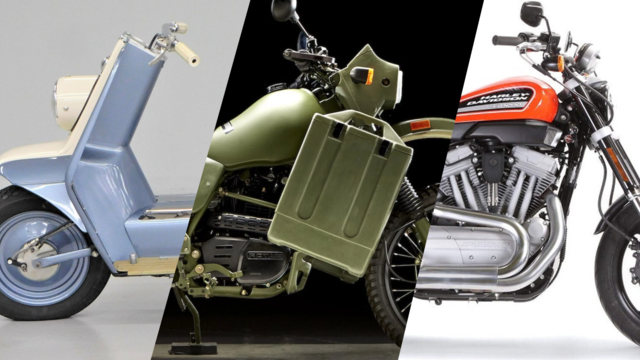
7 Surprising Harley-Davidson Products that Are Not Motorcycles
Slideshow: The bar-and-shield logo shows up on far more than motorcycles, some of the company's most unexpected products have nothing to do with riding.
Slideshow: From the troubled AMF years to modern misfires, these bikes earned reputations for reliability issues, questionable engineering, or disappointing performance.
Crazy Bunderbike Build Looks Amazing, But Is It Impossible to Ride?
Slideshow: The Swiss custom shop has taken a Harley Softail and stretched it into something so long and low that it looks closer to a rolling sculpture than a conventional motorcycle.