








DYNO Numbers for Baggers???

Seasoned HDF Member


Joined: Apr 2015
Posts: 7,709
Likes: 7,850
From: New York

2017 FLHTK 107" twin cooled, Wood WM8-22X cam, Stage 1 air cleaner, Jackpot head pipe & mufflers, Power Vision tune
This is a new cam from Wood Performance for stock compression M8 engines
5th gear run

vs stock bike (with slip ons) as recd. Tested same day. 5th gear runs

This is a new cam from Wood Performance for stock compression M8 engines
5th gear run
vs stock bike (with slip ons) as recd. Tested same day. 5th gear runs

Club Member

Joined: Jun 2007
Posts: 45,429
Likes: 2,898
From: Bedford UK
Seasoned HDF Member
Joined: Apr 2015
Posts: 7,709
Likes: 7,850
From: New York
I'll have a go! But first read this link, then ask questions.
Club Member
Joined: Jun 2007
Posts: 45,429
Likes: 2,898
From: Bedford UK

I'm unclear how making that happen earlier or later affects the engine, but I do understand that the entire process is a compromise. So what is it that makes many of the after market replacement cams [S&S?] that many members speak of on this Forum superior to the stock cams?
The design and cams of any current engine has to comply with EPA regulations, as well as meet the wishes of the manufacturer, and both these tend to provide modestly tuned engines. Which leaves plenty of scope for the aftermarket to play with!
How close does an open valve come to the piston crown? Are we talking inches or millimeters?
To a trained eye, can one look at a camshaft and determine if the shaft is stock or "high performance"?
If tolerances are as tight as I suspect, with the cam "nudging" the valve open thousands & thousands of times per minute, don't the contact points wear, thus changing [shortening?] the opening?
How is changing cams different from changing the air/fuel mixture with a device such as a Power Commander?
On a stock engine the air/fuel ratio has to comply with EPA regulations, which are lean compared with optimum figures. Hence a tuner can give improved performance over stock, if optimum tuning is used.
Sorry for the ignorance. I'm sure if I saw a breakdown and rebuild of an engine it would make more sense to me. Thanks for the link.
Seasoned HDF Member
Joined: Apr 2015
Posts: 7,709
Likes: 7,850
From: New York
In essence they open the valves sooner than stock and hold them open longer. Just to tease you, it is routine in a tuned engine for the exhaust valve to open while the inlet valve is still open, so that some fresh air/fuel mixture is drawn through the cylinder and into the exhaust. The inlet valve is then closed, but the exhaust kept open, so that a pressure pulse in the exhaust system can push that extra mixture back into the cylinder, hence over-filling it. That is why choice of exhaust system is so important when building a tuned engine.
Thanks for your help and suggestions. I will indeed be checking a few YouTubes for an engine build and maybe also follow along with a cam installation.
Club Member
Joined: Jun 2007
Posts: 45,429
Likes: 2,898
From: Bedford UK

Ahhhhh! In my feeble mind I always assumed that if one was willing to tolerate the noise, straight, open pipes would provide the best performance in an engine; if I understand the above statement correctly, my assumption is incorrect. The engine requires some back-pressure to operate at peak performance?
A tuned-length drag pipe, with a square-cut tip, will do just that, although it is only operational over a short rev range. A suitable system for a road bike, such as a good brand-name 2-into-1, will give a wider and more useful effective rev range. I have a SuperTrapp Supermeg on my Glide (with S&S 107" engine), which is just great!
Intermediate
Joined: Jun 2017
Posts: 31
Likes: 3
From: Piedmont, MO
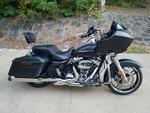
2017 RG Stage 3 Vance and Hines Titan 4.5 and Power Duals. TTS Tuner and High Flow Breather. Almost forgot... Woods 777 cam
https://www.hdforums.com/forum/the-d...l#post16698446
https://www.hdforums.com/forum/the-d...l#post16698446
Last edited by TBennett1962; Oct 31, 2017 at 01:13 PM.
HD Forum Stories
The Best of Harley-Davidson for Lifelong Riders

7 Surprising Harley-Davidson Products that Are Not Motorcycles
Verdad Gallardo
8 Best Harley-Davidson Motorcycles Ever
Pouria Savadkouei
10 Worst Harley-Davidson Motorcycles Ever
Pouria Savadkouei
Killer Custom's Jail Break Is The Breakout That Refused to Blend In
Verdad Gallardo
Crazy Bunderbike Build Looks Amazing, But Is It Impossible to Ride?
Verdad Gallardo
Harley-Davidson Reveals Super Cool Cafe Racer Concept
Verdad Gallardo
Engraved Rebellion: Inside Bundnerbike's Glam Rock II
Verdad Gallardo
10 Motorcycles You Should Never Buy
Joe Kucinski
10 Things Harley-Davidson Needs to Fix in 2026
Verdad Gallardo
Novice
Joined: Oct 2017
Posts: 18
Likes: 4
From: Illinois
2011 ultra 96"
Rev perf 107 kit with balanced and trued crank. Rev perf stage 2 heads. Woods cams 7H . H beam rods. Dyno tuned twice
V and H pro pipe- 108 HP 114 tQ
Magnaflow 2-1-2 with 4.5 top gun muffs-98 hp 120 tq
Still not happy with Magnaflow. Perhaps a change over the winter.... Can you say Fuel Moto 117"?
Rev perf 107 kit with balanced and trued crank. Rev perf stage 2 heads. Woods cams 7H . H beam rods. Dyno tuned twice
V and H pro pipe- 108 HP 114 tQ
Magnaflow 2-1-2 with 4.5 top gun muffs-98 hp 120 tq
Still not happy with Magnaflow. Perhaps a change over the winter.... Can you say Fuel Moto 117"?
Novice
Joined: Oct 2017
Posts: 18
Likes: 4
From: Illinois
Jealous
2017 RG Stage 3 Vance and Hines Titan 4.5 and Power Duals. TTS Tuner and High Flow Breather. Almost forgot... Woods 777 cam
https://www.hdforums.com/forum/the-d...l#post16698446
https://www.hdforums.com/forum/the-d...l#post16698446