








Shock Air psi- How Often?
Tourer
Joined: Apr 2012
Posts: 325
Likes: 2
From: Texas

Not sure of the location on yours (it's on the left on my 07 SG) but I wanted to mention that you shouldn't use a compressor to air it up if you haven't done it before because it can blow out the diaphrams. H-D makes a little hand pump especially for adjusting the air in the shocks. If you look at the top of your shocks you should see a fitting with a small plastic tube coming out of it, follow that tube and it should lead you to the fill valve.
Elite HDF Member
Joined: Nov 2010
Posts: 3,846
Likes: 173
From: Simi Valley, CA
I've only checked my shocks a few times in the nearly two years I've had my bike. Based on my experience they only lose a psi or two in several months. I know that's not a whole lot of data points to draw any conclusions from, but now I usually only check them before a long trip.
Same with tires, I'm not nearly as **** about checking them as some folks. Usually once a month or so. They're always within a few psi. If a tire is significantly low, you'll know it when you ride.
Same with tires, I'm not nearly as **** about checking them as some folks. Usually once a month or so. They're always within a few psi. If a tire is significantly low, you'll know it when you ride.

Road Master
Joined: Jan 2010
Posts: 881
Likes: 13
From: ONT
Not sure of the location on yours (it's on the left on my 07 SG) but I wanted to mention that you shouldn't use a compressor to air it up if you haven't done it before because it can blow out the diaphrams. H-D makes a little hand pump especially for adjusting the air in the shocks. If you look at the top of your shocks you should see a fitting with a small plastic tube coming out of it, follow that tube and it should lead you to the fill valve.
Road Captain
Joined: Aug 2010
Posts: 669
Likes: 28
From: Bothell, WA
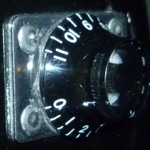
As I was looking for an alternate location for the air tank for my FLHP air-ride seat, I figured a way to get a pressure gauge attached to the right shock. In doing this I removed the y-valve that was mounted on the left side of the bike so the air-line goes directly from the left shock to the connector on the right side. Gauge is visible just inside of the right saddle bag:

Here are the brass fittings I had PC'd black:
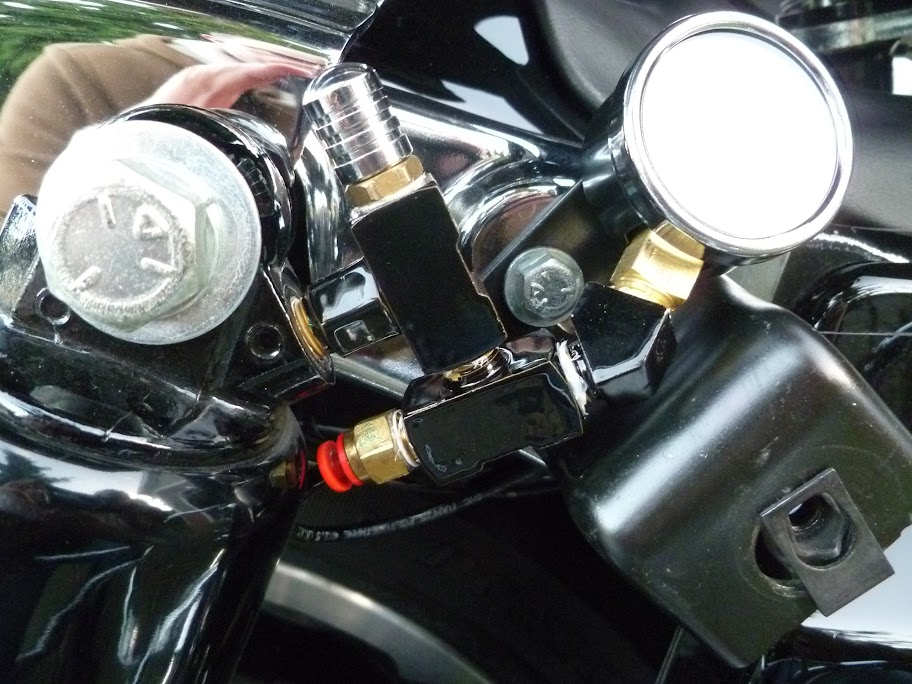
THis setup moved the valve to the top of the shock so it is a bit easier to get at.
Here are the brass fittings I had PC'd black:
THis setup moved the valve to the top of the shock so it is a bit easier to get at.
HD Forum Stories
The Best of Harley-Davidson for Lifelong Riders

7 Surprising Harley-Davidson Products that Are Not Motorcycles
Verdad Gallardo
8 Best Harley-Davidson Motorcycles Ever
Pouria Savadkouei
10 Worst Harley-Davidson Motorcycles Ever
Pouria Savadkouei
Killer Custom's Jail Break Is The Breakout That Refused to Blend In
Verdad Gallardo
Crazy Bunderbike Build Looks Amazing, But Is It Impossible to Ride?
Verdad Gallardo
Harley-Davidson Reveals Super Cool Cafe Racer Concept
Verdad Gallardo
Engraved Rebellion: Inside Bundnerbike's Glam Rock II
Verdad Gallardo
10 Motorcycles You Should Never Buy
Joe Kucinski
10 Things Harley-Davidson Needs to Fix in 2026
Verdad Gallardo
Elite HDF Member
Joined: Nov 2010
Posts: 3,846
Likes: 173
From: Simi Valley, CA
As I was looking for an alternate location for the air tank for my FLHP air-ride seat, I figured a way to get a pressure gauge attached to the right shock. In doing this I removed the y-valve that was mounted on the left side of the bike so the air-line goes directly from the left shock to the connector on the right side. Gauge is visible just inside of the right saddle bag:
Here are the brass fittings I had PC'd black:
THis setup moved the valve to the top of the shock so it is a bit easier to get at.
Here are the brass fittings I had PC'd black:
THis setup moved the valve to the top of the shock so it is a bit easier to get at.

Ultimate HDF Member
Joined: Dec 2007
Posts: 9,254
Likes: 283
From: Lake City, Florida (Native)
Check weekly but not always needed but sometimes is .. Just did a 6,000+ mile trip to AZ and back needed to add air once in a 2 week period .. Sometimes goes a month easy without other times might lose 5-10 in a week think all depends on what kind of riding have done .. whether Solo, 2 up loaded, type of roads ridden , etc ..