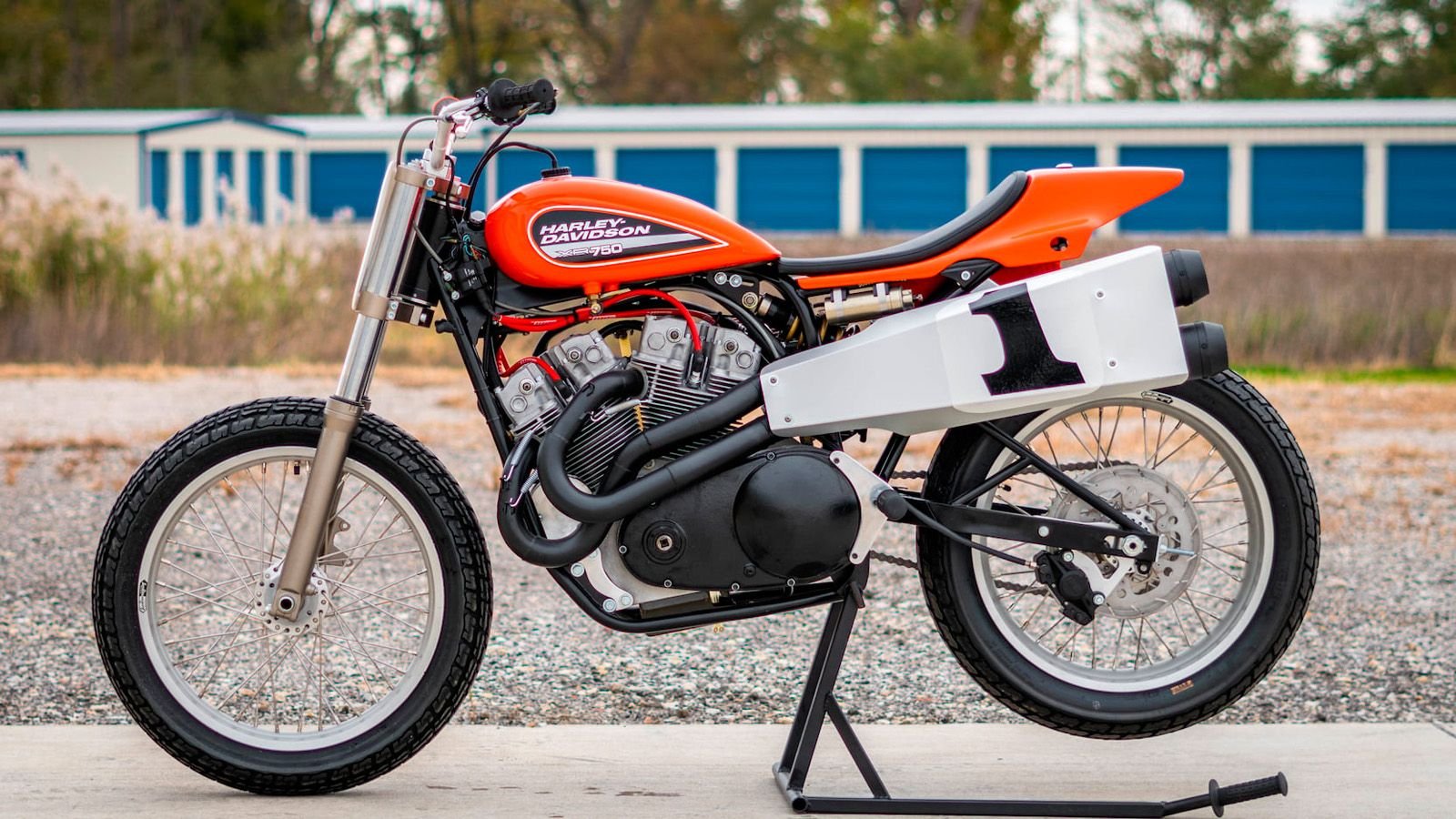
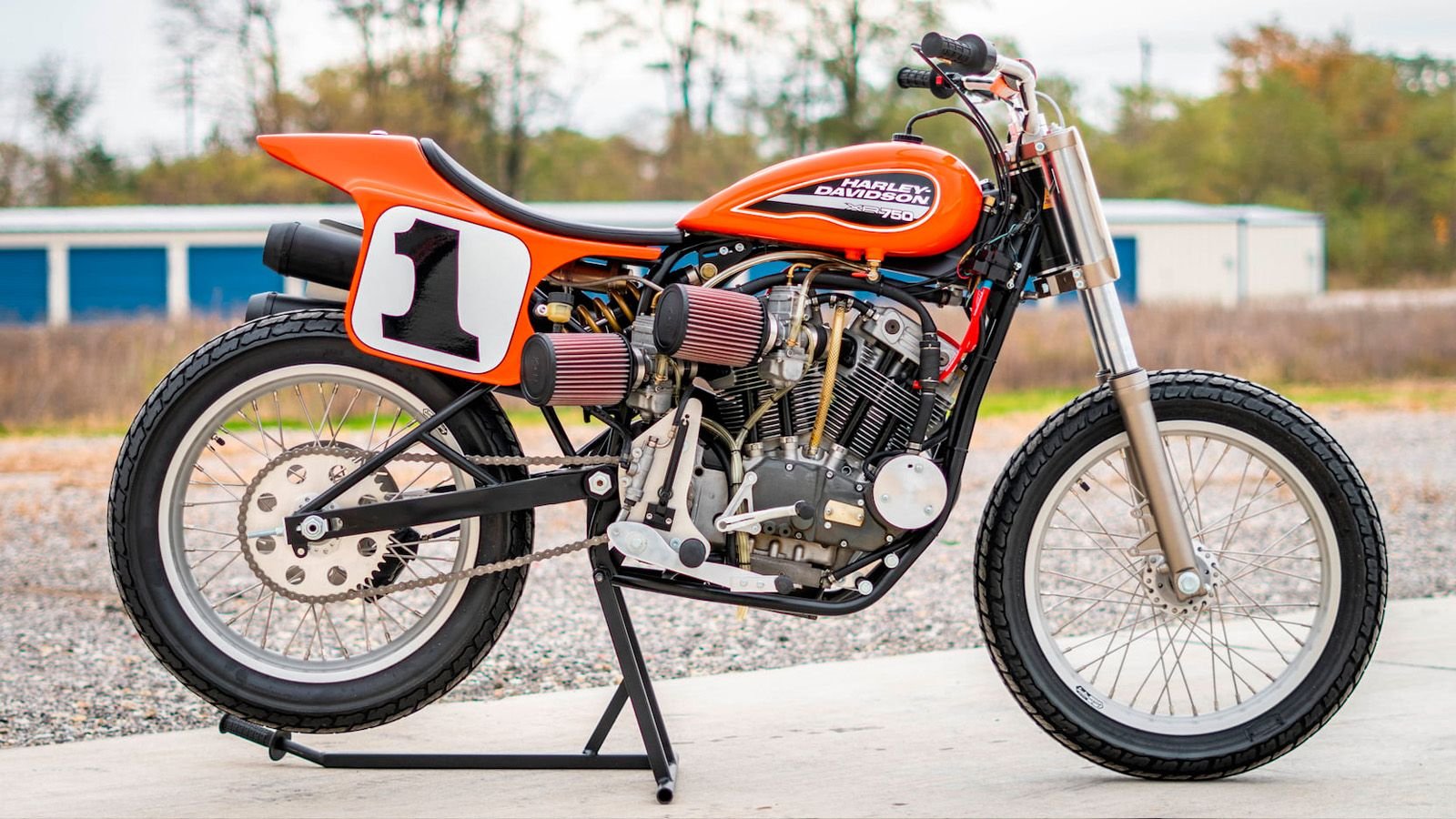
The XR750 was the most dominant and successful production racer ever built. Now that icon has a very big anniversary.
All Time
The Harley-Davidson XR750 celebrates its 50th anniversary this year. Since its debut in 1970, the iconic flat tracker dominated the American Motorcyclist Association (AMA) racing scene for decades. To its credit, the XR750 has racked up more wins than any other motorcycle in the history of AMA racing, earning the distinction of being the “most successful race bike of all time.”
Revolution X
The XR750's battleground was the dirt ovals of flat track racing. Created by Harley-Davidson’s Race Team Manager Dick O’Brian and his development team, the XR750 would go on to win twenty-eight of the thirty-seven AMA Grand National Championships between 1972 and 2008. The XR750 campaigned until 2017 when it was replaced by the XG750R flat tracker — powered by the 750cc Revolution X engine.
>>Join in the conversation about the dirt racing XR750 turning the big 5-0 right here in Harley-Davidson Forums.
Equivalency Formula
In many ways, the AMA forced Harley-Davidson's hand back in 1969. British manufacturers had petitioned the sanctioning body to institute a new 750cc overhead-valve equivalency formula to level the playing field. At the time, the Grand National Championship was deliberately structured to favor side-valve engines rather than overhead-valve engines. Triumph, BSA, and Norton were all limited to 500cc, whereas Harley-Davidson ran the successful side-valve KR750.
>>Join in the conversation about the dirt racing XR750 turning the big 5-0 right here in Harley-Davidson Forums.
Road Legal
The phenomenal success of the XR750 prompted Harley-Davidson to design a number of variants. Introduced in 1972, the 80 horsepower XRTT was the road racing version of the XR750, destined to compete in the British Trans-Atlantic Match Race Series. The XR750 also spawned two road-legal machines, the short-lived XR1000 produced from 1983 to 1984, and the underappreciated XR1200, built between 2008 to 2013.
>>Join in the conversation about the dirt racing XR750 turning the big 5-0 right here in Harley-Davidson Forums.
Decreased Displacement
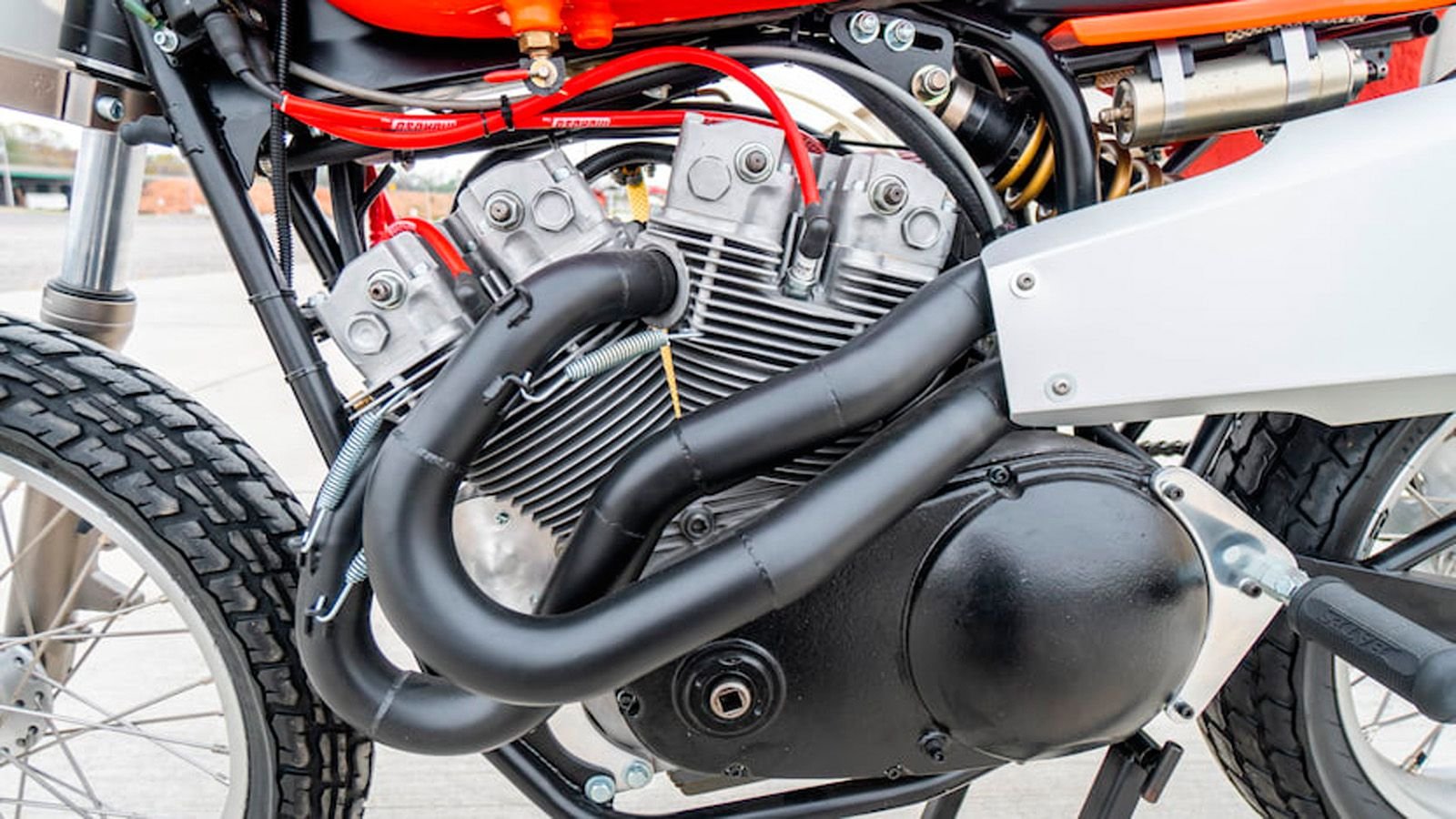
Harley-Davidson had a head start with the XR750's development. The new OHV racing motor was based on the Sportster XLR, a 900cc production racer built-in low numbers between 1958 and 1969. In order to reduce the XLR's engine capacity, Harley-Davidson engineers decreased the motor's stroke, while increasing its bore, which brought the displacement to just under the 750cc maximum.
>>Join in the conversation about the dirt racing XR750 turning the big 5-0 right here in Harley-Davidson Forums.
Top Speed
The first Ironhead XR750s had a couple of drawbacks, they were heavy and prone to overheating. So much so that they earned the dubious nickname of 'waffle iron'. To address these issues, new aluminum cylinder heads with larger valves were designed in 1972. Fitted with dual 36mm Mikuni carburetors, the alloy heads produced 82 horsepower at 7,700rpm, resulting in a top speed of around 115mph.
>>Join in the conversation about the dirt racing XR750 turning the big 5-0 right here in Harley-Davidson Forums.
Design Staple
The revised engine enabled Mark Brelsford to win the Grand National Championship in 1972. The top podium finish began Harley-Davidson's decades-long dominance in flat track racing, which is arguably one of the Motor Company's highlights during the troubled AMF years. The XR750's number one plaque, its Racing Orange paint, and checkered flag tank decal have since become a MoCo design staple.
>>Join in the conversation about the dirt racing XR750 turning the big 5-0 right here in Harley-Davidson Forums.
Inspiring Reputation
Compact and well balanced, the XR750 was also coveted as a stunt bike. Known for his wild jumps, Evel Knievel propelled the little bike to its status as a cultural icon. His antics inspired a generation to ride while racing greats such as Mert Lawwill, Cal Rayborn, and Jay Springsteen cemented the XR750's reputation as the most dominant production racer ever built.
>>Join in the conversation about the dirt racing XR750 turning the big 5-0 right here in Harley-Davidson Forums.
For help with your do-it-yourself maintenance and repair projects, please visit our how-to section in the forum.