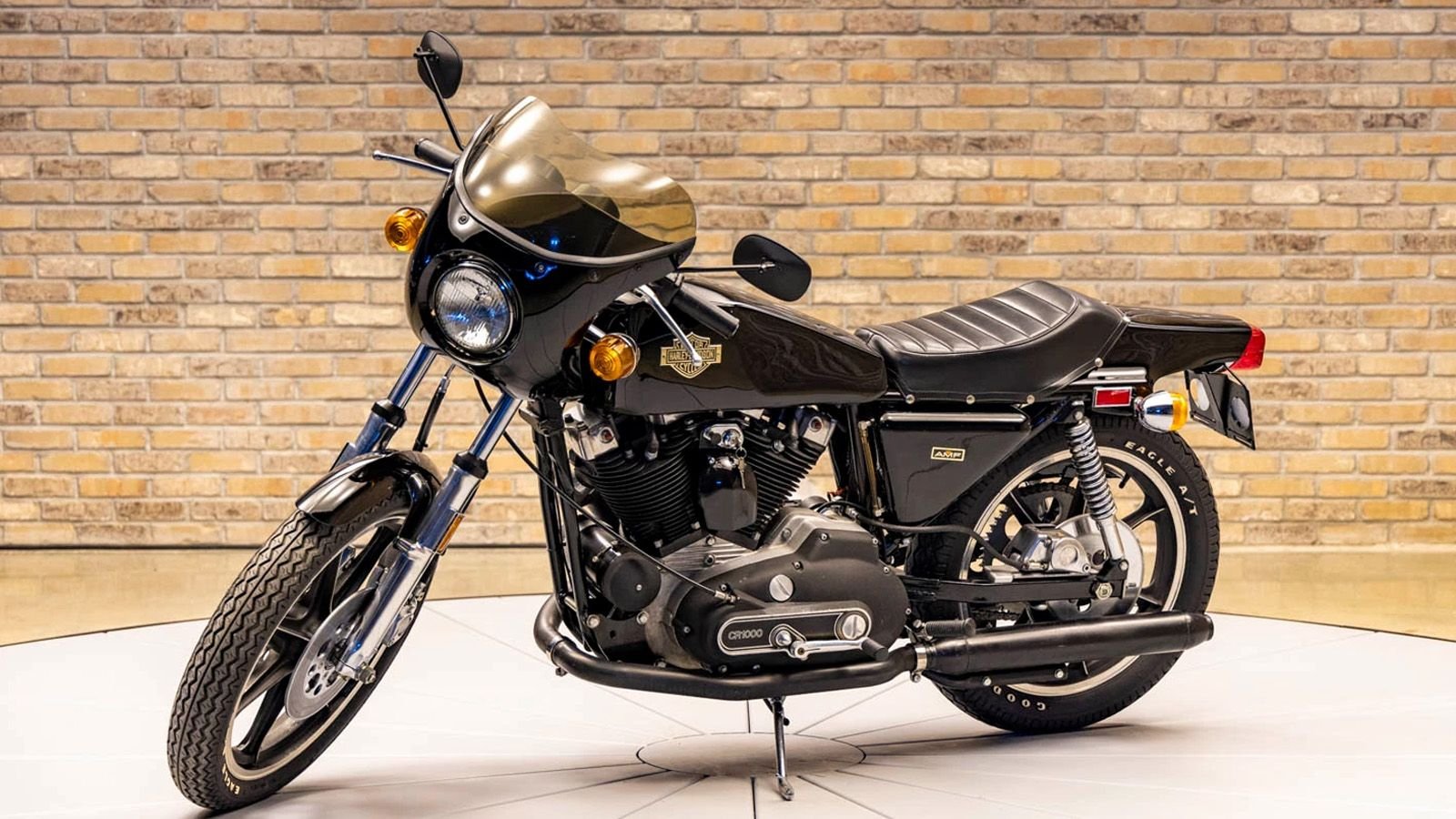
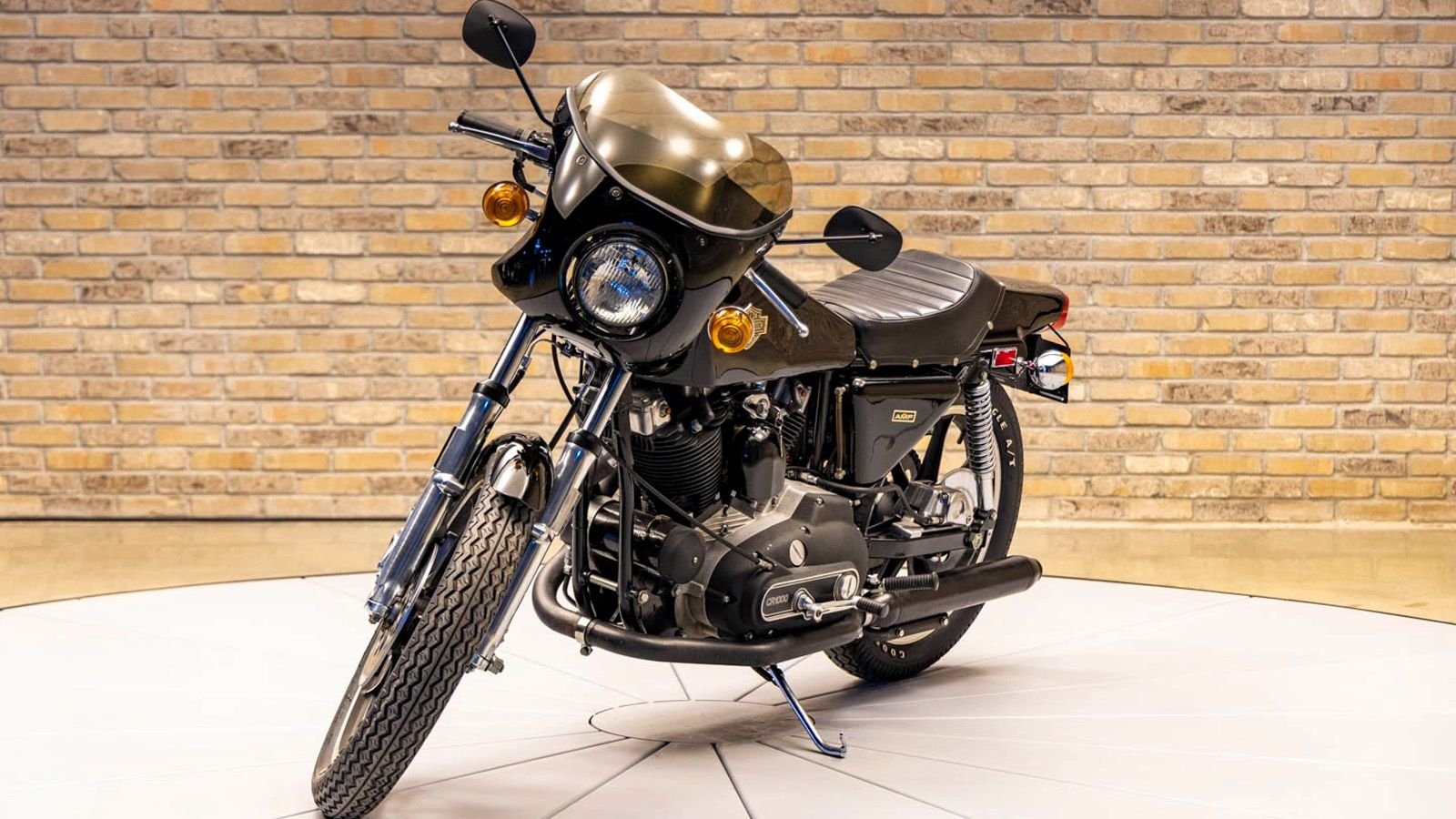
Unique European design was the creation of two artists working in collaboration.
Angular Sell
Menacing and macho, or brutal and unrefined, the XLCR side-swiped enthusiasts with its European café racer styling with its debut in 1977. Produced for just two years, it proved exceptionally unpopular and difficult to sell. Yet, for those who liked its angular attitude and oddly co-joined exhaust, the unique machine marks a curious and inspired moment in Harley-Davidson design.
Photos: Throttlestop Museum
Seasoned Pressures
Short on competitive power, the XLCR's claim to fame is in its esoteric value, rather than a performance legacy. Created partly by chance, it is the Motor Company's only attempt at a production café racer to date. Seasoned with a touch of displaced nostalgia, it was conceived from a heady mix of market trends, import pressures, and multi-tiered management.
Thematic Curve
Genealogically, the XLCR shares its pedigree with the XR-750 dirt track racer. Arguably, it also inspired the 2008 XR1200—another unfavorable, but performance-oriented version of the Sportster. On the whole, the XLCR was a flop, but both its component parts and the attempt at producing a 'thematic' factory-built machine were years ahead of the curve.
Modified Inspiration
One obscure detail about the XLCR is its frame design. The popular story attributes the bike's conception to Willie G. Davidson—then head of styling at Harley-Davidson. While true, the inspiration for the XLCR came from Bob Moderow—a Motor Company engineer, who rode his own modified 1974 XLCH, equipped with a bikini fairing, drag bars, and blacked-out exhaust.
Parallel Position
At the apex of 1960s British café racing sits the Triton, a hybrid Triumph and Norton that came to define speed and elegance. In a parallel take, the XLCR's frame splices the front section of a stock XL to the rear portion of a production XR-750 dirt track racer. The layout accommodated a more upright shock position and a boxed XR-style swing arm.
Sluggish Onslaught
Fabricated by Harley-Davidson engineer Ching Lo, the curious Siamese pipe configuration was meant to increase horsepower. Performance was a concern in the mid-1970s, as the Motor Company reeled against the onslaught of lighter and faster Japanese and British machines. Sadly, the XLCR was only ever fitted with the slightly sluggish, 61 cubic-inch Ironhead motor—purloined from the production Sportster XL.
Collaborative Fusion
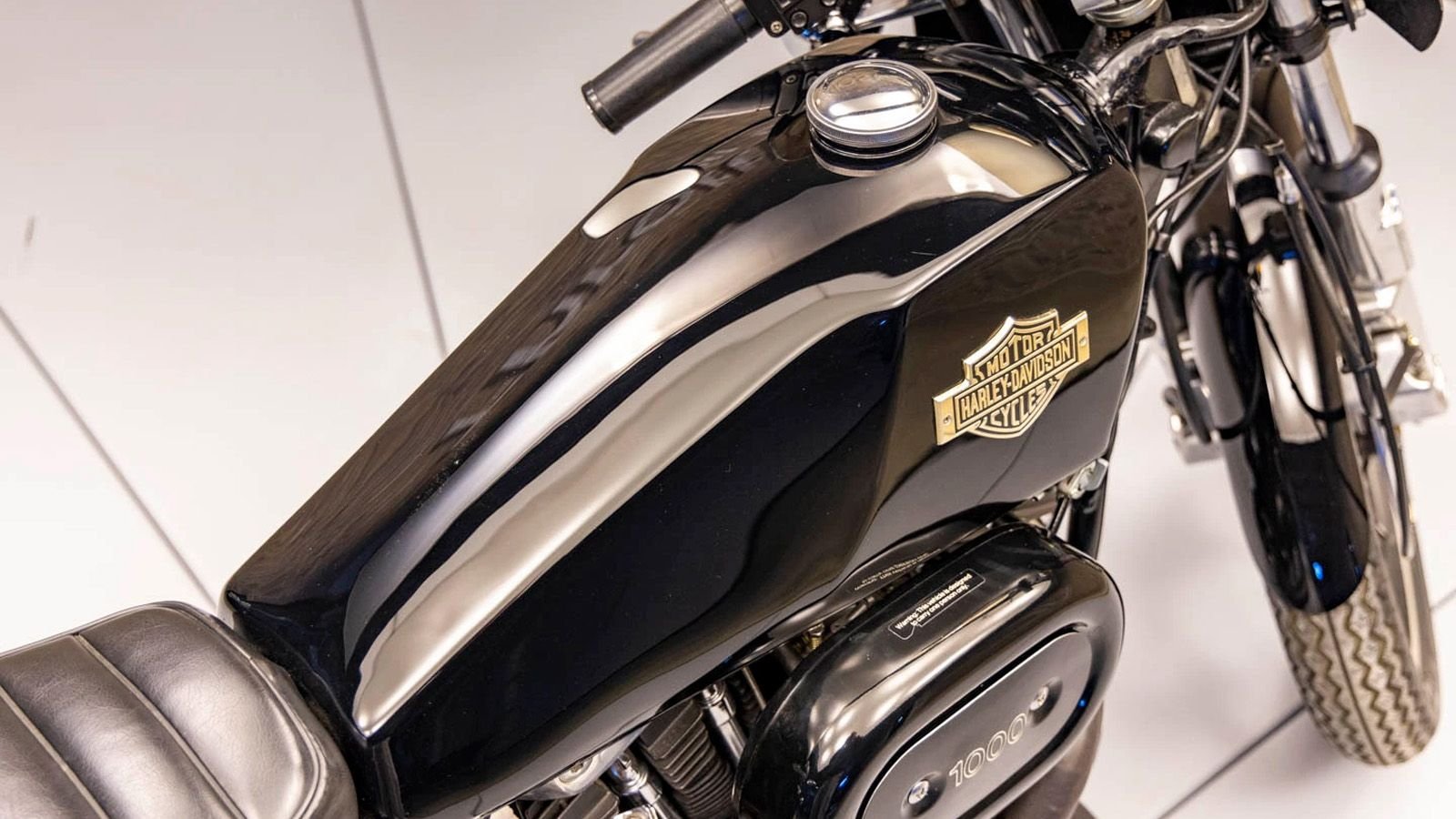
Willie G. Davidson often gets most of the accolades for the café racer concept. In actuality, the XL/XR-fusion was a collaborative effort between Davidson, Bob Moderow, and Jim Haubert, a former racer and machinist—who worked as an independent contractor. In the mix, Dean Wixom also deserves credit, as his seat and fuel tank from the 1970 XR flat tracker were used in the XLCR's design.
Creation Communication
Moderow was soon pulled away from the project and Davidson and Haubert finished the first prototype in February 1975. Haubert later recounted, “There were never any blueprints...it was the creation of two artists working in close communication with each other.” Officially dubbed the CR1000, the short-lived model was ahead of its time and forever marks a sweet moment for café racer-minded enthusiasts.
>>Join in the conversation about this custom XLCR right here in Harley-Davidson Forums.
For help with your do-it-yourself maintenance and repair projects, please visit our how-to section in the forum.