When you click on links to various merchants on this site and make a purchase, this can result in this site earning a commission. Affiliate programs and affiliations include, but are not limited to, the eBay Partner Network.
Another in a series of my "newbie builds a chopper" threads.
FXE Hardtail.
When I tighten down my rear axel nut, the brake caliper doesn't pivot freely around the rotor. I don't have pads in it yet so it's not binding on the rotor.
I've seen somewhere that even when tightened, the caliper should still rotate freely around the rotor - with only the brake stay keeping it in place. This shows nothing is binding and the caliper is true. Is there an outer bearing that is supposed to sit between the wheel seal and where the caliper mounts on the axel? Am I missing something? See the first pic below but I'm not running a shim or anything between the wheel and caliper. It seems that when I torque down the nut, it squeezes the wheel and axel plate in on the caliper which keeps it from pivoting. Thanks
They have shims for moving the rotor around. If the rotor does not float than the caliper needs to. Especially with a caliper piston on one side of the rotor
They have shims for moving the rotor around. If the rotor does not float than the caliper needs to.
I don't have pads in the caliper yet. Just mocked it up to get my spacing but the rotor looks centered inside the caliper.
Originally Posted by TwiZted Biker
Aftermarket wheel I'm guessing, did you check the bearing end play by any chance ?
OEM late model Shovel wheel. I got the bike and buddy was running solid rear. I'm replacing it with the spoked dual flange. The wheel bearing is mint and I've spaced the wheel to the frame.
Originally Posted by Professor Fate
It's only important that the wheel and rotor move freely. The caliper bracket shouldn't move.
Wheel spins great. I've heard/seen people say the caliper itself (not bracket) should pivot freely around the rotor as it's telling me there aren't any binding issues.
The caliper bracket is tethered by a strut (torque arm), so the caliper bracket should not move once things are back in place. The (single piston) caliper should float to allow the caliper to move as the brake pads wear. Otherwise the pad on the piston side will wear prematurely and the brakes won't stop the bike well.
The inside of the caliper bracket should contact the inner race of the bearing, but when the rear axle is torqued, the wheel should have between .004 to .018 end play. If it's not in that range, you will need to change the wheel bearing spacer between the bearings, inside the wheel hub.
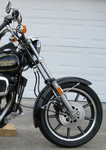
The attached picture is the of the front, but the same principals apply to the rear.
The caliper bracket is tethered by a strut (torque arm), so the caliper bracket should not move once things are back in place. The (single piston) caliper should float to allow the caliper to move as the brake pads wear. Otherwise the pad on the piston side will wear prematurely and the brakes won't stop the bike well.
The inside of the caliper bracket should contact the inner race of the bearing, but when the rear axle is torqued, the wheel should have between .004 to .018 end play. If it's not in that range, you will need to change the wheel bearing spacer between the bearings, inside the wheel hub.
The attached picture is the of the front, but the same principals apply to the rear.
Paul
I know the caliper & braket is to remain stationary during operation. The pivot or rotation I'm mentioning is just during mock up as I'm told it's a good sign on if there will be rotor binding.
I don't see a shim or washer etc. between the wheel flange and rotor shim (parts 21 & 21A) and that's how my rear wheel looks.
On the bike I am restoring there is some after market stuff back there and the wheel is not centered in the rear fender. The caliper bracket does not look quite right so when I change this stuff out I will be correcting these issues. So I am kind of in the same boat as you are Hellagnarly. Still gathering up parts but I have been thinking about it. Since I am buying a new rear rotor I have seen rotor shims listed along side of them. I am thinking that the rotor needs to be centered in the total travel of the caliper. Unless you have a piston on each side of the rotor. I have been watching some of Billy Lanes videos and he has some good pointers on a variety of things too.
One the bike I am restoring there is some after market stuff back there and the wheel is not centered in the rear fender. The caliper bracket does not look quite right so when I change this stuff out I will be correcting these issues. So I am kind of in the same boat as you are Hellagnarly. Still gathering up parts but I have been thinking about it. Since I am buying a new rear rotor I have seen rotor shims listed along side of them. I am thinking that the rotor needs to be centered in the total travel of the caliper. Unless you have a piston on each side of the rotor. I have been watching some of Billy Lanes videos and he has some good pointers on a variety of things too.
The rotor shim is something different and only when trying to space the chain sprocket to match the trans sprocket alignment. I'm pretty sure you'd only need to shim the disk rotor if you were running a wider wheel. Take a look a the parts chart someone posted above. You're talking about part # 21A. Also, check out the video I linked above. It does a better job at explaining what I'm trying to achieve.
7 Surprising Harley-Davidson Products that Are Not Motorcycles
Slideshow: The bar-and-shield logo shows up on far more than motorcycles, some of the company's most unexpected products have nothing to do with riding.
Slideshow: From the troubled AMF years to modern misfires, these bikes earned reputations for reliability issues, questionable engineering, or disappointing performance.
Crazy Bunderbike Build Looks Amazing, But Is It Impossible to Ride?
Slideshow: The Swiss custom shop has taken a Harley Softail and stretched it into something so long and low that it looks closer to a rolling sculpture than a conventional motorcycle.
Engraved Rebellion: Inside Bundnerbike's Glam Rock II
Slideshow: A standard cruiser becomes an intricate metal canvas in the hands of a Swiss custom house known for pushing Harley-Davidson platforms far beyond their factory brief.
Slideshow: Harley-Davidson's challenges aren't abstract; they show up in dropping shipments, shrinking dealer traffic, and strategic decisions that aren't yet translating into growth.













 Rear Caliper Setup