When you click on links to various merchants on this site and make a purchase, this can result in this site earning a commission. Affiliate programs and affiliations include, but are not limited to, the eBay Partner Network.
Dyna Glide ModelsSuper Glide, Super Glide Sport, Super Glide Custom, Dyna Glide Convertible, Super Glide T-Sport, Dyna Glide Police, Dyna Switchback, Low Rider, Street Bob, Fat Bob and Wide Glide.
Bunch of up grades over the years, to numerous to spell out. Great confidence in mechanical tool persons. Did a great job.Thinking it should be dino tuned. Worth the $. Thanks
Well, dinosaurs have been extinct for millions of years. So chances are you won't find one to tune your bike. Having your bike Dyno tuned is a must for upgrades if you want optimal performance though ��
I don't think a Harley dealer would do this , so on that I would find a dyno shop that could help you out. Maybe the local dealer can suggest one. If it's carbed a tuner can do jet changes, if it has EFI the ECM is pretty basic and atuner is added then dialed in. I've an 02 with cams and a 95" kit, modified carb and an 05 EFI with a Digital Fuel Optimizer on it. Both run quite well.
I don't think a Harley dealer would do this , so on that I would find a dyno shop that could help you out. Maybe the local dealer can suggest one. If it's carbed a tuner can do jet changes, if it has EFI the ECM is pretty basic and a tuner is added then dialed in. I've an 02 with cams and a 95" kit, modified carb and an 05 EFI with a Digital Fuel Optimizer on it. Both run quite well.
+1 on this reply .. Big Key for the Dyno is not looking for how much power or torque it makes but what your A/F Ratio is through the Ranges ..
Having grown up in the era of carburetors, I still find EFI computers a bit mysterious - certainly having trouble tuning my 1993 Miata without a dyno.
Carbs are actually pretty easy and I've done many a motorcycle by the seat of my pants carefully feeling out the performance in each of the power bands on the street and reading plug colors. Just be glad you're only doing a single carbed Harley compared to a four-cylinder Japanese bike. I think it took me the better part of 5 weeks to get my 1982 Suzuki GS1100E dialed in with pipes and air cleaner pods (the bike was practically unridable when I bought it).
A good hand-held air fuel gauge will make this MUCH easier. Not recommending this one in particular, but just to give you the idea:
All this is definitely doable on the street once you understand the parts of CV carbs - pilot, main jet, air jet, slide needle, and accelerator pump. The stock HD carbs are very easy to work on (and install and remove - compared to say, a 1982 GS1100e). Chances are that you are already pretty close if your performance is already good (no flat spots as you run it up to redline), your plug colors are good, and your fuel mileage is hitting typical numbers. There is no "super dyno tune" magic bullet that's going to uncork tons of power. (IMNSHO)
FWIW, I also have an older carbureted airplane. Since aircraft go through such extreme variations of altitude (hence air density), the mixture is manually controlled even on fuel injected aircraft. Managing an aircraft engine is sort of like operating on a dyno, where airspeed is the proxy for power. For a given throttle setting (manifold pressure = MAP) and prop speed (RPM), what mixture setting gives you the best airspeed within acceptable engine temperatures? The other way is efficiency - what MAP and mixture setting gives you lowest fuel burn for acceptable temperature and and airspeed.
I know this post is pretty far off base, but if I've peaked your curiosity about engine management, see this article from aviation writer Mike Busch https://www.avweb.com/news/savvyaviator/193242-1.html
The pic below is from that article and tells you 99% of how this works.




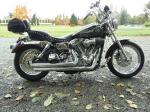


 2004 Super Glide 88"