


Is the Needle Jet suppose to be seated at all times?

Thread Starter
|
Road Captain

Joined: Jun 2010
Posts: 568
Likes: 1
From: New Jersey Somerset
 Is the Needle Jet suppose to be seated at all times?
Is the needle jet suppose to be held down by the spring seat and spring at all times when the slide is operating?
I am experiencing diaphragm bounces (I call them pops) during mid rpm (40-50 in 3rd gear for example). When this occurs, my bike has a erratic pull back feeling, loss of power basically and it quickly goes back to normal in less than half a secound. I can hear the diaphragm "popping" when this happens, it pretty loud with a full face helmet which picks up sounds very well. Good for diagnosing a bike lol.
What I think the problem might be is that the needle bounces during mid rpm and causes air to rush into the diaphragm therefore filling it up and pushing the slide down (which is exactly what I am experiencing, slide goes down = loss of power). After trying a stronger and longer spring the diaphragm bounces have occur alot less but still occur. This supports my theory of what the problem might actually be because the stronger spring would hold down the needle better and the needle would not bounce up as much. The needle I had previously had four to five shims on it which I think was purposely put in so that the needle was also pushed down better.
Is this a possibility, what do you guys think? What might I want to do to fix this?
I am experiencing diaphragm bounces (I call them pops) during mid rpm (40-50 in 3rd gear for example). When this occurs, my bike has a erratic pull back feeling, loss of power basically and it quickly goes back to normal in less than half a secound. I can hear the diaphragm "popping" when this happens, it pretty loud with a full face helmet which picks up sounds very well. Good for diagnosing a bike lol.
What I think the problem might be is that the needle bounces during mid rpm and causes air to rush into the diaphragm therefore filling it up and pushing the slide down (which is exactly what I am experiencing, slide goes down = loss of power). After trying a stronger and longer spring the diaphragm bounces have occur alot less but still occur. This supports my theory of what the problem might actually be because the stronger spring would hold down the needle better and the needle would not bounce up as much. The needle I had previously had four to five shims on it which I think was purposely put in so that the needle was also pushed down better.
Is this a possibility, what do you guys think? What might I want to do to fix this?

Stellar HDF Member

Joined: Feb 2011
Posts: 3,335
Likes: 27
From: San Diego, CA
The spring is there to help push the slide down faster when you release the throttle. It sound more like you might have a vacuum leak that is reducing the vacuum that is suppose to be holding the slide up.
When you twist the throttle you are opening the throttle plate in the carb. that allow vacuum up into the diaphragm, sucking up the slider which pulls the pin up. This allows fuel to flow through the main jet. As long as the throttle is twisted the throttle plate is open and the slide should be raised. The wider the throttle plate is open the higher the slider is lifted, the more fuel is allowed to flow through the main jet the more fuel is sucked into the pistons. If you have a vacuum leak you vacuum won't be at a steady rate and you might have a bounce in your slider. Another cause of this could be a torn diaphragm. When you completely release the throttle, thus closing the throttle plate, the vacuum is cut off from the port to the top of the diaphragm and the spring helps to push the slider back down. This pushes the pin back down and into the main jet cutting off the fuel through the main jet. This causes the vacuum to be applied to the slow/idle jet and supplies just enough fuel through it to keep the bike running at an idle.
When you installed a stronger and longer spring, it now requires you to open up the throttle more to create more vacuum to get the same lift on the slider than before (it more than likely isn't so much that you would notice, but is is more). This higher vacuum, created by the throttle plate being opened more, will compensate for the lose of vacuum from either a vacuum hose leak or a torn diaphragm. But, because that vacuum loss is still there you will still get what you call popping, just not as much.
In actuality the pin is held down in the slider by the plastic thing in the bottom of the slider that the spring sits on top of. The shims were there to make sure the pin didn't go to little or too much into the main jet and did not have anything to do with keeping it down in the bottom of the slider. If you look at the bottom of your slider you will notice a small hole that is slightly less then or about 1/8" in diameter. You have to have a vent for the bottom of the diaphragm or the diaphragm would not be able to be sucked up properly. The vacuum is applied to the top of the diaphragm and as long as it does not have a tear in it is sealed from the side that the pin is on.
I hope I didn't go too much in to deep detail here. In short check your vacuum hoses for cracks and leaks and your slider diaphragm for tears. Even a minor tear in the diaphragm will cause big problems.
When you twist the throttle you are opening the throttle plate in the carb. that allow vacuum up into the diaphragm, sucking up the slider which pulls the pin up. This allows fuel to flow through the main jet. As long as the throttle is twisted the throttle plate is open and the slide should be raised. The wider the throttle plate is open the higher the slider is lifted, the more fuel is allowed to flow through the main jet the more fuel is sucked into the pistons. If you have a vacuum leak you vacuum won't be at a steady rate and you might have a bounce in your slider. Another cause of this could be a torn diaphragm. When you completely release the throttle, thus closing the throttle plate, the vacuum is cut off from the port to the top of the diaphragm and the spring helps to push the slider back down. This pushes the pin back down and into the main jet cutting off the fuel through the main jet. This causes the vacuum to be applied to the slow/idle jet and supplies just enough fuel through it to keep the bike running at an idle.
When you installed a stronger and longer spring, it now requires you to open up the throttle more to create more vacuum to get the same lift on the slider than before (it more than likely isn't so much that you would notice, but is is more). This higher vacuum, created by the throttle plate being opened more, will compensate for the lose of vacuum from either a vacuum hose leak or a torn diaphragm. But, because that vacuum loss is still there you will still get what you call popping, just not as much.
In actuality the pin is held down in the slider by the plastic thing in the bottom of the slider that the spring sits on top of. The shims were there to make sure the pin didn't go to little or too much into the main jet and did not have anything to do with keeping it down in the bottom of the slider. If you look at the bottom of your slider you will notice a small hole that is slightly less then or about 1/8" in diameter. You have to have a vent for the bottom of the diaphragm or the diaphragm would not be able to be sucked up properly. The vacuum is applied to the top of the diaphragm and as long as it does not have a tear in it is sealed from the side that the pin is on.
I hope I didn't go too much in to deep detail here. In short check your vacuum hoses for cracks and leaks and your slider diaphragm for tears. Even a minor tear in the diaphragm will cause big problems.



Elite HDF Member
Joined: Dec 2009
Posts: 4,598
Likes: 14
From: navarre ohio
the needle shouldn't move with out the slide,they go up and down together.as the slide opens letting in more air,the needle lifts to let in more fuel. if the needle is bouncing around, that is the problem.
Last edited by j1mmy; Oct 19, 2012 at 10:50 AM.
Stellar HDF Member
Joined: Feb 2011
Posts: 3,335
Likes: 27
From: San Diego, CA
Last edited by DOMAPOI; Oct 19, 2012 at 05:17 PM.
Thread Starter
|
Road Captain
Joined: Jun 2010
Posts: 568
Likes: 1
From: New Jersey Somerset
The spring is there to help push the slide down faster when you release the throttle. It sound more like you might have a vacuum leak that is reducing the vacuum that is suppose to be holding the slide up.
When you twist the throttle you are opening the throttle plate in the carb. that allow vacuum up into the diaphragm, sucking up the slider which pulls the pin up. This allows fuel to flow through the main jet. As long as the throttle is twisted the throttle plate is open and the slide should be raised. The wider the throttle plate is open the higher the slider is lifted, the more fuel is allowed to flow through the main jet the more fuel is sucked into the pistons. If you have a vacuum leak you vacuum won't be at a steady rate and you might have a bounce in your slider. Another cause of this could be a torn diaphragm. When you completely release the throttle, thus closing the throttle plate, the vacuum is cut off from the port to the top of the diaphragm and the spring helps to push the slider back down. This pushes the pin back down and into the main jet cutting off the fuel through the main jet. This causes the vacuum to be applied to the slow/idle jet and supplies just enough fuel through it to keep the bike running at an idle.
When you installed a stronger and longer spring, it now requires you to open up the throttle more to create more vacuum to get the same lift on the slider than before (it more than likely isn't so much that you would notice, but is is more). This higher vacuum, created by the throttle plate being opened more, will compensate for the lose of vacuum from either a vacuum hose leak or a torn diaphragm. But, because that vacuum loss is still there you will still get what you call popping, just not as much.
In actuality the pin is held down in the slider by the plastic thing in the bottom of the slider that the spring sits on top of. The shims were there to make sure the pin didn't go to little or too much into the main jet and did not have anything to do with keeping it down in the bottom of the slider. If you look at the bottom of your slider you will notice a small hole that is slightly less then or about 1/8" in diameter. You have to have a vent for the bottom of the diaphragm or the diaphragm would not be able to be sucked up properly. The vacuum is applied to the top of the diaphragm and as long as it does not have a tear in it is sealed from the side that the pin is on.
I hope I didn't go too much in to deep detail here. In short check your vacuum hoses for cracks and leaks and your slider diaphragm for tears. Even a minor tear in the diaphragm will cause big problems.
When you twist the throttle you are opening the throttle plate in the carb. that allow vacuum up into the diaphragm, sucking up the slider which pulls the pin up. This allows fuel to flow through the main jet. As long as the throttle is twisted the throttle plate is open and the slide should be raised. The wider the throttle plate is open the higher the slider is lifted, the more fuel is allowed to flow through the main jet the more fuel is sucked into the pistons. If you have a vacuum leak you vacuum won't be at a steady rate and you might have a bounce in your slider. Another cause of this could be a torn diaphragm. When you completely release the throttle, thus closing the throttle plate, the vacuum is cut off from the port to the top of the diaphragm and the spring helps to push the slider back down. This pushes the pin back down and into the main jet cutting off the fuel through the main jet. This causes the vacuum to be applied to the slow/idle jet and supplies just enough fuel through it to keep the bike running at an idle.
When you installed a stronger and longer spring, it now requires you to open up the throttle more to create more vacuum to get the same lift on the slider than before (it more than likely isn't so much that you would notice, but is is more). This higher vacuum, created by the throttle plate being opened more, will compensate for the lose of vacuum from either a vacuum hose leak or a torn diaphragm. But, because that vacuum loss is still there you will still get what you call popping, just not as much.
In actuality the pin is held down in the slider by the plastic thing in the bottom of the slider that the spring sits on top of. The shims were there to make sure the pin didn't go to little or too much into the main jet and did not have anything to do with keeping it down in the bottom of the slider. If you look at the bottom of your slider you will notice a small hole that is slightly less then or about 1/8" in diameter. You have to have a vent for the bottom of the diaphragm or the diaphragm would not be able to be sucked up properly. The vacuum is applied to the top of the diaphragm and as long as it does not have a tear in it is sealed from the side that the pin is on.
I hope I didn't go too much in to deep detail here. In short check your vacuum hoses for cracks and leaks and your slider diaphragm for tears. Even a minor tear in the diaphragm will cause big problems.
Trending Topics
Thread Starter
|
Road Captain
Joined: Jun 2010
Posts: 568
Likes: 1
From: New Jersey Somerset
It looks fine to me. Read the post above this to see the possible solution that I have came up with. I ordered a new spring seat and hopefully I will not need to use the o-ring under the needle head
Thread Starter
|
Road Captain
Joined: Jun 2010
Posts: 568
Likes: 1
From: New Jersey Somerset
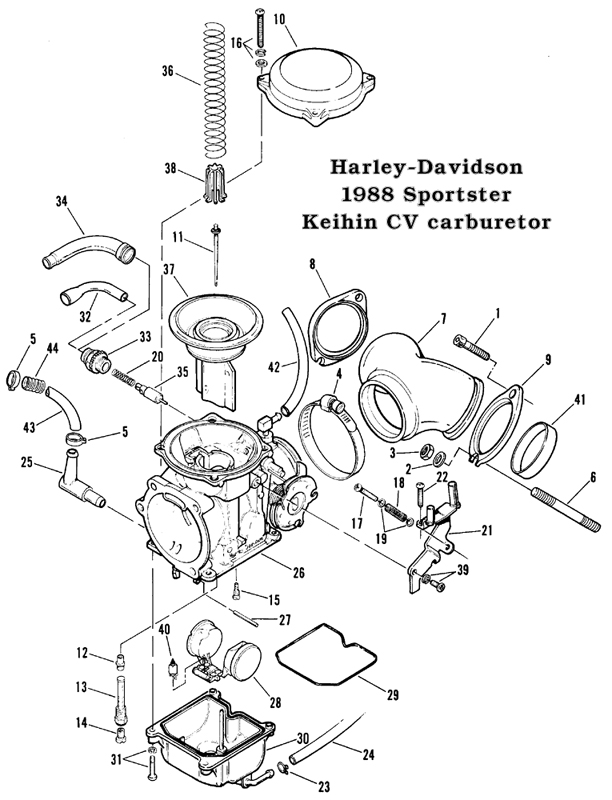
If the needle is bouncing around that means the plastic piece that should be in the inside bottom of the slide that the springs sits on is missing. That is what keeps the pin in place in the slide. That plastic piece serves two purposes, one to hold the pin in place with the help of the spring pushing down on that plastic piece and the other function is to keep the spring centered in the slide. (That would be part 38 in this diagram of a CV carb.)
Thread Starter
|
Road Captain
Joined: Jun 2010
Posts: 568
Likes: 1
From: New Jersey Somerset
I checked quickly if I had any vacuum leaks, if everything was snug and everything seems to be alright. The popping that I have mentioned in other threads that I have made is not due to the carb or air leak in the intake or anything. When I went to see tighten the exhaust nuts by the cylinder, I noticed they were not tighten down enough when I installed my exhaust. I tighten them and the popping occurred less but still occurred. Probably because the gaskets are a one time deal and after 1000miles of riding, they took shape and basically could not be reshaped properly when I tighten them down. So in the future when I have time, I will install new gaskets and tighten them properly so they form correctly