When you click on links to various merchants on this site and make a purchase, this can result in this site earning a commission. Affiliate programs and affiliations include, but are not limited to, the eBay Partner Network.
So with 4500 miles on the bike I decided it was time to make the suspension as good as the rest of the bike. Yes, the new suspensions on the M8s are an improvement over previous years, but only a slight one. There's just no comparing any suspension HD has ever had on their bikes to a real quality suspension. I had a set of Ohlins 2-2B rear shocks on my previous bike (04 FLHRI), so I already knew what I was in for.
So I decided to go with the 2-2B Ohlins shocks in the rear and the FKC102 Ohlins Cartridges in the front. I went with the 2-2B over the 2-2A for the extra travel. Ordering from MM was easy. Just gotta be short and to the point, and get off the phone.
Installing the rear shocks was a breeze. Had to use one of the washers on the upper mount on the right side and one on the lower mount on the left side. I set the sag and began tearing apart the front end. Anyone who has done this before knows it's pretty easy and to just follow the service manual.
Pulling the forks apart were somewhat of a pain in the *** because the service folks who swapped my lowers to the black ones used some blue Loctite on the bottom damper-rod bolts. Anyone who has tried to remove those before knows that they have a tendency to just spin instead of breaking loose and coming out. But my buddies Snap-On impact made short work of that. Once everything was apart I cleaned both the upper and lower fork tubes with brake cleaner to get all the residual oil out and make them nice and dry inside. I reassembled everything, took them to HD to have a couple new seals driven in, and installed the new FKC102 cartridges. The instructions were pretty good and it was pretty easy with my daughter helping me by holding the fork upright. Having cleaned out the insides and components with brake clean helped a lot with reassembly because everything was dry. When I installed the bottom damper-rod bolts (with new copper washers and NO LOCTITE this time), I was able to apply the 35 ft/lbs of torque without anything spinning and also without having to hold the lower tube with anything other than my hand pushing it against the workbench. Easy day. I filled them with the specified amount of Ohlins oil, worked out any air bubbles, installed the spring and preload collars/tubes, and capped them off. Reassembling the front of the bike was just as easy as disassembly.
I couple of notes about doing the front forks....
- I needed special tools. I did not know this and Howard did not tell me this. I received the forks, read the instructions, and realized I couldn't do **** until I had those tools. So I had to call MM back and buy them. I needed a pull-up tool, a stopper plate, a top-cap tool, and an oil-level gauge/tool. I also had to purchase a 19mm allen socket and a 12mm allen socket. The 19mm is used to take off the stock top-caps and the 12mm is used for the bottom bolts.
- You do not need to pull the upper and lower fork tubes apart to remove the stock internal components or to install the FKC102 cartridges. But it makes the job a whole lot easier when you're not fighting that oil the whole time. Seal are cheap. You're going to need new copper washers for the bottom bolts anyway so just grab a couple new seals. I didn't have a seal installation tool so I got everything put together, took them to HD and they did the seals for me. Took 10 seconds, literally. Then just throw the retaining clips on top and you're ready to finish off the job.
- I did not remove the handlebars or the fairing to do the forks. I just removed the instrument panel, the nacelle and lower skirt, and rotated the handlebars in order to get to the pinch bolts for the forks. But I did have some vise jaws meant for gripping tubes and that made removing the top caps easy once the forks were off the bike.
- After I was done I had a CEL come on. I figured out it was because I had the front tire off and the speed sensor was dangling. I turned the bike on and was messing with the radio while everything was disassembled and that told the ECM that it had lost contact with the speed sensor. HD reset it for me and all is well.
- Howard said that for optimum performance the fronts will need to be taken apart and cleaned every 10k miles. This seems a bit ridiculous to me, but he's the expert and if it means I'll get a lifetime of use out of these, and the ride will be great, I'm willing to do it. Besides, as I stated earlier, it's really an easy job.
- The FKC102 cartridges are different. One is for rebound and the other is for compression. The instructions call for them to be installed in specific legs. Easy to tell them apart. One has the holes on the bottom of the cartridge and the other has the holes in the top.
I'm not going to go on a big rave about how awesome the ride is. It's a dramatic improvement, but I already expected that. I put a tie-wrap on the shaft of the right side shock and went for a ride. After two adjustments the rear shocks are dialed in perfectly for me. The fronts feel great too. Noticeably reduced brake dive and this bike now has a steady diet of road imperfections. I rode over some of the more notable pieces of road that usually makes me grit my teeth and bounces me around in the seat. My *** stayed planted the entire time and the gnashing was replaced by a grin.
All and all this was a very easy install and I'm happy with the end result. I'm sure they'll get a little better as everything breaks in.
I'll post pics of a few things shortly. I'm on my PC typing this and the pics are on my phone. If anyone has any questions about anything, please ask them and I'll be more than happy to respond.
Last edited by SWThomas; Apr 15, 2017 at 04:37 PM.
Thanks for the pictorial. I have my rear Ohlins on order as well, will do the front as budget allows. Idea for you - consider renting your special tools out. I know I would rent them from you - as I would only need them once for the install.
Thanks for the pictorial. I have my rear Ohlins on order as well, will do the front as budget allows. Idea for you - consider renting your special tools out. I know I would rent them from you - as I would only need them once for the install.
Youll need them more than that if you're gonna service them every 10k miles like Howard recommends.
Yeah that seems a tad high maintanance for something that cant be done by just draining and filling like engine oil is.
Thats not what Howard told me. He said I'll need to pull the cartridges apart every 10k miles and clean them the shims and internals with mineral spirits. I'm gonna need to order yet another special tool from him to disassemble the cartridges.
Thats not what Howard told me. He said I'll need to pull the cartridges apart every 10k miles and clean them the shims and internals with mineral spirits. I'm gonna need to order yet another special tool from him to disassemble the cartridges.
Not disputing what he told you .. I just think that tearing apart the fork every 10K seems like more than it may be worth. MAYBE after the first 1,000 miles,but after that, if your building up enough material in there to need cleaning to that degree, it just seems odd.Hey, if the ride quality is that much improved, you feel its a fair trade off, that's all that matters..
7 Surprising Harley-Davidson Products that Are Not Motorcycles
Slideshow: The bar-and-shield logo shows up on far more than motorcycles, some of the company's most unexpected products have nothing to do with riding.
Slideshow: From the troubled AMF years to modern misfires, these bikes earned reputations for reliability issues, questionable engineering, or disappointing performance.
Crazy Bunderbike Build Looks Amazing, But Is It Impossible to Ride?
Slideshow: The Swiss custom shop has taken a Harley Softail and stretched it into something so long and low that it looks closer to a rolling sculpture than a conventional motorcycle.
Engraved Rebellion: Inside Bundnerbike's Glam Rock II
Slideshow: A standard cruiser becomes an intricate metal canvas in the hands of a Swiss custom house known for pushing Harley-Davidson platforms far beyond their factory brief.
Slideshow: Harley-Davidson's challenges aren't abstract; they show up in dropping shipments, shrinking dealer traffic, and strategic decisions that aren't yet translating into growth.




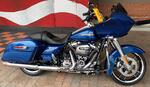
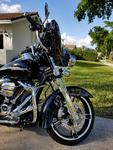





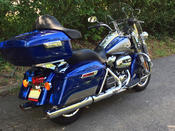
 Ohlins 2-2B and FKC102 installed