

Tortz Bits
Road Warrior
Joined: Oct 2006
Posts: 1,350
Likes: 46

Sorry I did not remember to bring home the torx & torx plus bits to take a picture, got out late & was having a bad day. I will go in tomorrow & get pics of them.
Toby
Road Warrior
Joined: Aug 2007
Posts: 1,979
Likes: 4
From: Central IL
At least you have a Mac man to talk to and buy from. I have all kinds of Mac tools and now no distributors within a 100 miles of me. Any problems and I have to send everything to Mac in Ohio. Pain in the ol' butt! Nothing like them taking a bunch of my money and then yanking the proverbial rug out from under me. Should have bought all Snap-On or Matco.
Road Warrior
Joined: Oct 2006
Posts: 1,350
Likes: 46
At least you have a Mac man to talk to and buy from. I have all kinds of Mac tools and now no distributors within a 100 miles of me. Any problems and I have to send everything to Mac in Ohio. Pain in the ol' butt! Nothing like them taking a bunch of my money and then yanking the proverbial rug out from under me. Should have bought all Snap-On or Matco.
Toby
Road Warrior
Joined: Oct 2006
Posts: 1,350
Likes: 46
Didn't make it to the shop, worked on tiling the kitchen counters instead. But have to go into the shop tomorrow & sand blast some of the garbage disposal pieces so will take them then. Did find this in a another post & it shows it very well.
Here's some more background info on TORX and TORX Plus screws
(source: www.screwdriversets.org/TORX-Screwdriver.html):
"Since the torx screw was designed for automated assembly it now showing up in many places including automobiles. It is even becoming popular in the construction industries.


The TORX® (rhymes with "forks") fastening system was developed by Acument Global Technologies' Camcar LLC group (formerly Camcar Textron) and is the trademark for a type of screw head characterized by a 6-point star-shaped pattern. People are often not aware of the trademark 'TORX' (which is always capitalized) and often refer to such a driver as a star screwdriver.
The generic name is hexalobular (hex-lob) internal driving feature and is known as ISO 10664 by the International Organization for Standardization.
One of the primary advantages of a torx fastener is the elimination of cam out. Cam out is when the screwdriver slips out of the screw head once a certain torque is exceeded.
In the earlier days of manufacturing, the Phillips screwdriver replaced the slotted driver. It was self centering which allowed for automated assembly. The Phillips head screw and screwdriver system was designed to cam out to prevent over-tightening. This was before torque-sensing automatic screwdrivers existed. These properties were used to speed up production although camming out damages the screw and also the screwdriver.
As torque-limiting automatic screwdrivers became available, the torx system was invented. By design, torx head screws do not cam out. When the desired torque is reached the driver stops applying torque. This pretty much prevents damage to the driver tip, screw head and workpiece. It also allows for the torque to be consistently applied.
The torx system is known as 'Torx T' and has the following features:


Camcar LLC also developed an improved profile which they designated TORXPLUS®. Instead of 'V-shaped' points the torx plus has 'U-shaped' points. It has a 0° drive angle versus the 15° drive angle of the standard torx system. This allows for the torx plus screwdriver to mate better with the torx plus screw sidewalls providing greater torque and less wear.
The torx plus system is known as 'Torx TS' and has the following features:
There is also a tamper resistant version of torx plus screw that has five lobes instead of six with a post in the center and is known as a torx TX".
TORX vs TORX Plus
(source:www.friesen.com/electric/screw_information.html)
"Torx®
Star-shaped drive with six rounded points allows maximum transfer of torque. Provides a high level of security without sacrificing accessibility.
Torx Plus®
Elliptical groove design maximizes engagement depth between driver and fastener. Ensures optimum torque transmission, and virtually eliminates camout.
(source: www.wrenthamtool.com/products/torx.asp)
The larger cross section at the lobes reduces cam-out and gives higher torque transfer capability."


(source: www.screwdriversets.org/TORX-Screwdriver.html):
"Since the torx screw was designed for automated assembly it now showing up in many places including automobiles. It is even becoming popular in the construction industries.
The TORX® (rhymes with "forks") fastening system was developed by Acument Global Technologies' Camcar LLC group (formerly Camcar Textron) and is the trademark for a type of screw head characterized by a 6-point star-shaped pattern. People are often not aware of the trademark 'TORX' (which is always capitalized) and often refer to such a driver as a star screwdriver.
The generic name is hexalobular (hex-lob) internal driving feature and is known as ISO 10664 by the International Organization for Standardization.
One of the primary advantages of a torx fastener is the elimination of cam out. Cam out is when the screwdriver slips out of the screw head once a certain torque is exceeded.
In the earlier days of manufacturing, the Phillips screwdriver replaced the slotted driver. It was self centering which allowed for automated assembly. The Phillips head screw and screwdriver system was designed to cam out to prevent over-tightening. This was before torque-sensing automatic screwdrivers existed. These properties were used to speed up production although camming out damages the screw and also the screwdriver.
As torque-limiting automatic screwdrivers became available, the torx system was invented. By design, torx head screws do not cam out. When the desired torque is reached the driver stops applying torque. This pretty much prevents damage to the driver tip, screw head and workpiece. It also allows for the torque to be consistently applied.
The torx system is known as 'Torx T' and has the following features:
- Straight sidewalls prevent cam out
- Allows high torque transmission
- Circular geometry increases drive bit engagement
- Drivers last ten times longer than Phillips
- 15° drive angle prevents full engagement of the drive bit and fastener
- 15° drive anglepermits a small amount of radial stress which reduces driver bit life
Camcar LLC also developed an improved profile which they designated TORXPLUS®. Instead of 'V-shaped' points the torx plus has 'U-shaped' points. It has a 0° drive angle versus the 15° drive angle of the standard torx system. This allows for the torx plus screwdriver to mate better with the torx plus screw sidewalls providing greater torque and less wear.
The torx plus system is known as 'Torx TS' and has the following features:
- Spreads driving forces over larger area which ensures optimal torque transmission with reduced clamp load
- Straight, vertical sidewalls eliminate cam out
- Completely encloses driver bit which reduces tool slippage and application damage and extends tool life
- Little or no end load is required to keep the screwdriver engaged in the screw recess which reduces fatigue and muscular stress during manual assembly
- Maximizes engagement between driver and screw (true 0° drive angle)
There is also a tamper resistant version of torx plus screw that has five lobes instead of six with a post in the center and is known as a torx TX".
TORX vs TORX Plus
(source:www.friesen.com/electric/screw_information.html)
"Torx®
Star-shaped drive with six rounded points allows maximum transfer of torque. Provides a high level of security without sacrificing accessibility.
Torx Plus®
Elliptical groove design maximizes engagement depth between driver and fastener. Ensures optimum torque transmission, and virtually eliminates camout.
(source: www.wrenthamtool.com/products/torx.asp)
The larger cross section at the lobes reduces cam-out and gives higher torque transfer capability."

Ultimate HDF Member
Joined: Dec 2006
Posts: 8,961
Likes: 263
From: Conroe Texas
Look at teh bottom of the PDF of the kit contents, it spells out teh torx needed for most of your bike.
http://www.cruztools.com/products/kitshd.html
I would also think hardening the bits yourself like they taught you in metal shop in junir high would help if you bought a cheap set.
http://www.cruztools.com/downloads/contentsmc.pdf
http://www.cruztools.com/products/kitshd.html
I would also think hardening the bits yourself like they taught you in metal shop in junir high would help if you bought a cheap set.
http://www.cruztools.com/downloads/contentsmc.pdf

Stellar HDF Member
Joined: Dec 2009
Posts: 2,035
Likes: 8
From: Western Canada
Well, the problem kinda took care of itself
The torx head broke off in the engine guard bolt and before I could get at it with a drill, the engine vibration shook it out. Funny how things work out. This sure has been an informative thread.
Road Warrior
Joined: Oct 2006
Posts: 1,350
Likes: 46
It's not like an easy out, they fit in there loose to begin with & they don't get tighter as you turn them. I have never had a problem getting them out with a magnet, but if the magnet wont pull it out a slight tap with a hammer should shock them loose so a magnet will.
Toby
Toby
HD Forum Stories
The Best of Harley-Davidson for Lifelong Riders
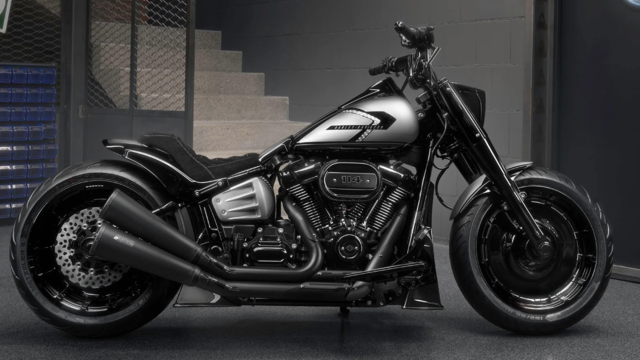
Harley-Davidson Fat Boy Becomes a Dark, Decepticon-Inspired Custom
Verdad Gallardo
6 Weirdest Harley-Davidsons Ever Sold to the Public
Verdad Gallardo
7 Times Harley-Davidson Chucked Tradition Out the Window
Verdad Gallardo
7 Surprising Harley-Davidson Products that Are Not Motorcycles
Verdad Gallardo
8 Best Harley-Davidson Motorcycles Ever
Pouria Savadkouei
10 Worst Harley-Davidson Motorcycles Ever
Pouria Savadkouei
Killer Custom's Jail Break Is The Breakout That Refused to Blend In
Verdad Gallardo
Crazy Bunderbike Build Looks Amazing, But Is It Impossible to Ride?
Verdad Gallardo