When you click on links to various merchants on this site and make a purchase, this can result in this site earning a commission. Affiliate programs and affiliations include, but are not limited to, the eBay Partner Network.
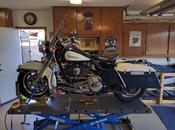
I put about 1000 miles on the bike last weekend and I think the Touring Frame Stabilizer really improves the feel of the bike in harder corners. The vague feeling that the front and rear wheels aren't quite following the same line is gone. I can't prove that the bike actually can corner any harder than it did without it, but I can say that I have more confidence stuffing it into a corner now.
Then it was money well spent. I am looking at this also. Thanks for the update!
I gave it another test on my way home from work last night. Two corners that I know well and have experienced the frame oscillation in before. They both happen to be right handers. One is slightly off camber and has two repair humps running across it one just after the other. They are so close together that the suspension has no time to recover from the first before hitting the second. This has always caused the oscillation if taken at any speed over about 45 mph. I rolled through at 60+ and noticed no oscillation; I only felt the suspension absorbing the humps.
The second corner is a steep downhill decreasing radius turn with good smooth pavement. There are a lot of car wrecks on this corner because as the turn tightens it also rolls off camber. To make things even more interesting there was some debris in the road mid corner that forced me to take a less than optimum line through the turn so that I had to throw the bike hard into the apex later in the turn than I normally would. I noticed no wobble in the suspension at all, which was a good thing as there was enough drama going on at the time as it was. Too fast, bad line and traffic in the opposite direction so I had no option to run wide.
I'm going to claim that Alloy Art's Touring Frame Stabilizer is effective.
Keep in mind, most of the stuff you see and read about Glide-pro pertains to the pre 09's. I did the swap in my 09 because I was having some instability issues when cornering. The culprit was the rear isolators due to end play. After installing these, the end play was gone and so was the instability issues. If I were to do it again, I would have just used OEM isolators. If the OEMs last 40k+/- miles, I could replace them 4 times for what the glide pro costs. I love my ride but I doubt I'll have it for 160k miles... On 09+, before replacing them, I would highly recommend dropping the rear wheel, disconnecting the shocks, and check for end play/side to side movement to verify the issue before spending the big money.
And if you're taking a curve at 80 mph on a bagger, the issue might be behind the handlebars along with how much tire is actually in contact with the road and the condition of the road.
My "wobble" experiences were from the time the bike was new. I have over 40,000 on it now and I would say it hasn't gotten any worse and is only an issue at speeds over intended use. Some bikes are better/worse than others which is probably the result of tolerance stacking through the entire assembly process. Some will just be tighter/looser than others with the majority being just fine.
I agree that any/all of the add on products are more cost effective and usually less money, I just wouldn't want to see it.
Highly recommended. I've had mine for over a year. It works great and it's mostly out of the way. I did, however, have to slightly modify the right side heat shield to mount with the stabilizer. No biggie.
7 Surprising Harley-Davidson Products that Are Not Motorcycles
Slideshow: The bar-and-shield logo shows up on far more than motorcycles, some of the company's most unexpected products have nothing to do with riding.
Slideshow: From the troubled AMF years to modern misfires, these bikes earned reputations for reliability issues, questionable engineering, or disappointing performance.
Crazy Bunderbike Build Looks Amazing, But Is It Impossible to Ride?
Slideshow: The Swiss custom shop has taken a Harley Softail and stretched it into something so long and low that it looks closer to a rolling sculpture than a conventional motorcycle.
Engraved Rebellion: Inside Bundnerbike's Glam Rock II
Slideshow: A standard cruiser becomes an intricate metal canvas in the hands of a Swiss custom house known for pushing Harley-Davidson platforms far beyond their factory brief.
Slideshow: Harley-Davidson's challenges aren't abstract; they show up in dropping shipments, shrinking dealer traffic, and strategic decisions that aren't yet translating into growth.