




First ride on the S
Seasoned HDF Member


Joined: Jan 2015
Posts: 15,990
Likes: 7,111
From: Sandy Eggo's North County

WH1~ Are you going to change the fluids before, or during your road trip? I'd probably ride 300-400 miles tomorrow, then change all the fluids for the road trip. In fact, that's what I did on my FXDL.

Road Captain
Joined: May 2016
Posts: 544
Likes: 61
From: San Diego
Dealer told me that I was good to go to make it to Pine Valley CA and get the fluids changed in El Cajon CA. That's 1100 miles or so. I'd love to put some real miles on it tomorrow but we are going to my wife's families ranch all day.

Grand HDF Member


Joined: Jun 2010
Posts: 4,584
Likes: 918
From: coast to coast
 Nice.
Nice.

Thread Starter
|
Extreme HDF Member
Joined: Dec 2007
Posts: 13,402
Likes: 941
From: Illinois
greggreen - I don't know what your problem is unless you're green with envy.
From where I stand it is good to be me. It seems to me that it is sad to be you.
Your past posts challenging me were without merit or foundation in fact.
Here is a condensation of my posts over the past decade of learning how to improve mileage and performance of an air cooled twin.
All gas regardless of octane has about 115,000 BTU's. Except winter blends which are 108,000.
BTU's is the power in gasoline therefore all gas has the same power
Octane is a measurement of resistance to ignition and not power.
The higher the octane in gas the slower it burns therefore higher octane burns less of the gas during the combustion cycle and yields more unburned contaminants to foul the engine.
Combustion problems are called pinging, knocking, preignition and some others. They occur before, during and after top dead center in the compression/combustion cycle. However they can all be described under one term and that is spontaneous combustion.
Many factors lead up to those conditions. Spark plug location, intake angles, combustion chamber design, metallurgy, AFR, compression ratio, octane and the big one heat.
Shovels pinged more than Evo's and TC's less than Evo's. Reason: The Shovel had a Hemispherical head with no squish area for the incoming charge to mix and evaporate combined with the domed piston that absorbed and retained more heat while blocking some of the intake flow and spark propagation. The Evo corrected with a D shaped combustion area that improved the squish area and had flat pistons to has less surface area to absorb heat. The aluminum heads dissipated heat much better than iron heads. The TC's went further with oil sprayed under the piston for cooling and a bath tub shaped combustion chamber that does a great job of mixing the mixture. That evaporation process enhanced evaporation which cools the piston, head and cylinders better than past engines.
Now comes the negative factors to an air cooled engine. EPA mandates a lean burn AFR of 14.6 to 1. That is the ratio that produces the least amount of the three gasses EPA is concerned with. The AFR that produces the most power, runs the coolest and burns more completely is 12.5. to 1.
The other thing that EPA requires is that the blow by of spent combustion gases that enter the crankcase be routed into the intake manifold along with misted oil to be reburn. That adds to the incoming charge heat and yields more fouling of the combustion chamber and reduces engine performance as does the lean burn AFR.
At this point we have the fact that a cooler engine runs stronger and lasts longer when dealing with air cooled motors. That is why if the bike does not come with an oil cooler I add one.
How to achieve that? Many defeat the blow by problem with catch cans. The lean burn issue is addressed by aftermarket programmers that can adjust the AFR across the entire rpm range. I have never advocated that to anyone. Early on that was how I handled it. As time when on I learned how to accomplish cooler running without aftermarket aids.
As I researched books, magazines, seminars and all things about engine performance from the numerous muscle cars that I had in the 60's and 70's to the sports cars that I had until 2012 when I sold them to focus on H-D's.
I did my own work on them from pulling engines, trans, clutches, rebuild carbs, mess with weights and springs in the distributor to change the spark curve not just the advance, top end jobs and changing tires.
My current shop is 1,500 sq. ft. with 500 sq. ft. of loft storage. There are 5 roller chests and three top chests of a lifetime collection of needed tools. Other tools like a tire changer, balancer, 90 ton press, cut off saw, 60 gallon compressor, bike lift table, grinders, tools and much more to do all that I need to get done.
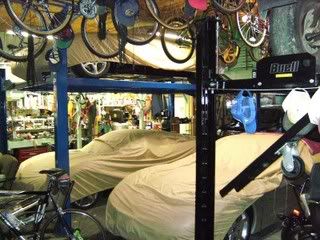
This pic is of the back of the garage before I sold off the cars to focus on the bikes. By the rims one should be able to identify three Vettes in this shot on under and by the Bendpak 4 post lift. Out of the picture under the other four post lift is where the S2000 sits and the Viper is up on the lifts. The five bikes I had at the time were behind where I stood to take this shot.
Now to today's method of making an air cooled HD run stronger and last longer.
I pick up the bike from the dealer with 1 mile or less as they are not to test ride it. When home with it I do 12 heat cycles over a period of several days.
I use the process recommended by H-D. It involves starting the cold engine and running it a set length of time and temp. Let it cool and repeat. Each cycle is a little longer and hotter. The process does not "break in" an engine. It prepares it for the break in operation. The process reduces the sharp edges left for machining of the various parts. The end result is engine will develop less heat as there is less friction to generate it during the break in miles.
Step two is to slowing break in the engine. So it does not end at 1,000 miles. I take it to 3,000 miles of easyier slower use. A comment on fast and hard break in advocated by some. Yes, It will yield a faster running engine initially. However as a American Iron magazine study and others have reported after time the slow run in engine will surpass the performance of the hard broke in engine.
At this point I do a Heavy breather but retain the stock exhaust. The result is more torque. More air makes a cooler incoming charge. The cooler air expands more during combustion yielding what? Oh more power.
I am not doing the catch cans anymore. I just do more carbon removal by misting water into the intake while the engine is at about 2,000 rpm. That keeps the carbon build up down and keeps the combustion ratio at build spec. The Heavy breathers make it easy with just loosening the hose clamp and pull the filter off.
Now comes E10 87 octane. First I will quote from an article by Kevin Cameron one of the most notable motorcycle engine guru's known.
His article in this season's MotoAmerica's official season guide. The title is "What's in the tank" He describes Sunoco providing fuel for MotoAmerica's racing season. He identifies the compounds in it and guess what? It contains alcohol and this is what he says. "Alcohols act as a refrigerant, having great ability to cool the afr charge as they evaporate, thereby increasing it's density."
So the less BTU's in alcohol is more than offset by lowering the charge temperature yielding more power. So much for the folks that seek out and pay more for "pure fuel".
The final step is to install iridium plugs. The pin point electrode concentrates the spark that fires the alcohol mix sooner than copper core plugs. 87 octane burns faster and more complete than higher octane. If you can wrap your head around the fact the the gas burned in the combustion stroke the more power is made.
The other consideration is that the higher the gas mileage the cooler the engine is and the less it wears. For example. I get 50 mpg on my 12 RGC CVO. That generates 115,000 BTU's in 50 miles. Lets say gregg's gets 40 mpg. The net effect is that mine is producing 25 per cent less heat!
So if an oil cooled air cooled low compression long stroke TC is broke in carefully along with iridium plugs, E1087 octane gas, stock ECM and exhaust it will run stronger and last longer.
Some may ask how can it last longer. Here's how. Metal exists in three states solid, liquid and gas. The difference is heat. The hotter it gets the softer it gets. So it follows the softer it gets the faster it wears. Hasn't anyone ever wondered why water cooled engines last typically twice as long as air cooled. Now you know. Heat kills.
I am well known in my community for my bikes and riding. At least two levels of H-D management have thanked me for representing H-D particularly with my winter riding.
Any questions?
From where I stand it is good to be me. It seems to me that it is sad to be you.
Your past posts challenging me were without merit or foundation in fact.
Here is a condensation of my posts over the past decade of learning how to improve mileage and performance of an air cooled twin.
All gas regardless of octane has about 115,000 BTU's. Except winter blends which are 108,000.
BTU's is the power in gasoline therefore all gas has the same power
Octane is a measurement of resistance to ignition and not power.
The higher the octane in gas the slower it burns therefore higher octane burns less of the gas during the combustion cycle and yields more unburned contaminants to foul the engine.
Combustion problems are called pinging, knocking, preignition and some others. They occur before, during and after top dead center in the compression/combustion cycle. However they can all be described under one term and that is spontaneous combustion.
Many factors lead up to those conditions. Spark plug location, intake angles, combustion chamber design, metallurgy, AFR, compression ratio, octane and the big one heat.
Shovels pinged more than Evo's and TC's less than Evo's. Reason: The Shovel had a Hemispherical head with no squish area for the incoming charge to mix and evaporate combined with the domed piston that absorbed and retained more heat while blocking some of the intake flow and spark propagation. The Evo corrected with a D shaped combustion area that improved the squish area and had flat pistons to has less surface area to absorb heat. The aluminum heads dissipated heat much better than iron heads. The TC's went further with oil sprayed under the piston for cooling and a bath tub shaped combustion chamber that does a great job of mixing the mixture. That evaporation process enhanced evaporation which cools the piston, head and cylinders better than past engines.
Now comes the negative factors to an air cooled engine. EPA mandates a lean burn AFR of 14.6 to 1. That is the ratio that produces the least amount of the three gasses EPA is concerned with. The AFR that produces the most power, runs the coolest and burns more completely is 12.5. to 1.
The other thing that EPA requires is that the blow by of spent combustion gases that enter the crankcase be routed into the intake manifold along with misted oil to be reburn. That adds to the incoming charge heat and yields more fouling of the combustion chamber and reduces engine performance as does the lean burn AFR.
At this point we have the fact that a cooler engine runs stronger and lasts longer when dealing with air cooled motors. That is why if the bike does not come with an oil cooler I add one.
How to achieve that? Many defeat the blow by problem with catch cans. The lean burn issue is addressed by aftermarket programmers that can adjust the AFR across the entire rpm range. I have never advocated that to anyone. Early on that was how I handled it. As time when on I learned how to accomplish cooler running without aftermarket aids.
As I researched books, magazines, seminars and all things about engine performance from the numerous muscle cars that I had in the 60's and 70's to the sports cars that I had until 2012 when I sold them to focus on H-D's.
I did my own work on them from pulling engines, trans, clutches, rebuild carbs, mess with weights and springs in the distributor to change the spark curve not just the advance, top end jobs and changing tires.
My current shop is 1,500 sq. ft. with 500 sq. ft. of loft storage. There are 5 roller chests and three top chests of a lifetime collection of needed tools. Other tools like a tire changer, balancer, 90 ton press, cut off saw, 60 gallon compressor, bike lift table, grinders, tools and much more to do all that I need to get done.
This pic is of the back of the garage before I sold off the cars to focus on the bikes. By the rims one should be able to identify three Vettes in this shot on under and by the Bendpak 4 post lift. Out of the picture under the other four post lift is where the S2000 sits and the Viper is up on the lifts. The five bikes I had at the time were behind where I stood to take this shot.

Now to today's method of making an air cooled HD run stronger and last longer.
I pick up the bike from the dealer with 1 mile or less as they are not to test ride it. When home with it I do 12 heat cycles over a period of several days.
I use the process recommended by H-D. It involves starting the cold engine and running it a set length of time and temp. Let it cool and repeat. Each cycle is a little longer and hotter. The process does not "break in" an engine. It prepares it for the break in operation. The process reduces the sharp edges left for machining of the various parts. The end result is engine will develop less heat as there is less friction to generate it during the break in miles.
Step two is to slowing break in the engine. So it does not end at 1,000 miles. I take it to 3,000 miles of easyier slower use. A comment on fast and hard break in advocated by some. Yes, It will yield a faster running engine initially. However as a American Iron magazine study and others have reported after time the slow run in engine will surpass the performance of the hard broke in engine.
At this point I do a Heavy breather but retain the stock exhaust. The result is more torque. More air makes a cooler incoming charge. The cooler air expands more during combustion yielding what? Oh more power.
I am not doing the catch cans anymore. I just do more carbon removal by misting water into the intake while the engine is at about 2,000 rpm. That keeps the carbon build up down and keeps the combustion ratio at build spec. The Heavy breathers make it easy with just loosening the hose clamp and pull the filter off.
Now comes E10 87 octane. First I will quote from an article by Kevin Cameron one of the most notable motorcycle engine guru's known.
His article in this season's MotoAmerica's official season guide. The title is "What's in the tank" He describes Sunoco providing fuel for MotoAmerica's racing season. He identifies the compounds in it and guess what? It contains alcohol and this is what he says. "Alcohols act as a refrigerant, having great ability to cool the afr charge as they evaporate, thereby increasing it's density."
So the less BTU's in alcohol is more than offset by lowering the charge temperature yielding more power. So much for the folks that seek out and pay more for "pure fuel".
The final step is to install iridium plugs. The pin point electrode concentrates the spark that fires the alcohol mix sooner than copper core plugs. 87 octane burns faster and more complete than higher octane. If you can wrap your head around the fact the the gas burned in the combustion stroke the more power is made.
The other consideration is that the higher the gas mileage the cooler the engine is and the less it wears. For example. I get 50 mpg on my 12 RGC CVO. That generates 115,000 BTU's in 50 miles. Lets say gregg's gets 40 mpg. The net effect is that mine is producing 25 per cent less heat!
So if an oil cooled air cooled low compression long stroke TC is broke in carefully along with iridium plugs, E1087 octane gas, stock ECM and exhaust it will run stronger and last longer.
Some may ask how can it last longer. Here's how. Metal exists in three states solid, liquid and gas. The difference is heat. The hotter it gets the softer it gets. So it follows the softer it gets the faster it wears. Hasn't anyone ever wondered why water cooled engines last typically twice as long as air cooled. Now you know. Heat kills.
I am well known in my community for my bikes and riding. At least two levels of H-D management have thanked me for representing H-D particularly with my winter riding.
Any questions?
Last edited by lh4x4; May 29, 2016 at 10:18 PM.
Cruiser
Joined: Mar 2011
Posts: 237
Likes: 99
greggreen - I don't know what your problem is unless you're green with envy.
From where I stand it is good to be me. It seems to me that it is sad to be you.
Your past posts challenging me were without merit or foundation in fact.
Here is a condensation of my posts over the past decade of learning how to improve mileage and performance of an air cooled twin.
All gas regardless of octane has about 115,000 BTU's. Except winter blends which are 108,000.
BTU's is the power in gasoline therefore all gas has the same power
Octane is a measurement of resistance to ignition and not power.
The higher the octane in gas the slower it burns therefore higher octane burns less of the gas during the combustion cycle and yields more unburned contaminants to foul the engine.
Combustion problems are called pinging, knocking, preignition and some others. They occur before, during and after top dead center in the compression/combustion cycle. However they can all be described under one term and that is spontaneous combustion.
Many factors lead up to those conditions. Spark plug location, intake angles, combustion chamber design, metallurgy, AFR, compression ratio, octane and the big one heat.
Shovels pinged more than Evo's and TC's less than Evo's. Reason: The Shovel had a Hemispherical head with no squish area for the incoming charge to mix and evaporate combined with the domed piston that absorbed and retained more heat while blocking some of the intake flow and spark propagation. The Evo corrected with a D shaped combustion area that improved the squish area and had flat pistons to has less surface area to absorb heat. The aluminum heads dissipated heat much better than iron heads. The TC's went further with oil sprayed under the piston for cooling and a bath tub shaped combustion chamber that does a great job of mixing the mixture. That evaporation process enhanced evaporation which cools the piston, head and cylinders better than past engines.
Now comes the negative factors to an air cooled engine. EPA mandates a lean burn AFR of 14.6 to 1. That is the ratio that produces the least amount of the three gasses EPA is concerned with. The AFR that produces the most power, runs the coolest and burns more completely is 12.5. to 1.
The other thing that EPA requires is that the blow by of spent combustion gases that enter the crankcase be routed into the intake manifold along with misted oil to be reburn. That adds to the incoming charge heat and yields more fouling of the combustion chamber and reduces engine performance as does the lean burn AFR.
At this point we have the fact that a cooler engine runs stronger and lasts longer when dealing with air cooled motors. That is why if the bike does not come with an oil cooler I add one.
How to achieve that? Many defeat the blow by problem with catch cans. The lean burn issue is addressed by aftermarket programmers that can adjust the AFR across the entire rpm range. I have never advocated that to anyone. Early on that was how I handled it. As time when on I learned how to accomplish cooler running without aftermarket aids.
As I researched books, magazines, seminars and all things about engine performance from the numerous muscle cars that I had in the 60's and 70's to the sports cars that I had until 2012 when I sold them to focus on H-D's.
I did my own work on them from pulling engines, trans, clutches, rebuild carbs, mess with weights and springs in the distributor to change the spark curve not just the advance, top end jobs and changing tires.
My current shop is 1,500 sq. ft. with 500 sq. ft. of loft storage. There are 5 roller chests and three top chests of a lifetime collection of needed tools. Other tools like a tire changer, balancer, 90 ton press, cut off saw, 60 gallon compressor, bike lift table, grinders, tools and much more to do all that I need to get done.
This pic is of the back of the garage before I sold off the cars to focus on the bikes. By the rims one should be able to identify three Vettes in this shot on under and by the Bendpak 4 post lift. Out of the picture under the other four post lift is where the S2000 sits and the Viper is up on the lifts. The five bikes I had at the time were behind where I stood to take this shot.
Now to todays method of making an air cooled HD run stronger and last longer.
I pick up the bike from the dealer with 1 mile or less as they are not to test ride it. When home with it I do 12 heat cycles over a period of several days.
I use the process recommended by H-D. It involves starting the cold engine and running it a set length of time and temp. Let it cool and repeat. Each cycle is a little longer and hotter. The process does not "break in" an engine. It prepares it for the break in operation. The process reduces the sharp edges left for machining of the various parts. The end result is engine will develop less heat as there is less friction to generate it during the break in miles.
Step two is to slowing break in the engine. So it does not end at 1,000 miles. I take it to 3,000 miles of easyier slower use. A comment on fast and hard break in advocated by some. Yes, It will yield a faster running engine initially. However as a American Iron magazine study and others have reported after time the slow run in engine will surpass the performance of the hard broke in engine.
At this point I do a Heavy breather but retain the stock exhaust. The result is more torque. More air makes a cooler incoming charge. The cooler air expands more during combustion yielding what? Oh more power.
I am not doing the catch cans anymore. I just do more carbon removal by misting water into the intake while the engine is at about 2,000 rpm. That keeps the carbon build up down and keeps the combustion ratio at build spec. The Heavy breathers make it easy with just loosening the hose clamp and pull the filter off.
Now comes E10 87 octane. First I will quote from an article by Kevin Cameron one of the most notable motorcycle engine guru's known.
His article in this season's MotoAmerica's official season guide. The title is "What's in the tank" He describes Sunoco providing fuel for MotoAmerica's racing season. He identifies the compounds in it and guess what? It contains alcohol and this is what he says. "Alcohols act as a refrigerant, having great ability to cool the afr charge as they evaporate, thereby increasing it's density."
So the less BTU's in alcohol is more than offset by lowering the charge temperature yielding more power. So much for the folks that seek out and pay more for "pure fuel".
The final step is to install iridium plugs. The pint point electrode concentrates the spark that fires the alcohol mix sooner than copper core plugs. 87 octane burns faster and more complete than higher octane. If you can wrap your head around the fact the the gas burned in the combustion stroke the more power is made.
The other consideration is that the higher the gas mileage the cooler the engine is and the less it wears. For example. I get 50 mpg on my 12 RGC CVO. That generates 115,000 BTU's in 50 miles. Lets say gregg's gets 40 mpg. The net effect is that mine is producing 25 per cent less heat!
So if an oil cooled air cooled low compression long stroke TC is broke in carefully along with iridium plugs, E1087 octane gas, stock ECM and exhaust it will run stronger and last longer.
Some may ask how can it last longer. Here's how. Metal exists in three states solid, liquid and gas. The difference is heat. The hotter it gets the softer it gets. So it follows the softer it gets the faster it wears. Hasn't anyone ever wondered why water cooled engines last typically twice as long as air cooled. Now you know. Heat kills.
I am well known in my community for my bikes and riding. At least two levels of H-D management have thanked me for representing H-D particularly with my winter riding.
Any questions?
From where I stand it is good to be me. It seems to me that it is sad to be you.
Your past posts challenging me were without merit or foundation in fact.
Here is a condensation of my posts over the past decade of learning how to improve mileage and performance of an air cooled twin.
All gas regardless of octane has about 115,000 BTU's. Except winter blends which are 108,000.
BTU's is the power in gasoline therefore all gas has the same power
Octane is a measurement of resistance to ignition and not power.
The higher the octane in gas the slower it burns therefore higher octane burns less of the gas during the combustion cycle and yields more unburned contaminants to foul the engine.
Combustion problems are called pinging, knocking, preignition and some others. They occur before, during and after top dead center in the compression/combustion cycle. However they can all be described under one term and that is spontaneous combustion.
Many factors lead up to those conditions. Spark plug location, intake angles, combustion chamber design, metallurgy, AFR, compression ratio, octane and the big one heat.
Shovels pinged more than Evo's and TC's less than Evo's. Reason: The Shovel had a Hemispherical head with no squish area for the incoming charge to mix and evaporate combined with the domed piston that absorbed and retained more heat while blocking some of the intake flow and spark propagation. The Evo corrected with a D shaped combustion area that improved the squish area and had flat pistons to has less surface area to absorb heat. The aluminum heads dissipated heat much better than iron heads. The TC's went further with oil sprayed under the piston for cooling and a bath tub shaped combustion chamber that does a great job of mixing the mixture. That evaporation process enhanced evaporation which cools the piston, head and cylinders better than past engines.
Now comes the negative factors to an air cooled engine. EPA mandates a lean burn AFR of 14.6 to 1. That is the ratio that produces the least amount of the three gasses EPA is concerned with. The AFR that produces the most power, runs the coolest and burns more completely is 12.5. to 1.
The other thing that EPA requires is that the blow by of spent combustion gases that enter the crankcase be routed into the intake manifold along with misted oil to be reburn. That adds to the incoming charge heat and yields more fouling of the combustion chamber and reduces engine performance as does the lean burn AFR.
At this point we have the fact that a cooler engine runs stronger and lasts longer when dealing with air cooled motors. That is why if the bike does not come with an oil cooler I add one.
How to achieve that? Many defeat the blow by problem with catch cans. The lean burn issue is addressed by aftermarket programmers that can adjust the AFR across the entire rpm range. I have never advocated that to anyone. Early on that was how I handled it. As time when on I learned how to accomplish cooler running without aftermarket aids.
As I researched books, magazines, seminars and all things about engine performance from the numerous muscle cars that I had in the 60's and 70's to the sports cars that I had until 2012 when I sold them to focus on H-D's.
I did my own work on them from pulling engines, trans, clutches, rebuild carbs, mess with weights and springs in the distributor to change the spark curve not just the advance, top end jobs and changing tires.
My current shop is 1,500 sq. ft. with 500 sq. ft. of loft storage. There are 5 roller chests and three top chests of a lifetime collection of needed tools. Other tools like a tire changer, balancer, 90 ton press, cut off saw, 60 gallon compressor, bike lift table, grinders, tools and much more to do all that I need to get done.
This pic is of the back of the garage before I sold off the cars to focus on the bikes. By the rims one should be able to identify three Vettes in this shot on under and by the Bendpak 4 post lift. Out of the picture under the other four post lift is where the S2000 sits and the Viper is up on the lifts. The five bikes I had at the time were behind where I stood to take this shot.
Now to todays method of making an air cooled HD run stronger and last longer.
I pick up the bike from the dealer with 1 mile or less as they are not to test ride it. When home with it I do 12 heat cycles over a period of several days.
I use the process recommended by H-D. It involves starting the cold engine and running it a set length of time and temp. Let it cool and repeat. Each cycle is a little longer and hotter. The process does not "break in" an engine. It prepares it for the break in operation. The process reduces the sharp edges left for machining of the various parts. The end result is engine will develop less heat as there is less friction to generate it during the break in miles.
Step two is to slowing break in the engine. So it does not end at 1,000 miles. I take it to 3,000 miles of easyier slower use. A comment on fast and hard break in advocated by some. Yes, It will yield a faster running engine initially. However as a American Iron magazine study and others have reported after time the slow run in engine will surpass the performance of the hard broke in engine.
At this point I do a Heavy breather but retain the stock exhaust. The result is more torque. More air makes a cooler incoming charge. The cooler air expands more during combustion yielding what? Oh more power.
I am not doing the catch cans anymore. I just do more carbon removal by misting water into the intake while the engine is at about 2,000 rpm. That keeps the carbon build up down and keeps the combustion ratio at build spec. The Heavy breathers make it easy with just loosening the hose clamp and pull the filter off.
Now comes E10 87 octane. First I will quote from an article by Kevin Cameron one of the most notable motorcycle engine guru's known.
His article in this season's MotoAmerica's official season guide. The title is "What's in the tank" He describes Sunoco providing fuel for MotoAmerica's racing season. He identifies the compounds in it and guess what? It contains alcohol and this is what he says. "Alcohols act as a refrigerant, having great ability to cool the afr charge as they evaporate, thereby increasing it's density."
So the less BTU's in alcohol is more than offset by lowering the charge temperature yielding more power. So much for the folks that seek out and pay more for "pure fuel".
The final step is to install iridium plugs. The pint point electrode concentrates the spark that fires the alcohol mix sooner than copper core plugs. 87 octane burns faster and more complete than higher octane. If you can wrap your head around the fact the the gas burned in the combustion stroke the more power is made.
The other consideration is that the higher the gas mileage the cooler the engine is and the less it wears. For example. I get 50 mpg on my 12 RGC CVO. That generates 115,000 BTU's in 50 miles. Lets say gregg's gets 40 mpg. The net effect is that mine is producing 25 per cent less heat!
So if an oil cooled air cooled low compression long stroke TC is broke in carefully along with iridium plugs, E1087 octane gas, stock ECM and exhaust it will run stronger and last longer.
Some may ask how can it last longer. Here's how. Metal exists in three states solid, liquid and gas. The difference is heat. The hotter it gets the softer it gets. So it follows the softer it gets the faster it wears. Hasn't anyone ever wondered why water cooled engines last typically twice as long as air cooled. Now you know. Heat kills.
I am well known in my community for my bikes and riding. At least two levels of H-D management have thanked me for representing H-D particularly with my winter riding.
Any questions?
Sorry pal, that train has left the station.

Seasoned HDF Member


Joined: Sep 2009
Posts: 25,306
Likes: 2,443
From: Eastern NE
First off let me apologize. I really don't have the patience to read this entire tribute you've written to yourself. But, a cursory examination reveals it to be what it truly is. A long winded desperate and futile attempt to restore your credibility on this forum.
Sorry pal, that train has left the station.
Sorry pal, that train has left the station.

Last edited by Iceman24; May 29, 2016 at 05:49 AM.
HD Forum Stories
The Best of Harley-Davidson for Lifelong Riders

7 Surprising Harley-Davidson Products that Are Not Motorcycles
Verdad Gallardo
8 Best Harley-Davidson Motorcycles Ever
Pouria Savadkouei
10 Worst Harley-Davidson Motorcycles Ever
Pouria Savadkouei
Killer Custom's Jail Break Is The Breakout That Refused to Blend In
Verdad Gallardo
Crazy Bunderbike Build Looks Amazing, But Is It Impossible to Ride?
Verdad Gallardo
Harley-Davidson Reveals Super Cool Cafe Racer Concept
Verdad Gallardo
Engraved Rebellion: Inside Bundnerbike's Glam Rock II
Verdad Gallardo
10 Motorcycles You Should Never Buy
Joe Kucinski
10 Things Harley-Davidson Needs to Fix in 2026
Verdad Gallardo


Seasoned HDF Member

Joined: Oct 2015
Posts: 13,488
Likes: 34,571
From: Pine Flat Dam/South Bay Area, CA
@greggreen; So...you challenge @lh4x4 to a "fuel duel" & when he posts his fairly detailed reply you don't even take the time to digest. Seems kinda like a bully challenging someone to fight after school & then not showing. I don't think Larry's cred's the one in question here.
If Larry's bikes don't have issues with pinging & they get great gas mileage there is nothing wrong with his use of 87 octane regular gas.