






Battery Life
Thread Starter
|
Cruiser
Joined: Jan 2007
Posts: 191
Likes: 8
From: Yorba Linda, CA
 Battery Life
I always buy my batteries at the H-D dealer due to my VISA card reward points. However, the number I've had to buy over the past 11 years is crazy. Granted I don't ride much (13K miles over those 11 years) and I do not use a battery tender, but replacing the battery every 2 years or so is way too often. I have an old 1982 Kawasaki that I treat about the same and the Yuasa I have in there is over 6 years old. I realize the H-D may have some electronic draw that the old Kaw doesn't have, but the difference in longevity is ridiculous. Any of you all have similar experiences or do I need to hook up that tender?

Seasoned HDF Member


Joined: Sep 2013
Posts: 6,175
Likes: 1,964
From: Great State of Canada
I'm a big fan of Yuasa. We use em where I work (at sea) exclusively where replacing things costs big $ due to logistics.
I keep my bike/battery on one of these when not riding:
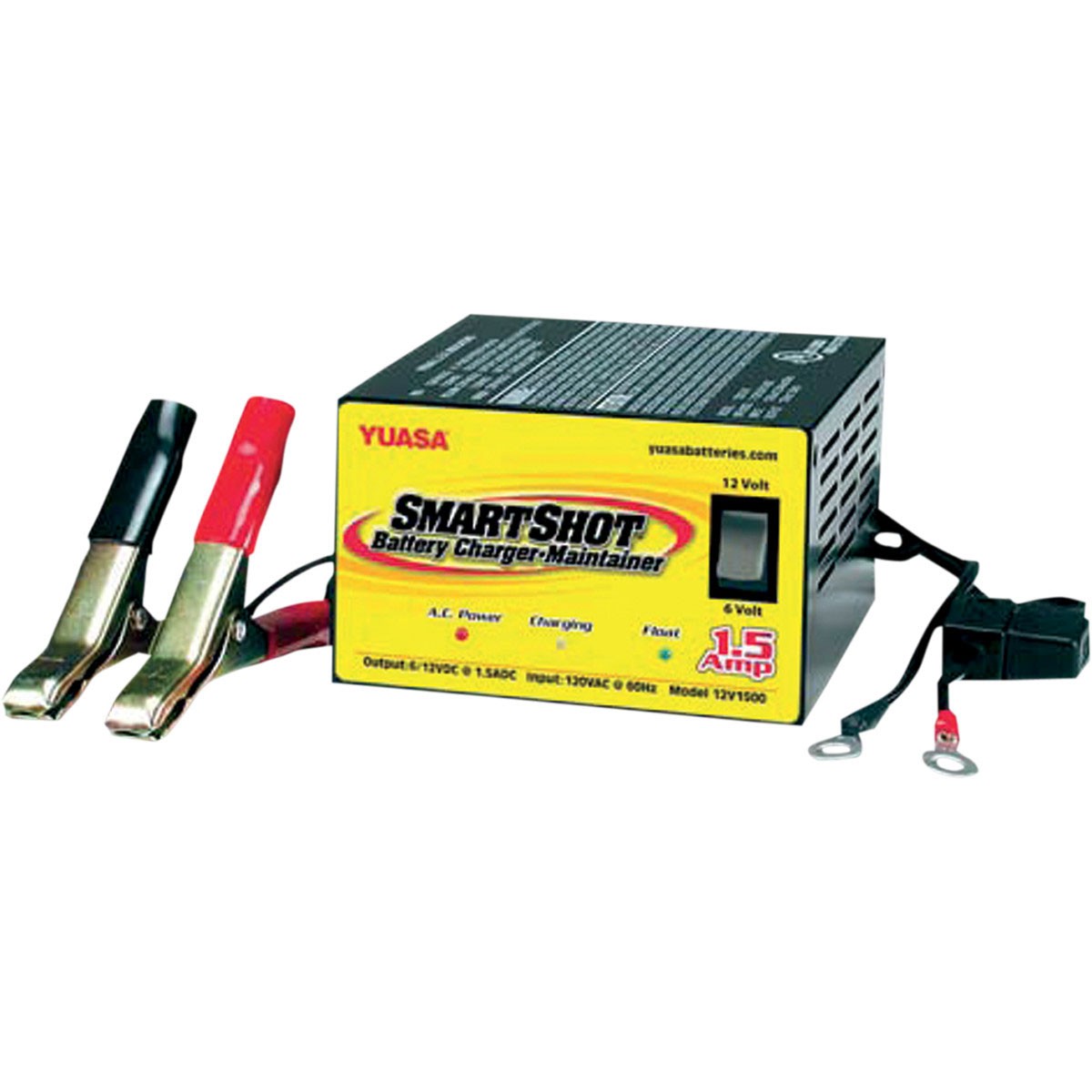
I keep my bike/battery on one of these when not riding:

Extreme HDF Member
Joined: Feb 2015
Posts: 10,907
Likes: 8,758
From: Galt's Gulch - MI
My experiences with the HD/Deka batteries has not been exactly exemplary either. Even keeping them on a Battery Tender religiously, 2 - 3 years max; my rather new Deka started giving hard starts on the last couple rides of this past season; charging system and battery voltage checked out but put the battery under starting load in colder temperatures and no bueno.
I've always had such great luck with Yuasa batteries in my sport bikes this time I ordered a GYZ20HL. Also upgraded the battery cables to Terry Components 4 gauge wiring; the OEM is 6 gauge.
$86.95, you can't beat that price anywhere http://www.phatperformanceparts.com/.../yuasa-gyz.htm
I've always had such great luck with Yuasa batteries in my sport bikes this time I ordered a GYZ20HL. Also upgraded the battery cables to Terry Components 4 gauge wiring; the OEM is 6 gauge.
$86.95, you can't beat that price anywhere
http://www.phatperformanceparts.com/.../yuasa-gyz.htm

Road Master


Joined: Dec 2016
Posts: 1,051
Likes: 399
From: Bournemouth United Kingdom
I too work in the marine sector and highly rate Yuasa Batteries (as does HKMark23 above.) Calcium enriched ones are best. Calcium is used to strengthen the lead plates. The main advantages of a calcium battery are longer shelf life as they self discharge very slowly, (probably better for your scenario?) they are more resistant to vibrations, higher cold cranking amp ratings, less prone to sulphating. They are of course also more expensive.
A battery should last you ballpark 4-5 years minimum. Stating the obvious a battery conditioner such as the Harley-Davidson branded ones which are not much larger than a computer mouse or an Optimate would be ideal. I have used both and exceeded the 4-5 year term several times in the past.
A point to note perhaps is that with a V-Twin the battery takes a bit of a beasting cranking the engine over, general rule of thumb is to replace what you have taken out of the battery the bike should be ridden at least 7 miles to replenish it. Probably easy to do in the USA but on British roads it can be a difficulty without stop starting. Hope this helps!
A battery should last you ballpark 4-5 years minimum. Stating the obvious a battery conditioner such as the Harley-Davidson branded ones which are not much larger than a computer mouse or an Optimate would be ideal. I have used both and exceeded the 4-5 year term several times in the past.
A point to note perhaps is that with a V-Twin the battery takes a bit of a beasting cranking the engine over, general rule of thumb is to replace what you have taken out of the battery the bike should be ridden at least 7 miles to replenish it. Probably easy to do in the USA but on British roads it can be a difficulty without stop starting. Hope this helps!
Last edited by K9F; Jan 8, 2017 at 09:21 AM.

Outstanding HDF Member
Joined: Sep 2014
Posts: 2,717
Likes: 273
From: Minnesota
I'll be replacing the battery on my 2009 FXD this spring (2017), it's the original factory battery. I only charge it once each spring before I'm ready to ride.
So battery life is a roll of the dice,
I will not get an HD battery
Sometimes getting a couple bucks back on the card when spending $100 or better isn't exactly the best thing to do. Did you ever consider that it's a gimmick in place to get you to actually spend more money?
Get a different cash-back card,, one you can use everyplace and earn cash back with every purchase,, not just select locations/stores.
So battery life is a roll of the dice,
I will not get an HD battery
Sometimes getting a couple bucks back on the card when spending $100 or better isn't exactly the best thing to do. Did you ever consider that it's a gimmick in place to get you to actually spend more money?
Get a different cash-back card,, one you can use everyplace and earn cash back with every purchase,, not just select locations/stores.
Trending Topics
Seasoned HDF Member


Joined: Jan 2015
Posts: 15,997
Likes: 7,111
From: Sandy Eggo's North County
I always buy my batteries at the H-D dealer due to my VISA card reward points. However, the number I've had to buy over the past 11 years is crazy. Granted I don't ride much (13K miles over those 11 years) and I do not use a battery tender, but replacing the battery every 2 years or so is way too often. I have an old 1982 Kawasaki that I treat about the same and the Yuasa I have in there is over 6 years old. I realize the H-D may have some electronic draw that the old Kaw doesn't have, but the difference in longevity is ridiculous. Any of you all have similar experiences or do I need to hook up that tender?
Really. The more you "work" a battery, the longer it'll last. Don't ride much? You'll be in for a battery every 9 months. Don't ride at all? Then it doesn't matter. Short trips do a battery no good.
You gotta ride past Cook's Corner and Santiago Cyn to get a decent charge put back into your battery!
Get a tender, it will help.
HD Forum Stories
The Best of Harley-Davidson for Lifelong Riders

7 Surprising Harley-Davidson Products that Are Not Motorcycles
Verdad Gallardo
8 Best Harley-Davidson Motorcycles Ever
Pouria Savadkouei
10 Worst Harley-Davidson Motorcycles Ever
Pouria Savadkouei
Killer Custom's Jail Break Is The Breakout That Refused to Blend In
Verdad Gallardo
Crazy Bunderbike Build Looks Amazing, But Is It Impossible to Ride?
Verdad Gallardo
Harley-Davidson Reveals Super Cool Cafe Racer Concept
Verdad Gallardo
Engraved Rebellion: Inside Bundnerbike's Glam Rock II
Verdad Gallardo
10 Motorcycles You Should Never Buy
Joe Kucinski
10 Things Harley-Davidson Needs to Fix in 2026
Verdad Gallardo
Seasoned HDF Member

Joined: May 2012
Posts: 32,934
Likes: 36,031
From: Carlsbad, CA
You're in the OC! What you need to do is ride your bike more!
Really. The more you "work" a battery, the longer it'll last. Don't ride much? You'll be in for a battery every 9 months. Don't ride at all? Then it doesn't matter. Short trips do a battery no good.
You gotta ride past Cook's Corner and Santiago Cyn to get a decent charge put back into your battery!
Get a tender, it will help.
Really. The more you "work" a battery, the longer it'll last. Don't ride much? You'll be in for a battery every 9 months. Don't ride at all? Then it doesn't matter. Short trips do a battery no good.
You gotta ride past Cook's Corner and Santiago Cyn to get a decent charge put back into your battery!
Get a tender, it will help.


Ultimate HDF Member
Joined: Apr 2012
Posts: 8,680
Likes: 2,279
From: South Carolina
Battery tender is mandatory. But I'll agree, I've never seen a motorcycle battery last as long (in calendar months) as any of my car/truck batteries. It is basically related to the mass of the battery.
From an engineering perspective I'd say that the life of a battery is directly proportional to the number charge discharge cycles. Smaller batteries discharge faster and thus need to be recharged more often. Charging systems on motorcycles are not as sophisticated as on your typical F150 for obvious reasons.
From an engineering perspective I'd say that the life of a battery is directly proportional to the number charge discharge cycles. Smaller batteries discharge faster and thus need to be recharged more often. Charging systems on motorcycles are not as sophisticated as on your typical F150 for obvious reasons.