



Kill Switch Vs Ignition Switch

Outstanding HDF Member
Joined: Nov 2005
Posts: 3,030
Likes: 177
From: Tipp City, Ohio
 RE: Kill Switch Vs Ignition Switch
I always turn off the bike with the ignition switch first then turn off the kill switch. The book does say the opposite but doesn't say it is bad for the bike, to use ignition switch first. As for the clutch when starting I always disengage cause I don't trust lights. Hell, I still don't trust the Jiffy stand all that much.

Cruiser
Joined: Mar 2006
Posts: 110
Likes: 3
From:
RE: Kill Switch Vs Ignition Switch
In the owners manual of most European bikes and some Jap bikes is says to never use the kill switch. Why... because since the invention of electronic ignitions the CDI box can be damaged if you leave the ignition switch on for too long. Even though you would turn it off promtly, there is still high voltage going to the CDI box. Similar damage can result from allowing the bike to run on only one of the two cylinders on my BMW twin, because the spark plug is often removed when tuning and the CDI box is overloaded since there is no "ground". It did not matter with points type ignition as the voltage was lower. This is all aside from saftey / habit issues. Unless things have changed and the previous post about warning lights coming on is true then I would never risk "burning" the CDI / iginition box. so use the key, (just like in ya car).
Graham.
06 dyna
Graham.
06 dyna

Outstanding HDF Member
Joined: Feb 2006
Posts: 2,958
Likes: 1
From: West Tennessee
RE: Kill Switch Vs Ignition Switch
squeech...No one is talking about leaving the key on, it would leave the ignition and all the lights on. The question is whether or not to use the killswitch to kill the engine before turning off the ignition. If I understand your post correctly.
At any rate, the voltage should never be any higher than 14-15VDC max until you get to the ignition coil. Don't know what you mean by "high voltage".
At any rate, the voltage should never be any higher than 14-15VDC max until you get to the ignition coil. Don't know what you mean by "high voltage".
Cruiser
Joined: Mar 2006
Posts: 110
Likes: 3
From:
RE: Kill Switch Vs Ignition Switch
G'day Craig C,
sorry to confuse, I should have written "key" when I said "turn it (key) of promptly. Obviously you turn the key off immediately. It is the few seconds that the kill switch is off and the ignition key is on that is sending voltage to the ignition / CDI that concerns me. If you leave the ignition on with an old "points distributor" and the contacts are just opening an arch flashes across and will "burn the points", and so it is for electronic ignition. You are putting power in one end and not letting it out the other! I stand corrected on the word "high" ..I was thinging about the spark plug voltage and typing at the same time, sorry. But there is still enough voltage to do damage. I always thought that a kill switch was for emergencys ONLY. I notice opinion is divided 50 / 50, but it is interesting to read. A mate who is an automotive electrician said that on "newer bikes" the manufactures have rewired ignition switches so that if your kill switch is OFF but your ignition switch is ON, no power can get through, and you can see if you have this by checking if the warning / idiot lights come on when you do this. Older biker have the warning lights on, even though the kill switch is off and this proves that power is getting to the ignition box / CDI ..... but if the dash warning lights are OUT then the circuit is protected. in which case it really won't matter which you do first! Which is why manufactures did it in the first place, to protect from burning the CDI box. Disconnection a spark plug overload the CDI / ignition and does similar damage, that's why I mentioned it.
Graham.
sorry to confuse, I should have written "key" when I said "turn it (key) of promptly. Obviously you turn the key off immediately. It is the few seconds that the kill switch is off and the ignition key is on that is sending voltage to the ignition / CDI that concerns me. If you leave the ignition on with an old "points distributor" and the contacts are just opening an arch flashes across and will "burn the points", and so it is for electronic ignition. You are putting power in one end and not letting it out the other! I stand corrected on the word "high" ..I was thinging about the spark plug voltage and typing at the same time, sorry. But there is still enough voltage to do damage. I always thought that a kill switch was for emergencys ONLY. I notice opinion is divided 50 / 50, but it is interesting to read. A mate who is an automotive electrician said that on "newer bikes" the manufactures have rewired ignition switches so that if your kill switch is OFF but your ignition switch is ON, no power can get through, and you can see if you have this by checking if the warning / idiot lights come on when you do this. Older biker have the warning lights on, even though the kill switch is off and this proves that power is getting to the ignition box / CDI ..... but if the dash warning lights are OUT then the circuit is protected. in which case it really won't matter which you do first! Which is why manufactures did it in the first place, to protect from burning the CDI box. Disconnection a spark plug overload the CDI / ignition and does similar damage, that's why I mentioned it.
Graham.

Cruiser
Joined: Oct 2005
Posts: 223
Likes: 0
From: BC, Canada
RE: Kill Switch Vs Ignition Switch
ORIGINAL: CraigC
squeech...No one is talking about leaving the key on, it would leave the ignition and all the lights on. The question is whether or not to use the killswitch to kill the engine before turning off the ignition. If I understand your post correctly.
At any rate, the voltage should never be any higher than 14-15VDC max until you get to the ignition coil. Don't know what you mean by "high voltage".
squeech...No one is talking about leaving the key on, it would leave the ignition and all the lights on. The question is whether or not to use the killswitch to kill the engine before turning off the ignition. If I understand your post correctly.
At any rate, the voltage should never be any higher than 14-15VDC max until you get to the ignition coil. Don't know what you mean by "high voltage".
Its not the voltage you worry about its the amperage that is across the points of the switch when opening the switch you have an arc crossing it and it depends on how many amps(load) is used it will eventually burn out

Road Captain
Joined: Nov 2005
Posts: 593
Likes: 0
From: Central IL
RE: Kill Switch Vs Ignition Switch
I have an 01 wide glide. My manual seems to contradict itself-
Engine Stop Switch
The engine stop/run switch turns the ignition ON or OFF, and should be used at all times to stop the engine, especially in an emergency.
1. To stop engine, push the Engine Stop/Run Switch to position marked OFF.
2. Turn the ignition key to the OFF position.
Starting the Engine
1. Turn the fuel valve to the ON position.
2. BE SURE THROTTLE IS CLOSED.
3. Pull enrichener **** to full out position.
4. Turn the ignition switch ON and press the starter switch to operate the electric starter.
There is no mention of the Stop/Run switch in the starting directions. Hmmmmmm.
Engine Stop Switch
The engine stop/run switch turns the ignition ON or OFF, and should be used at all times to stop the engine, especially in an emergency.
1. To stop engine, push the Engine Stop/Run Switch to position marked OFF.
2. Turn the ignition key to the OFF position.
Starting the Engine
1. Turn the fuel valve to the ON position.
2. BE SURE THROTTLE IS CLOSED.
3. Pull enrichener **** to full out position.
4. Turn the ignition switch ON and press the starter switch to operate the electric starter.
There is no mention of the Stop/Run switch in the starting directions. Hmmmmmm.
HD Forum Stories
The Best of Harley-Davidson for Lifelong Riders
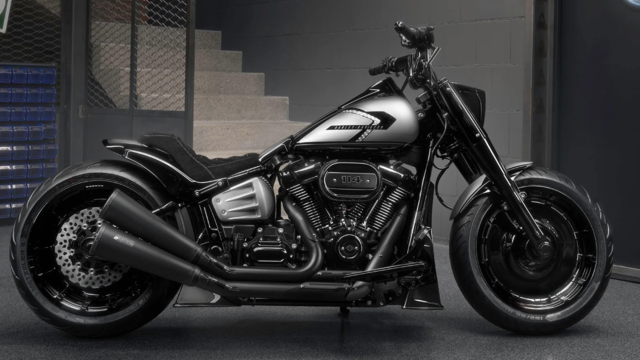
Harley-Davidson Fat Boy Becomes a Dark, Decepticon-Inspired Custom
Verdad Gallardo
6 Weirdest Harley-Davidsons Ever Sold to the Public
Verdad Gallardo
7 Times Harley-Davidson Chucked Tradition Out the Window
Verdad Gallardo
7 Surprising Harley-Davidson Products that Are Not Motorcycles
Verdad Gallardo
8 Best Harley-Davidson Motorcycles Ever
Pouria Savadkouei
10 Worst Harley-Davidson Motorcycles Ever
Pouria Savadkouei
Killer Custom's Jail Break Is The Breakout That Refused to Blend In
Verdad Gallardo
Crazy Bunderbike Build Looks Amazing, But Is It Impossible to Ride?
Verdad Gallardo
Harley-Davidson Reveals Super Cool Cafe Racer Concept
Verdad Gallardo
Outstanding HDF Member
Joined: Feb 2006
Posts: 2,958
Likes: 1
From: West Tennessee
RE: Kill Switch Vs Ignition Switch
ORIGINAL: electricuter
Its not the voltage you worry about its the amperage that is across the points of the switch when opening the switch you have an arc crossing it and it depends on how many amps(load) is used it will eventually burn out
ORIGINAL: CraigC
squeech...No one is talking about leaving the key on, it would leave the ignition and all the lights on. The question is whether or not to use the killswitch to kill the engine before turning off the ignition. If I understand your post correctly.
At any rate, the voltage should never be any higher than 14-15VDC max until you get to the ignition coil. Don't know what you mean by "high voltage".
squeech...No one is talking about leaving the key on, it would leave the ignition and all the lights on. The question is whether or not to use the killswitch to kill the engine before turning off the ignition. If I understand your post correctly.
At any rate, the voltage should never be any higher than 14-15VDC max until you get to the ignition coil. Don't know what you mean by "high voltage".
Its not the voltage you worry about its the amperage that is across the points of the switch when opening the switch you have an arc crossing it and it depends on how many amps(load) is used it will eventually burn out