




Break noise

Thread Starter
|
Novice
Joined: May 2010
Posts: 17
Likes: 0
From: Gaffney SC
 Break noise
Please help I just changed the rear breaks on my 94 Dyna fxds and now there is a squeaking noise ever so often can tap the breaks and it stops for a little while but starts back. I have bleed the breaks and still nothing so info that will lead me in the right direction will help thanks
Outstanding HDF Member
Joined: Jul 2010
Posts: 2,427
Likes: 2
From: Smack Dab in the Middle of Louisiana
Did you de-glaze the rotor? did you use any of the disc-brake quite stuff?
Break squeal usually comes from vibration of the pads ever so slightly vibrating on the rotor. Or hard spots on the rotor.
[Think of those old Victrola record players (78's) the rotor acts like the mega horn on the player]
Break squeal usually comes from vibration of the pads ever so slightly vibrating on the rotor. Or hard spots on the rotor.
[Think of those old Victrola record players (78's) the rotor acts like the mega horn on the player]
Outstanding HDF Member
Joined: Jul 2010
Posts: 2,427
Likes: 2
From: Smack Dab in the Middle of Louisiana
Rotors are of a certain material and when pressure from the brake pad is applied and heat from the pads is transferred to the rotor it starts a metabolic
change to the rotor material (this is called an annealing process). In other words it breaks down the hydrogen and covalent bonds of that material (Molecules).
OK~OK the rotor gets Hot (Hard) spots on it from all the stuff I said in the previous statement.
When I was still working as a technician we used to put some 80 grit discs on our drills and swirl the shinny of the face of the rotors where the pads ride. This is what is known as de-glazing the rotor. You only have to scuff them, not grind them.
Another way it used to be done is by using Clover Brand Valve lapping compound (it is water based, and not oil based) smear some on the rotor and go hit the brakes pretty and it will remove the glaze. I do not really suggest this last method unless you are familiar with doing it. I was shown this method from and Ole Biker back when disc's first came out.
change to the rotor material (this is called an annealing process). In other words it breaks down the hydrogen and covalent bonds of that material (Molecules).
OK~OK the rotor gets Hot (Hard) spots on it from all the stuff I said in the previous statement.
When I was still working as a technician we used to put some 80 grit discs on our drills and swirl the shinny of the face of the rotors where the pads ride. This is what is known as de-glazing the rotor. You only have to scuff them, not grind them.
Another way it used to be done is by using Clover Brand Valve lapping compound (it is water based, and not oil based) smear some on the rotor and go hit the brakes pretty and it will remove the glaze. I do not really suggest this last method unless you are familiar with doing it. I was shown this method from and Ole Biker back when disc's first came out.
Last edited by SteveO-ll; Jul 28, 2010 at 10:06 PM. Reason: <sp>

Banned
Joined: Mar 2010
Posts: 5,403
Likes: 7
From: Southwest Florida
Many brake pads come 'chamfered' from the manufacturer in order to help eliminate squealing and promote break-in. Some don't.
But if your brakes weren't squealing before, you gotta ask, "What's changed?" In your case, it sounds like just the brake pads.
If you installed them correctly and they're squealing, it might be they're lacking that chamfer. But I'm old school and things may have changed. If all it is, is that missing chamfer, then just drive it. It should go away. Or not.
Sometimes, people will do what's called a brake 'burn in' or 'burnishing' for new brake pads. I'm not a fan but the idea is to get the bike up to a decent speed (no, not Warp 1) then evenly and firmly apply the brakes until the bike comes to an almost complete stop. Do this ten or twenty times and it might help. For God's sake don't kill yourself doing this. We're not talking panic stops here, just firm even pressure without bringing the bike to a complete stop.
Like I said, not a big fan unless you've done it before and know what to expect.
If not then you may want to remove the pads and apply some anti-squeal (paste or spray or even the pads) between the brake pads and the caliper if that's not a no-no. Don't see why it would be.
But if your brakes weren't squealing before, you gotta ask, "What's changed?" In your case, it sounds like just the brake pads.
If you installed them correctly and they're squealing, it might be they're lacking that chamfer. But I'm old school and things may have changed. If all it is, is that missing chamfer, then just drive it. It should go away. Or not.
Sometimes, people will do what's called a brake 'burn in' or 'burnishing' for new brake pads. I'm not a fan but the idea is to get the bike up to a decent speed (no, not Warp 1) then evenly and firmly apply the brakes until the bike comes to an almost complete stop. Do this ten or twenty times and it might help. For God's sake don't kill yourself doing this. We're not talking panic stops here, just firm even pressure without bringing the bike to a complete stop.
Like I said, not a big fan unless you've done it before and know what to expect.
If not then you may want to remove the pads and apply some anti-squeal (paste or spray or even the pads) between the brake pads and the caliper if that's not a no-no. Don't see why it would be.
Trending Topics
i do a break in on all new pads, 10mph stop, 15 mph stop up to 55... the pads are new so i am guessing it is not dust, did you use some high temp pad greese behind them before installing? i ALWAYS grease pads first... always
HD Forum Stories
The Best of Harley-Davidson for Lifelong Riders

7 Surprising Harley-Davidson Products that Are Not Motorcycles
Verdad Gallardo
8 Best Harley-Davidson Motorcycles Ever
Pouria Savadkouei
10 Worst Harley-Davidson Motorcycles Ever
Pouria Savadkouei
Killer Custom's Jail Break Is The Breakout That Refused to Blend In
Verdad Gallardo
Crazy Bunderbike Build Looks Amazing, But Is It Impossible to Ride?
Verdad Gallardo
Harley-Davidson Reveals Super Cool Cafe Racer Concept
Verdad Gallardo
Engraved Rebellion: Inside Bundnerbike's Glam Rock II
Verdad Gallardo
10 Motorcycles You Should Never Buy
Joe Kucinski
10 Things Harley-Davidson Needs to Fix in 2026
Verdad Gallardo

Banned
Joined: Mar 2010
Posts: 5,403
Likes: 7
From: Southwest Florida
Sometimes, I buy stuff because of value so I get the bigger can. Then I go back to re-use it a year or more later and it's turned into a rock. Learned my lesson. Sort of. If you're always working on stuff, its okay. But the DIYer usually isn't so it just goes to waste.
This stuff is three or four dollars at your local parts store--
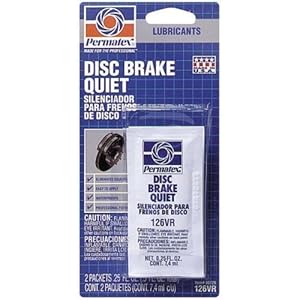
Stops brake squeal by dampening vibration at caliper/brake pad interface. Provides tighter fit and allows for easier disassembly. Protects against corrosion. Compatible with anti-lock brake systems. This product contains an elastomeric polymer for use with brake pads not having anti-squeal shims.