





Work Around for Dog Bones

Thread Starter
|
Advanced
Joined: Dec 2014
Posts: 73
Likes: 0
From: North Carolina
 Work Around for Dog Bones
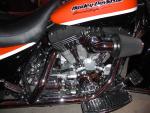
Long story short... I have a mechanically inclined family member visiting for a few days and I figured it is a good opportunity to fix my rocker box leak. The service manual mentions the use of dog bones and I was wondering if there is a work around for this. I cant find them at the local tool stores and I doubt they will arrive in time if I get them shipped.
Have any of the wrench veterans out there found a way around using dog bones while still getting the proper torque specs?
Any input would be greatly appreciated.
Have any of the wrench veterans out there found a way around using dog bones while still getting the proper torque specs?
Any input would be greatly appreciated.
Long story short... I have a mechanically inclined family member visiting for a few days and I figured it is a good opportunity to fix my rocker box leak. The service manual mentions the use of dog bones and I was wondering if there is a work around for this. I cant find them at the local tool stores and I doubt they will arrive in time if I get them shipped.
Have any of the wrench veterans out there found a way around using dog bones while still getting the proper torque specs?
Any input would be greatly appreciated.
Have any of the wrench veterans out there found a way around using dog bones while still getting the proper torque specs?
Any input would be greatly appreciated.
Last edited by Ed Ramberger; May 12, 2015 at 09:37 PM.

HDF Community Team


Joined: Jun 2006
Posts: 12,774
Likes: 2,606
From: san antonio

Torque on the rocker boxes is not critical. I have done it by "feel" for years. Torque the fastener you can reach with a torque wrench then put a box end wrench on a torqued fastener and "feel" how tight it is. Move to a fastener that cannot be tightened with a torque wrench and slip the box end wrench on that fastener and tighten to the same "feel" as the torqued fastener. That's my work around for dog bones.
Thread Starter
|
Advanced
Joined: Dec 2014
Posts: 73
Likes: 0
From: North Carolina
Hi Nick, Did you try NAPA, Harbor freight and the like. They're also known as Torque Adapters and Torque wrench extensions. They will be needed for the rear head where the frame will hit the wrench when you are trying to torque them. I have seen them in the generic tool sections of many stores.
Thread Starter
|
Advanced
Joined: Dec 2014
Posts: 73
Likes: 0
From: North Carolina
Torque on the rocker boxes is not critical. I have done it by "feel" for years. Torque the fastener you can reach with a torque wrench then put a box end wrench on a torqued fastener and "feel" how tight it is. Move to a fastener that cannot be tightened with a torque wrench and slip the box end wrench on that fastener and tighten to the same "feel" as the torqued fastener. That's my work around for dog bones.
just checked out napa's online store. they have them for individual sale for one of the best prices I have found... just over 13 bucks. I called and checked with Harbor Freight and they didnt have any. Thanks for the advice. I would have never found them on napa cause they didnt show up on the google search for some reason.
HDF Community Team
Joined: Jun 2006
Posts: 12,774
Likes: 2,606
From: san antonio
Thats exactly what my older mechanic buddy back in Florida told me (not saying you are old or anything lol). He has been building harley engines for years that put out some serious power without a torque wrench with no issues. I think what I am going to do is wait until my old man gets down here so he can get eyes on on what i am working with. Looking through the service manual and seeing all these snap on and hd specialty tools gets scary when you pull them up on google for the price check.
I had assumed that your leak was at the rocker box cover; however, if the leak is between the rocker box and the cylinder head, you will have to remove the rocker support plate to remove the rocker box and replace the gasket. If the bike is a '11 or later model, you won't have any issues removing the rocker support plate, breather, etc. However, if the bike is an earlier model, you will swear that that the rear rocker support plate cannot be removed as it is a tight fit between the cylinder head and the frame. As Ed says, it will only come out the right side and the bolts he referenced will be removed with the plate. The fix for that that will make the installation and future R/R as easy as the front is to replace the early breathers with the stamped breather that was introduced in the '11 models; some later '10 models had the new breather as well. PN26500002, much thinner with shorter bolts and a more efficient breather; a $6 part and worth every penny the next time you have to R/R the rear rocker box.
Trending Topics
Thread Starter
|
Advanced
Joined: Dec 2014
Posts: 73
Likes: 0
From: North Carolina
Well, I am an "old" guy and have built a few Harley motors myself all without any of the HD specialty tools; however, I do still use a torque wrench for certain fasteners.
I had assumed that your leak was at the rocker box cover; however, if the leak is between the rocker box and the cylinder head, you will have to remove the rocker support plate to remove the rocker box and replace the gasket. If the bike is a '11 or later model, you won't have any issues removing the rocker support plate, breather, etc. However, if the bike is an earlier model, you will swear that that the rear rocker support plate cannot be removed as it is a tight fit between the cylinder head and the frame. As Ed says, it will only come out the right side and the bolts he referenced will be removed with the plate. The fix for that that will make the installation and future R/R as easy as the front is to replace the early breathers with the stamped breather that was introduced in the '11 models; some later '10 models had the new breather as well. PN26500002, much thinner with shorter bolts and a more efficient breather; a $6 part and worth every penny the next time you have to R/R the rear rocker box.
I had assumed that your leak was at the rocker box cover; however, if the leak is between the rocker box and the cylinder head, you will have to remove the rocker support plate to remove the rocker box and replace the gasket. If the bike is a '11 or later model, you won't have any issues removing the rocker support plate, breather, etc. However, if the bike is an earlier model, you will swear that that the rear rocker support plate cannot be removed as it is a tight fit between the cylinder head and the frame. As Ed says, it will only come out the right side and the bolts he referenced will be removed with the plate. The fix for that that will make the installation and future R/R as easy as the front is to replace the early breathers with the stamped breather that was introduced in the '11 models; some later '10 models had the new breather as well. PN26500002, much thinner with shorter bolts and a more efficient breather; a $6 part and worth every penny the next time you have to R/R the rear rocker box.
Last edited by Nick412; May 14, 2015 at 08:46 PM.
HD Forum Stories
The Best of Harley-Davidson for Lifelong Riders

7 Surprising Harley-Davidson Products that Are Not Motorcycles
Verdad Gallardo
8 Best Harley-Davidson Motorcycles Ever
Pouria Savadkouei
10 Worst Harley-Davidson Motorcycles Ever
Pouria Savadkouei
Killer Custom's Jail Break Is The Breakout That Refused to Blend In
Verdad Gallardo
Crazy Bunderbike Build Looks Amazing, But Is It Impossible to Ride?
Verdad Gallardo
Harley-Davidson Reveals Super Cool Cafe Racer Concept
Verdad Gallardo
Engraved Rebellion: Inside Bundnerbike's Glam Rock II
Verdad Gallardo
10 Motorcycles You Should Never Buy
Joe Kucinski
10 Things Harley-Davidson Needs to Fix in 2026
Verdad Gallardo
Nick, there are three styles of breather assemblies used in the Twin Cam.
In the early years they were cast aluminum housings that had replaceable gaskets and umbrella valves. These were great but cost $$ in manufacturing.
HD then went to a plastic breather (I think it might have been 2002) that was dimensionally the same as the metal ones, but was one piece. The problem is that there were no metal collars where the bolts clamped them down and soon after assembly these lost clamp load because the plastic yielded. High oil carryover was often a result. For a short while, they reinstated the metal assemblies (might have been an SE part)
Then they went to the newest assemblies that are a stamped metal and work well like the originals but are much less cost in manufacturing. The newest ones require shorter bolts than the first two variations. If you have the cast aluminum ones, your gasket set might have everything you need. If not, or if you have the plastic ones, you will need to update to the newest ones and get 4 of the shorter bolts.
In the early years they were cast aluminum housings that had replaceable gaskets and umbrella valves. These were great but cost $$ in manufacturing.
HD then went to a plastic breather (I think it might have been 2002) that was dimensionally the same as the metal ones, but was one piece. The problem is that there were no metal collars where the bolts clamped them down and soon after assembly these lost clamp load because the plastic yielded. High oil carryover was often a result. For a short while, they reinstated the metal assemblies (might have been an SE part)
Then they went to the newest assemblies that are a stamped metal and work well like the originals but are much less cost in manufacturing. The newest ones require shorter bolts than the first two variations. If you have the cast aluminum ones, your gasket set might have everything you need. If not, or if you have the plastic ones, you will need to update to the newest ones and get 4 of the shorter bolts.
Thread Starter
|
Advanced
Joined: Dec 2014
Posts: 73
Likes: 0
From: North Carolina
Thanks for the overview on the breather updates. I completely forgot to mention I'm working on a 2007 night Train. As soon as I get it open I will try and post pics of the breather so you guys can see what model I have. I'm currently researching the upgrade history of the internals, parts inspection, and troubleshooting so this info helps a ton. I am trying to get to the point where I can open her up and accomplish a thorough inspection to avoid ignorant engine damage.