


Why Evo?
Cruiser
Joined: Apr 2010
Posts: 160
Likes: 20

[QUOTE=Lucky Luke;14559890 Of course, the problem with the Japanese is that they keep fiddling with their models and producing new ones every month so they are never supported by the aftermarket to the same extend as Harley's are. But I think the 1500cc Vulcans have pretty much settled into a similar space at Evo Big Twins have; perfectly adequate rides at great bargain prices. I've never owned one but would not be adverse to doing so.[/QUOTE]
I don't know if Harleys much better when it comes to spitting out different models or variations of existing models. I know I can't keep track of them all. Things definitely were much simpler in past decades.
I don't know if Harleys much better when it comes to spitting out different models or variations of existing models. I know I can't keep track of them all. Things definitely were much simpler in past decades.
Last edited by Dr.Lou; Nov 9, 2015 at 08:49 AM.
Outstanding HDF Member
Joined: Jul 2013
Posts: 2,874
Likes: 36
From: Houston, TX
I think the deal with HD is they can have 100 different "styles" on 2 or 3 different frames, with the same engine and transmission. It makes having an aftermarket very easy.
Cruiser
Joined: Apr 2010
Posts: 160
Likes: 20
That's very possible. I am at the stage of my Harley evolution where the only thing I go to a Harley shop for is a t shirt or oil filter. Actually, earlier today I visited the Harley shop here in Hanoi, Vietnam, to grab a couple t shirts.

Banned
Joined: Jun 2015
Posts: 760
Likes: 3
From: NYC
One is a strong concept of "kaizen", a strategy of never-ending small efforts for "improvements" which makes a parts man's life hell because one part will only fit one year's releases.

You can see H-D's 20 year long steps in the second curve.
The other element is a kind of love of novelty or testing out new ideas in the market place. That is to say, they dump a dozen or more new and very different products in the marketplace to see which one catches, and then run with it dropping the others. If, unfortunately, you like a product which was not popular, you'll never see another part for it ever again.
It makes for an interesting and eclectic collection of vintage motorcycles, and some very cheap second hand vehicles, but not a very fecund aftermarket.
I like H-D's Soviet era "uni-wagon" approach to perfectly adequate transportation. It's very rational and it's allowed a rich aftermarket. All it really needed/needs was to be engineered to slightly higher standards, a standard equal to its paint jobs --- but that's the accountants' and management's fault, and not the workers or engineers.
Or something ...
Cruiser
Joined: Jul 2015
Posts: 209
Likes: 8
From: Northern Wisconsin
Harleys from the same era still have some limited dealer support, very rich aftermarket support, and most of them still on the road and being ridden.
I'm going to say that Harley-Davidson's strategy was ultimately more successful.
Dirt don't hurt


Joined: Jan 2011
Posts: 21,066
Likes: 4,568
From: Haslet Texas
They were brought down by the accountants IMO.
HD Forum Stories
The Best of Harley-Davidson for Lifelong Riders

Jason Momoa Is Turning Classic Harleys Into PHEVs
Verdad Gallardo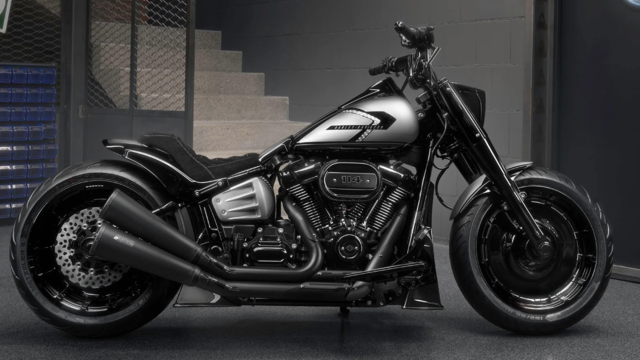
Harley-Davidson Fat Boy Becomes a Dark, Decepticon-Inspired Custom
Verdad Gallardo
6 Weirdest Harley-Davidsons Ever Sold to the Public
Verdad Gallardo
7 Times Harley-Davidson Chucked Tradition Out the Window
Verdad Gallardo
7 Surprising Harley-Davidson Products that Are Not Motorcycles
Verdad Gallardo
8 Best Harley-Davidson Motorcycles Ever
Pouria Savadkouei
10 Worst Harley-Davidson Motorcycles Ever
Pouria Savadkouei
Killer Custom's Jail Break Is The Breakout That Refused to Blend In
Verdad Gallardo
Crazy Bunderbike Build Looks Amazing, But Is It Impossible to Ride?
Verdad Gallardo
Cruiser
Joined: Apr 2010
Posts: 160
Likes: 20
Accountants are good at that. They have nothing better to do. :-)
Last edited by Dr.Lou; Nov 9, 2015 at 10:40 PM.
Banned
Joined: Jun 2015
Posts: 760
Likes: 3
From: NYC
I suppose the Japanese/Asian equivalent of the H-D, in terms of both utilitarian transport and customization would a 125cc 4-cycle single, or even a Cub. Over 60 million units shipped, and is still in production today.
I'm not dissing it but H-D itself controls a narrow niche in a fairly narrow socio-economic band, and it's pretty much US only. I appreciate it, I like the concept of sticking with one thing that is perfectly adequate and working, but I think we need a better definition, something like the "most sustainable engineering eco-system" (for big people with big roads). You couldn't run an H-D on half the road the Cubs manage (nor carry the usual 5 passengers and a couple of chickens).
These are the real dangers to its continued existence though, demographics and economic tendencies --

Would the market have have consumed a non-pushrod engine like the X Wedge? Belt driven OHC, 3 or 4 valves per head? Water cooled top end? Nova?
Like them or not, Victory did resolve a lot of technical legacy problems in the engine design but that would have broken more of inter-exchangeability.
From an EPA point of view, what was/is the real problem with the Evo engine?
Last edited by Lucky Luke; Nov 9, 2015 at 11:13 PM.