


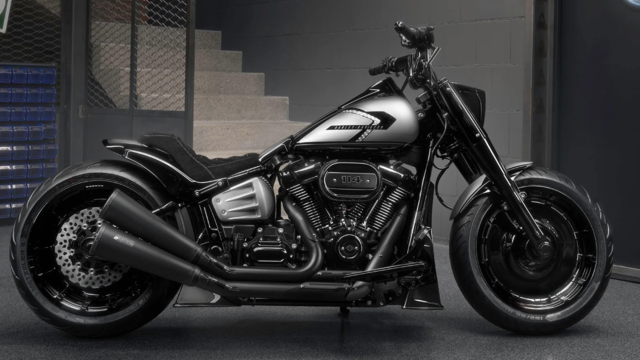
Torque, torque, torque. Bla-bla-bla.

Cruiser
Joined: Aug 2009
Posts: 161
Likes: 0
From: central CT

Do the math yourself boy. If hp = tq * rpm/5252 then HP is calculated based on rotations per min multiplied by force. IT IS WORK PERFORMED OVER TIME.
You honestly think my 2hp 30,000rpm nitro R/C car out muscle even my 1/2 hp garage door opener? That HP rating is ONLY due to the fact that it can perform so much work within 1 min time... 30,000rpm is allot of work being performed.
I was giving you the benefit of a doubt by responding to your post. Trying to help YOU out here. But I guess the others were right and you are just a troll. There is no way you can believe your own argument.

Banned
Joined: Mar 2007
Posts: 3,706
Likes: 7
From: Woodstock, Ont , Can
For people who like to talk about torque instead of HP I would like to say that if you remove one spark plug wire and run engine on one cylinder torgue will be the same as with 2 cylinders.
it should help to understand that torque means nothing.
Power (hp)=torque(lbf.ft) x 2Pi x RPM/33000=Torque x RPM/5255
it should help to understand that torque means nothing.
Power (hp)=torque(lbf.ft) x 2Pi x RPM/33000=Torque x RPM/5255
Ron
Here is something to read about TQ vs HP:
Torque vs. Horsepower
If you've been around motorized vehicles for any length of time, you have probably been exposed to the great torque vs. power debate at some point. If not, it goes like this:
"Torque is what makes a bike accelerate, not power."
"Wrong."
Torque and power are inescapably linked by the fact that horsepower equals torque (in ft-pounds) times RPM divided by 5250, so people who talk as if they are independent are full of it. If you have a given torque curve for an engine, you have the horsepower curve also. Knowing how these two numbers work with each other lets you can poke through some of the BS you might read.
First, as usual, a few definitions.
Torque is a twisting force applied to an object, like a wheel or a crankshaft. Note that motion is not required for torque to exist! If you stand on a lug wrench that is on a frozen lug bolt, you are applying a torque to that bolt even though there may be no movement. For our purposes, we will consider that torque is measured in pounds-force feet (lbf-ft) meaning the equivalent of a given force, in pounds, acting on the end of a lever of length in feet. For example, standing with 180 pounds body weight on a lug wrench one foot long yields 180 lbf-ft of torque. A child of 90 pounds standing on a two-foot lug wrench applies the same torque.
Work is the application of force over a distance. Unfortunately, the units used are the same (pounds times feet) but we write this as ft-lb just to distinguish it. The real difference is that in this case, the "feet" part means feet of movement. If you push on a car with 100 pounds of force and maintain that for 30 feet, you have done 3000 ft-lb of work. An easier example is lifting a weight (in pounds) a given distance (in feet). If you use some sort of mechanical advantage, like a winch, you will do the same amount of work because by halving the effort required, you will have to double the distance through which you apply the force to achive the same objective.
Power is the application of work within a finite time. 550 ft-lb of work in one second is one horsepower.
So, let's first go through the numbers to get from torque to horsepower. Pushing with 87.5 pounds (force) on the end of our 1-foot lug wrench applies a torque of 87.5 lbf-ft. No motion yet, so no work and no power. But now let's say the lug bolt loosens slightly and starts to turn, but that same 87.5 pounds of force is needed to keep the wrench turning. For every revolution of the wrench, you are applying 87.5 pounds of force over a distance of (2 * pi * 1 foot) or 6.28 feet, the circumference of the circle that your hand is making, for a total of 550 ft-lb of work. It's only when this system is actually moving that work is being performed. From here, it's a quick step to say that if you work fast enough to turn that wrench once per second, then you are doing 550 ft-lb of work per second, which means you are applying one horsepower.
By the definitions we can see that HP is directly proportional to torque and RPM. "Directly proportional" means there may be a multiplyer involved, so let's find it using our example numbers, remembering that 1 revolution per second is 60 RPM:
torque * RPM * constant = hp 87.5 lbf-ft * 60 rev/min * X = 1 hp X = 1 / (60 * 87.5) = 1/5250 torque * RPM * 1/5250 = hp hp = (torque * RPM) / 5250 For internal combustion engines, torque is always given at a certain RPM because they can't generate any torque when they aren't moving. Once they are running fast enough to sustain their own operation, the force that they are exerting against a load can be measured, and the speed at which they are turning can be measured, so the torque (and therefore power) numbers become known.
So, if there is such a fixed relationship between torque and power, why do some people say that a certain engine has lots of power, but no torque? Remember that the connection between torque and power is rotational speed. A sportbike motor might generate 150hp at 14,000 RPM but the torque at that RPM is very small; about 53 ft-lbs. In comparison, a large-displacement twin might peak at 100 hp at 7000 RPM. The torque applied at the twin's 7000 rpm, 75 ft-lbs, is greater than the torque applied at the sport bike's 14,000 rpm but the sport bike makes up for it with a lot more engine speed and ends up with more horsepower.
The street, though, complicates things because the sport bike will probably not be ridden at 14,000 RPM. At 5000 RPM, the twin would likely have more power. This is an artificial handicap; the sport bike wasn't meant to be ridden at that speed since it generates its power by sending the RPM part of the equation sky-high. For street riding, the twin is easier to ride, less prone to stalling as you pull away from a light, and you get that satisfying "oomph" when you twist the throttle. But as the RPM increases, the twin runs out of breath and the race bike, although the torque is low and probably getting lower, continues to make more and more power until it hits its peak at 14000.
[Insert dyno charts for comparison showing less torque but more power for sportbikes at high RPM]
Engines are designed for their intended use. Our twins are designed to yield fairly high torque values at low RPM, because this makes them easy to ride in day-to-day life, and Harley-Davidsons have their torque concentrated even lower in the RPM range than BMWs do. Low-end torque is accomplished by several design traits, one being small valves and intake tubes which create high air velocity into the cylinder for good fuel mix at low speed.
Those effects tend to become a restriction at high RPM, which means that engines intended for high RPM end up with larger valves, larger air intakes, smaller cylinders and other things that let them continue to breathe when other engines start to gasp. Race bike engines have fairly small displacement, which limits the torque that can be produced at the crank. They apply that torque at much higher speeds to get high horsepower (and who can argue that those bikes don't accelerate quickly?).
To a lesser extent, BMW varies these techniques for different bikes. The GS series has narrower intake tubes to give a faster intake charge, giving better fuel/air mixing and better torque at low RPM. Since this becomes a bottleneck at higher RPM, the "power" engine in the RS and RT bikes have larger intake tubes. Swapping the GS tubes into an RS or RT is a common retrofit, as it makes the bike torquier at low RPM where most of us ride. Newer technology in cars, like variable valve timing and variable intake tract length, can give motors the best of both worlds by increasing torque at higher RPM without giving it up at low RPM. Incidentally, Honda has variable valve timing on a motorcycle now.
But to get back to the main point, it is power that moves our bikes down the road. Yes, torque provides the pushing force through the drivetrain, but it needs to happen at some given speed, and those two factors define "power."
Why does torque drop after a certain RPM?
Torque starts to decrease because the engine cannot breathe as well. Due to the speed, the cylinder does not fill with air as well. A designer can get around this problem with "tuned intake" which sets up a resonance to pack the cylinder with air, but it only happens at a certain RPM. The next evolution of design is to make a variable system which packs the cylinders with air at all RPM; this is usually called "variable tuned intake runners" or something like that and involves valves which open and close to create a different size for the airbox and manifold.
Why does power continue to increase after torque decreases?
Remember that the power is essentially the product of the RPM and the torque. At first, decrease in torque is small and is not enough to offset the increasing RPM, so the overall product still increases. Eventually the decrease in torque becomes large enough that it outweighs the increase in RPM and we see the power start to drop. Because of this, the power peak will always be after the torque peak.
Torque vs. Horsepower
If you've been around motorized vehicles for any length of time, you have probably been exposed to the great torque vs. power debate at some point. If not, it goes like this:
"Torque is what makes a bike accelerate, not power."
"Wrong."
Torque and power are inescapably linked by the fact that horsepower equals torque (in ft-pounds) times RPM divided by 5250, so people who talk as if they are independent are full of it. If you have a given torque curve for an engine, you have the horsepower curve also. Knowing how these two numbers work with each other lets you can poke through some of the BS you might read.
First, as usual, a few definitions.
Torque is a twisting force applied to an object, like a wheel or a crankshaft. Note that motion is not required for torque to exist! If you stand on a lug wrench that is on a frozen lug bolt, you are applying a torque to that bolt even though there may be no movement. For our purposes, we will consider that torque is measured in pounds-force feet (lbf-ft) meaning the equivalent of a given force, in pounds, acting on the end of a lever of length in feet. For example, standing with 180 pounds body weight on a lug wrench one foot long yields 180 lbf-ft of torque. A child of 90 pounds standing on a two-foot lug wrench applies the same torque.
Work is the application of force over a distance. Unfortunately, the units used are the same (pounds times feet) but we write this as ft-lb just to distinguish it. The real difference is that in this case, the "feet" part means feet of movement. If you push on a car with 100 pounds of force and maintain that for 30 feet, you have done 3000 ft-lb of work. An easier example is lifting a weight (in pounds) a given distance (in feet). If you use some sort of mechanical advantage, like a winch, you will do the same amount of work because by halving the effort required, you will have to double the distance through which you apply the force to achive the same objective.
Power is the application of work within a finite time. 550 ft-lb of work in one second is one horsepower.
So, let's first go through the numbers to get from torque to horsepower. Pushing with 87.5 pounds (force) on the end of our 1-foot lug wrench applies a torque of 87.5 lbf-ft. No motion yet, so no work and no power. But now let's say the lug bolt loosens slightly and starts to turn, but that same 87.5 pounds of force is needed to keep the wrench turning. For every revolution of the wrench, you are applying 87.5 pounds of force over a distance of (2 * pi * 1 foot) or 6.28 feet, the circumference of the circle that your hand is making, for a total of 550 ft-lb of work. It's only when this system is actually moving that work is being performed. From here, it's a quick step to say that if you work fast enough to turn that wrench once per second, then you are doing 550 ft-lb of work per second, which means you are applying one horsepower.
By the definitions we can see that HP is directly proportional to torque and RPM. "Directly proportional" means there may be a multiplyer involved, so let's find it using our example numbers, remembering that 1 revolution per second is 60 RPM:
torque * RPM * constant = hp 87.5 lbf-ft * 60 rev/min * X = 1 hp X = 1 / (60 * 87.5) = 1/5250 torque * RPM * 1/5250 = hp hp = (torque * RPM) / 5250 For internal combustion engines, torque is always given at a certain RPM because they can't generate any torque when they aren't moving. Once they are running fast enough to sustain their own operation, the force that they are exerting against a load can be measured, and the speed at which they are turning can be measured, so the torque (and therefore power) numbers become known.
So, if there is such a fixed relationship between torque and power, why do some people say that a certain engine has lots of power, but no torque? Remember that the connection between torque and power is rotational speed. A sportbike motor might generate 150hp at 14,000 RPM but the torque at that RPM is very small; about 53 ft-lbs. In comparison, a large-displacement twin might peak at 100 hp at 7000 RPM. The torque applied at the twin's 7000 rpm, 75 ft-lbs, is greater than the torque applied at the sport bike's 14,000 rpm but the sport bike makes up for it with a lot more engine speed and ends up with more horsepower.
The street, though, complicates things because the sport bike will probably not be ridden at 14,000 RPM. At 5000 RPM, the twin would likely have more power. This is an artificial handicap; the sport bike wasn't meant to be ridden at that speed since it generates its power by sending the RPM part of the equation sky-high. For street riding, the twin is easier to ride, less prone to stalling as you pull away from a light, and you get that satisfying "oomph" when you twist the throttle. But as the RPM increases, the twin runs out of breath and the race bike, although the torque is low and probably getting lower, continues to make more and more power until it hits its peak at 14000.
[Insert dyno charts for comparison showing less torque but more power for sportbikes at high RPM]
Engines are designed for their intended use. Our twins are designed to yield fairly high torque values at low RPM, because this makes them easy to ride in day-to-day life, and Harley-Davidsons have their torque concentrated even lower in the RPM range than BMWs do. Low-end torque is accomplished by several design traits, one being small valves and intake tubes which create high air velocity into the cylinder for good fuel mix at low speed.
Those effects tend to become a restriction at high RPM, which means that engines intended for high RPM end up with larger valves, larger air intakes, smaller cylinders and other things that let them continue to breathe when other engines start to gasp. Race bike engines have fairly small displacement, which limits the torque that can be produced at the crank. They apply that torque at much higher speeds to get high horsepower (and who can argue that those bikes don't accelerate quickly?).
To a lesser extent, BMW varies these techniques for different bikes. The GS series has narrower intake tubes to give a faster intake charge, giving better fuel/air mixing and better torque at low RPM. Since this becomes a bottleneck at higher RPM, the "power" engine in the RS and RT bikes have larger intake tubes. Swapping the GS tubes into an RS or RT is a common retrofit, as it makes the bike torquier at low RPM where most of us ride. Newer technology in cars, like variable valve timing and variable intake tract length, can give motors the best of both worlds by increasing torque at higher RPM without giving it up at low RPM. Incidentally, Honda has variable valve timing on a motorcycle now.
But to get back to the main point, it is power that moves our bikes down the road. Yes, torque provides the pushing force through the drivetrain, but it needs to happen at some given speed, and those two factors define "power."
Why does torque drop after a certain RPM?
Torque starts to decrease because the engine cannot breathe as well. Due to the speed, the cylinder does not fill with air as well. A designer can get around this problem with "tuned intake" which sets up a resonance to pack the cylinder with air, but it only happens at a certain RPM. The next evolution of design is to make a variable system which packs the cylinders with air at all RPM; this is usually called "variable tuned intake runners" or something like that and involves valves which open and close to create a different size for the airbox and manifold.
Why does power continue to increase after torque decreases?
Remember that the power is essentially the product of the RPM and the torque. At first, decrease in torque is small and is not enough to offset the increasing RPM, so the overall product still increases. Eventually the decrease in torque becomes large enough that it outweighs the increase in RPM and we see the power start to drop. Because of this, the power peak will always be after the torque peak.

Advanced
Joined: Apr 2007
Posts: 76
Likes: 1
Well, you better start getting interested in torque. You can't actually measure Hp ya know. You measure torque and calculate hp (engine dyno). Or you measure drum speed change vs time and calculate both (chassis dyno).

Advanced
Joined: Dec 2007
Posts: 69
Likes: 0
From: sw ohio
All this is making my head spin. I think the OP is trying to argue with himself and wants us in on it.
Then I seen this.....
https://www.hdforums.com/forum/elect...ml#post5993616
Now it starts making since.
Then I seen this.....
https://www.hdforums.com/forum/elect...ml#post5993616
Now it starts making since.
HD Forum Stories
The Best of Harley-Davidson for Lifelong Riders

6 Weirdest Harley-Davidsons Ever Sold to the Public
Verdad Gallardo
7 Times Harley-Davidson Chucked Tradition Out the Window
Verdad Gallardo
7 Surprising Harley-Davidson Products that Are Not Motorcycles
Verdad Gallardo
8 Best Harley-Davidson Motorcycles Ever
Pouria Savadkouei
10 Worst Harley-Davidson Motorcycles Ever
Pouria Savadkouei
Killer Custom's Jail Break Is The Breakout That Refused to Blend In
Verdad Gallardo
Crazy Bunderbike Build Looks Amazing, But Is It Impossible to Ride?
Verdad Gallardo
Harley-Davidson Reveals Super Cool Cafe Racer Concept
Verdad Gallardo
Engraved Rebellion: Inside Bundnerbike's Glam Rock II
Verdad Gallardo
Banned
Joined: Sep 2009
Posts: 7,580
Likes: 7
From: The Internet (& Dyer, Indiana)
All this is making my head spin. I think the OP is trying to argue with himself and wants us in on it.
Then I seen this.....
https://www.hdforums.com/forum/elect...ml#post5993616
Now it starts making since.
Then I seen this.....
https://www.hdforums.com/forum/elect...ml#post5993616
Now it starts making since.
I am not paying 400 doll for tuning if I can do it myself (at least I think so).
I bought a Goldwing recently for $50 so tuning will cost me 8 Goldwings? No way!
I have 2 O2 sensors pulled from Accord, so it will cost me about $20 to install it.
I bought a Goldwing recently for $50 so tuning will cost me 8 Goldwings?
No way!I have 2 O2 sensors pulled from Accord, so it will cost me about $20 to install it.

Advanced
Joined: Jan 2009
Posts: 78
Likes: 0
Guess if I were riding a bicycle, torque wouldn't be as much a concern. Instead I ride a 800+ lbs motorcycle and weigh 200+ lbs, so torque is critical in propelling me down the road. Last time I checked "work = force x distance", force = torque (ft-lbs), whereas "hp = work/time". I am less concerned with how fast I can get from point A to B, as whether I can get from point A to B with a fully loaded bagger. Just my opinion of course!