




69 XLCH Build

Ultimate HDF Member
Joined: Dec 2007
Posts: 9,254
Likes: 283
From: Lake City, Florida (Native)

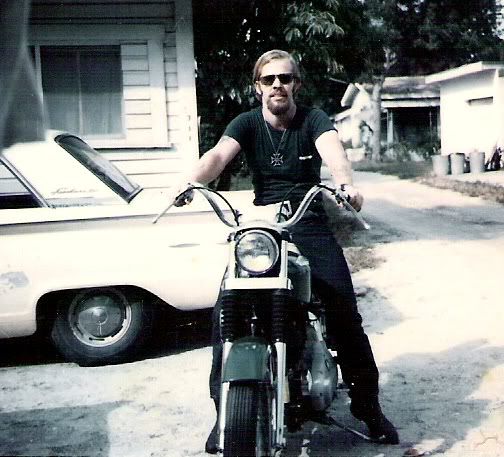
Found this to be a very interesting thread as I had what was titled to be a 1969 although several told me it was a 1970 .. Just wondering if any of you experts could tell by the picture .. Not much of a picture but was taken in 1972.. Bike is long gone now and never had any problem selling it .. Just curious..
Last edited by JayStronghawk; Dec 4, 2009 at 10:56 AM.

Stellar HDF Member

Joined: Feb 2006
Posts: 3,035
Likes: 17
From: Houston Texas
Found this to be a very interesting thread as I had what was titled to be a 1969 although several told me it was a 1970 .. Just wondering if any of you experts could tell by the picture .. Not much of a picture but was taken in 1972.. Bike is long gone now and never had any problem selling it .. Just curious..
The 1969 had the ignition sticking up out of the timing cover. An XLH had a distributor. This distributor had a metal cap held on by a wire clip over the top of it.
An XLCH (1969) had a magneto instead of a distributor. The magneto was a large rectangular box with the spark plug wires coming out of the top of it. It made for very cramped quarters with the bottom of the carburator.
From the pic you show, I believe you had an XLH rather than an XLCH. I say that because of the fuel tank. It looks like the larger tank found on the XLH model. If that were the case then this bike would have had the distributor on top if it were a 1969 and an enclosed cone shaped distributor in the timing cover if it were a 1970.
pg
PS: I like the car (Ford Fairlane?) in the background. I have not seen one of those in a while.
Stellar HDF Member
Joined: Feb 2006
Posts: 3,035
Likes: 17
From: Houston Texas
If your intent on going to an 18 inch wheel is an effort to 'level' the bike you will want to do some checking before you go spending money on a wheel.
The 4.00-18 wheel and tire that came on the bike when new was a certain diameter. Measure the wheel you say you have now.
A 5.00-16 wheel and tire is going to be almost the same diameter. The 16 inch rim is smaller than the 18 inch, but the sidewall of a 5.00-16 tire is much greater than that od a 4.00-18 tire.
The result......... Almost the same exact outside diameter between the two. This will negate the effort to level the bike in my opinion. Something to check out and consider anyway.
pg
Ultimate HDF Member
Joined: Dec 2007
Posts: 9,254
Likes: 283
From: Lake City, Florida (Native)
The year model cannot be determined from that picture. If you have a pic of timer timing cover then it would be very easy to tell you if it was a 1969 or a 1970.
The 1969 had the ignition sticking up out of the timing cover. An XLH had a distributor. This distributor had a metal cap held on by a wire clip over the top of it.
An XLCH (1969) had a magneto instead of a distributor. The magneto was a large rectangular box with the spark plug wires coming out of the top of it. It made for very cramped quarters with the bottom of the carburator.
From the pic you show, I believe you had an XLH rather than an XLCH. I say that because of the fuel tank. It looks like the larger tank found on the XLH model. If that were the case then this bike would have had the distributor on top if it were a 1969 and an enclosed cone shaped distributor in the timing cover if it were a 1970.
pg
PS: I like the car (Ford Fairlane?) in the background. I have not seen one of those in a while.
The 1969 had the ignition sticking up out of the timing cover. An XLH had a distributor. This distributor had a metal cap held on by a wire clip over the top of it.
An XLCH (1969) had a magneto instead of a distributor. The magneto was a large rectangular box with the spark plug wires coming out of the top of it. It made for very cramped quarters with the bottom of the carburator.
From the pic you show, I believe you had an XLH rather than an XLCH. I say that because of the fuel tank. It looks like the larger tank found on the XLH model. If that were the case then this bike would have had the distributor on top if it were a 1969 and an enclosed cone shaped distributor in the timing cover if it were a 1970.
pg
PS: I like the car (Ford Fairlane?) in the background. I have not seen one of those in a while.
Last edited by JayStronghawk; Dec 4, 2009 at 10:57 AM.
Stellar HDF Member
Joined: Feb 2006
Posts: 3,035
Likes: 17
From: Houston Texas
Although had the bigger tank title said XLCH I thought Kick Start was XLCH and Electric was XLH .. Anyway been a long time but think had the cone shaped distributor .. And Yes is 66 ( I think ) Ford Fairlane .. Great Ride was 6-7 years old in the pic and ran like a champ..
In 1969 and 1970 the XLH and the XLCH both had kick starters.
But only the XLH had an electric starter. The CH of this era had only a kick starter, along with the smaller battery mounted on the left side behind the end of the primary cover.
The XLH with the electric starter and kick starter had a side mount oil tank (right side) and a large battery mounted in the center of the frame behind the electric starter.
If you remember a cone shaped timing cover then the bike was a 1970.
pg

Thread Starter
|
Intermediate
Joined: Apr 2006
Posts: 30
Likes: 0
From: Charleston, IL
Here is something else to chew on,,,,,,,,,
If your intent on going to an 18 inch wheel is an effort to 'level' the bike you will want to do some checking before you go spending money on a wheel.
The 4.00-18 wheel and tire that came on the bike when new was a certain diameter. Measure the wheel you say you have now.
A 5.00-16 wheel and tire is going to be almost the same diameter. The 16 inch rim is smaller than the 18 inch, but the sidewall of a 5.00-16 tire is much greater than that od a 4.00-18 tire.
The result......... Almost the same exact outside diameter between the two. This will negate the effort to level the bike in my opinion. Something to check out and consider anyway.
pg
If your intent on going to an 18 inch wheel is an effort to 'level' the bike you will want to do some checking before you go spending money on a wheel.
The 4.00-18 wheel and tire that came on the bike when new was a certain diameter. Measure the wheel you say you have now.
A 5.00-16 wheel and tire is going to be almost the same diameter. The 16 inch rim is smaller than the 18 inch, but the sidewall of a 5.00-16 tire is much greater than that od a 4.00-18 tire.
The result......... Almost the same exact outside diameter between the two. This will negate the effort to level the bike in my opinion. Something to check out and consider anyway.
pg
Thanks for allt he great info. I found my lowering problem. This frontend was bougth new 4.5 years ago and has set ont he shelf since. (read...no fork oil) I took it off the jack today and tried bouncing the frontend a little bit. Absolutely nothing. Those forks are extended all the way out and will not budge. Looks like they are getting rebuilt first...YUK!
Stellar HDF Member
Joined: Feb 2006
Posts: 3,035
Likes: 17
From: Houston Texas
pg,
Thanks for allt he great info. I found my lowering problem. This frontend was bougth new 4.5 years ago and has set ont he shelf since. (read...no fork oil) I took it off the jack today and tried bouncing the frontend a little bit. Absolutely nothing. Those forks are extended all the way out and will not budge. Looks like they are getting rebuilt first...YUK!
Thanks for allt he great info. I found my lowering problem. This frontend was bougth new 4.5 years ago and has set ont he shelf since. (read...no fork oil) I took it off the jack today and tried bouncing the frontend a little bit. Absolutely nothing. Those forks are extended all the way out and will not budge. Looks like they are getting rebuilt first...YUK!
Forks are normally extended full length all the time because of the springs inside.
Roughly speaking this is the way forks work:
Springs hold the forks extended all the way out.
You hit a bump and the springs compress.
The fork oil passes through small holes to cushion the blow as the fork goes downward.
The spring wants to return the forks full length after the bump is passed. Without the oil the springs will slam the forks back to the extended position.
But since the oil has to travel back through the small holes the rebound is also cushioned and prevents them slamming home.
If you have ever run a bike with no oil in the forks you would remember riding a pogo stick. Clank-clunk go the front forks with a sudden harsh rebound.
Very simplified explanation, but that is the way they work.
So there is only one thing that will lower a front end and that is called a set of shorter fork tubes. We had this discussion here recently as I recall with another member who had 2 inch over long fork tubes and wanted to lower the front end.
As I recall he could never accept the fact that shorter tubes were the only way he was going to do this. I do not know what he did as he kinda did a quiet fade and I do not remember him coming back with a post after that.
pg
HD Forum Stories
The Best of Harley-Davidson for Lifelong Riders

7 Surprising Harley-Davidson Products that Are Not Motorcycles
Verdad Gallardo
8 Best Harley-Davidson Motorcycles Ever
Pouria Savadkouei
10 Worst Harley-Davidson Motorcycles Ever
Pouria Savadkouei
Killer Custom's Jail Break Is The Breakout That Refused to Blend In
Verdad Gallardo
Crazy Bunderbike Build Looks Amazing, But Is It Impossible to Ride?
Verdad Gallardo
Harley-Davidson Reveals Super Cool Cafe Racer Concept
Verdad Gallardo
Engraved Rebellion: Inside Bundnerbike's Glam Rock II
Verdad Gallardo
10 Motorcycles You Should Never Buy
Joe Kucinski
10 Things Harley-Davidson Needs to Fix in 2026
Verdad Gallardo
Thread Starter
|
Intermediate
Joined: Apr 2006
Posts: 30
Likes: 0
From: Charleston, IL
OK but........
Forks are normally extended full length all the time because of the springs inside.
Roughly speaking this is the way forks work:
Springs hold the forks extended all the way out.
You hit a bump and the springs compress.
The fork oil passes through small holes to cushion the blow as the fork goes downward.
The spring wants to return the forks full length after the bump is passed. Without the oil the springs will slam the forks back to the extended position.
But since the oil has to travel back through the small holes the rebound is also cushioned and prevents them slamming home.
If you have ever run a bike with no oil in the forks you would remember riding a pogo stick. Clank-clunk go the front forks with a sudden harsh rebound.
Very simplified explanation, but that is the way they work.
So there is only one thing that will lower a front end and that is called a set of shorter fork tubes. We had this discussion here recently as I recall with another member who had 2 inch over long fork tubes and wanted to lower the front end.
As I recall he could never accept the fact that shorter tubes were the only way he was going to do this. I do not know what he did as he kinda did a quiet fade and I do not remember him coming back with a post after that.
pg
Forks are normally extended full length all the time because of the springs inside.
Roughly speaking this is the way forks work:
Springs hold the forks extended all the way out.
You hit a bump and the springs compress.
The fork oil passes through small holes to cushion the blow as the fork goes downward.
The spring wants to return the forks full length after the bump is passed. Without the oil the springs will slam the forks back to the extended position.
But since the oil has to travel back through the small holes the rebound is also cushioned and prevents them slamming home.
If you have ever run a bike with no oil in the forks you would remember riding a pogo stick. Clank-clunk go the front forks with a sudden harsh rebound.
Very simplified explanation, but that is the way they work.
So there is only one thing that will lower a front end and that is called a set of shorter fork tubes. We had this discussion here recently as I recall with another member who had 2 inch over long fork tubes and wanted to lower the front end.
As I recall he could never accept the fact that shorter tubes were the only way he was going to do this. I do not know what he did as he kinda did a quiet fade and I do not remember him coming back with a post after that.
pg
Little new to HD world but have been riding and wrenching on bikes for about 20 years now. No expert by any means and learn something new everyday... Don't we all... haha
Probably should have explained myself a little better. The weight of the bike does not compress the forks at all. The forks are stuck solid. I realize they are at the outermost travel as normal. I can remove the cap and no spring pressure. The spring is actually lower than the bottom of the caps. These are extended out very far with no retention at all.
Stellar HDF Member
Joined: Feb 2006
Posts: 3,035
Likes: 17
From: Houston Texas
Thanks bud. Please trust me when I say I am not new at bikes. I own currently about 22 motorcycles...lol
Little new to HD world but have been riding and wrenching on bikes for about 20 years now. No expert by any means and learn something new everyday... Don't we all... haha
Probably should have explained myself a little better. The weight of the bike does not compress the forks at all. The forks are stuck solid. I realize they are at the outermost travel as normal. I can remove the cap and no spring pressure. The spring is actually lower than the bottom of the caps. These are extended out very far with no retention at all.
Little new to HD world but have been riding and wrenching on bikes for about 20 years now. No expert by any means and learn something new everyday... Don't we all... haha
Probably should have explained myself a little better. The weight of the bike does not compress the forks at all. The forks are stuck solid. I realize they are at the outermost travel as normal. I can remove the cap and no spring pressure. The spring is actually lower than the bottom of the caps. These are extended out very far with no retention at all.
Oh, and I will add that I have been riding and wrenching on bikes since 1957, and most of that has been on Harley.
pg
Last edited by piniongear; Dec 4, 2009 at 09:14 PM.