When you click on links to various merchants on this site and make a purchase, this can result in this site earning a commission. Affiliate programs and affiliations include, but are not limited to, the eBay Partner Network.
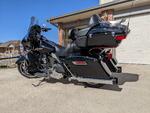
I've ordered new wheels for my bike. Once they arrive, I plan to take them and have new tires mounted. I was reading the factory service manual for removing and reinstalling the rear wheel. It states that the axle nut torque spec is 15-20 ft-lbs. That seems like a very low torque value for a 36mm nut, so I just wanted to double check it. Also, is the axle nut torque adapter tool really necessary, or does it just make the job a little easier? I don't mind buying one if it necessary or a significant time saver. But since I haven't done this before, I thought I would ask.
I already plan to buy the belt tension tool since I don't really have a feel for it. I'm sure the guys that have done it many times can do it by feel, but that's not me, yet.
Any other tips or tricks to make the job easier or prevent mistakes would be appreciated.
Does it mention anything after that initial torque setting?
I believe that 15-20 is just to set the drive belt adjustment.
Then it torques to something like 130-140lb ft.
Read on in the manual a bit..........
If you're not taking off the exhaust the adapter works great to reach that nut.
Just keep it to a 90 angle for proper torque setting.
Last edited by MURPHCC1; May 25, 2026 at 01:20 PM.
Correct, the first of two torque is just to hold things in place to allow belt tensioning.
You can check your belt deflection up front. If it's already correct take a marker and mark a reference spot on each side. That will make it very easy to get back to a good level and do your final adjustment.
It's also good to measure from the center of the axle on each side to the center of the swing arm bolt to assure proper alignment.
From my service manual for 21 & 22 touring models:
15-20 foot lbs. 1st torque
Inspect tension and alignment
135-145 Ft Lbs Torque final
I have found it the easiest to remove the tailpipes.
Make sure you have the right sockets / wrenches for the job.
Thanks guys, I knew that seemed like way too little torque. I did find the final torque in the table like you guys showed. The procedure only lists first torque for some reason. I noticed that the first time and kept looking in the procedure for the second value, but it wasn't there. Is there any trick to making sure the wheel is installed straight and inline with the bike? I don't see anything in the procedures for it.
I do have a 36mm socket and a hydraulic frame lift. Other than the torque adapter and belt tension too, are there any other special tools I may need?
Last edited by Black Ultra; May 25, 2026 at 05:12 PM.
The cams on either side of the axle should keep it straight.
If you question it, run a string along side the rear tire from rear to the front tire and measure the space between the tire and the string.
Another way is to use a long fluorescent tube along side the rear tire, measuring the space between front tire and tube.
Measure the axle center to the swingarm bolt is another way.
Last edited by MURPHCC1; May 25, 2026 at 05:17 PM.
Ok you have a lift to lift the bike.
Do you have a lift to lift the tire?
MUCH easier with any kind of lift to get that tire UP into the wheel well and the axle aligned.
Tie down your bike to the lift you have it on.
I actually use a car floor jack to lift the tire.
A little bit of a pia getting the tire in the right position to lift it, but once it's there, jack up the tire until the axle moves in slowly.
Ensure you replace it as well as all 4 bearings. Both are less than a tire by a few hundred bucks. Don’t and you may have new tires but the bike won’t ride as good as it can.
Ok you have a lift to lift the bike.
Do you have a lift to lift the tire?
MUCH easier with any kind of lift to get that tire UP into the wheel well and the axle aligned.
Tie down your bike to the lift you have it on.
I actually use a car floor jack to lift the tire.
A little bit of a pia getting the tire in the right position to lift it, but once it's there, jack up the tire until the axle moves in slowly.
Good tip! I do have several floor jacks for cars. It would seem the lightweight aluminum one would be good for that purpose. The new wheels are coming with new bearings. Are you suggesting I change the drive pulley bearings as well? I always tie it down on the lift, even if I'm just washing it.
Last edited by Black Ultra; May 25, 2026 at 07:20 PM.
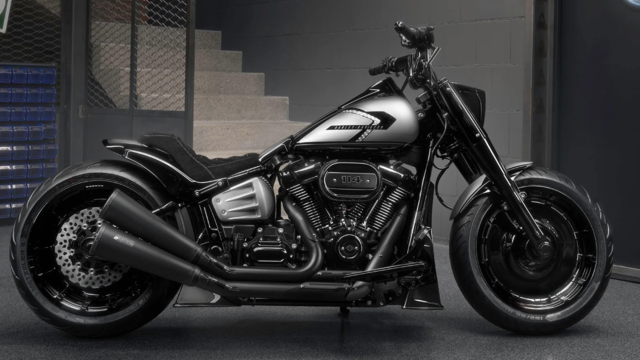
Harley-Davidson Fat Boy Becomes a Dark, Decepticon-Inspired Custom
Slideshow: Killer Custom's latest build relies on styling changes rather than performance upgrades, giving the cruiser an entirely different personality.
7 Surprising Harley-Davidson Products that Are Not Motorcycles
Slideshow: The bar-and-shield logo shows up on far more than motorcycles, some of the company's most unexpected products have nothing to do with riding.
Slideshow: From the troubled AMF years to modern misfires, these bikes earned reputations for reliability issues, questionable engineering, or disappointing performance.
Crazy Bunderbike Build Looks Amazing, But Is It Impossible to Ride?
Slideshow: The Swiss custom shop has taken a Harley Softail and stretched it into something so long and low that it looks closer to a rolling sculpture than a conventional motorcycle.
Engraved Rebellion: Inside Bundnerbike's Glam Rock II
Slideshow: A standard cruiser becomes an intricate metal canvas in the hands of a Swiss custom house known for pushing Harley-Davidson platforms far beyond their factory brief.








 Rear tire R&R Questions