When you click on links to various merchants on this site and make a purchase, this can result in this site earning a commission. Affiliate programs and affiliations include, but are not limited to, the eBay Partner Network.
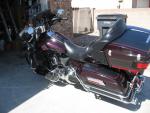
I have a 97 FLSTC and had a 12 Volt (cigarette style) plug put on the bike by a "local dealer".
Since that was done, my battery would completely drain within 4 or 5 hours. As such I "disconnected" the plug and have not had an issue since. Obviously, the "so called" experts screwed something up.
Anyway, I now need to re wire that plug back onto the bike so I can use my GPS. Is it just a matter of connecting the + (red) and - (black) wires from the plug directly to the battery terminals or does it have to be wired in some other way? A diagram of how to ... would be great if possible.
I need to know this info pretty quickly as I am taking off on a 3 day ride this weekend and can't get the bike into another dealer for the work to be done by then.
I would not wire it directly to the battery. Wire it to a "Switched" circuit preventing it from drawing power when the ignition switch is in the off position. You could connect it to your ignition switch under your dash console, positive wire leading to your headlight or positive wire to your tail light which should be located on the right side of the bike just under the seat.
Try to determine how many amps it will draw then use the proper gauge wire. Add an in-line fuse no greater than 15 amps.
Yes you can connect it directly to your battery terminals. Obviously it will have 12V power all the time. If you were to do it this way I would suggest removing your GPS from the socket when you are not riding to prevent an unwanted drain on the system.
"...why not get the cigaret lighter with the battery tender plug. you can plug it in when you need it and have a capped wire when you don't..."
That is what the idiots at the local dealership put in and what caused me the trouble in the first place. Now I have a battery tender wired in properly and a separate 12V socket that is currently disconnected.
Yes you can connect it directly to your battery terminals. Obviously it will have 12V power all the time. If you were to do it this way I would suggest removing your GPS from the socket when you are not riding to prevent an unwanted drain on the system.
As the only time I will have the GPS on the bike is when I am also on it and riding, I think this is what I will do until I can get it wired in properly, on it's own switch perhaps.
If you have a properly wired battery tender plug, when you plug the 12 v socket into it, the socket will be hot 100% of the time. If you have anything plugged into it, it'll draw current. That's the way it works. By the way I hope that 12v battery tender line has a fuse inline since it's direct to the battery when you are using accessories off of it.
If you don't want to unplug something each time you shut the bike off, as stated before, you'll need to tap a hot line when the ignition is on. Easiest place is the ignition switch under the console - one wire is always hot, the others aren't, the acc wire is the one to tap into, but be very careful to run the wire carefully to your handlebar mount so that it cannot pinch at full lock and be sure and install an inline fuse in that wire.
That's also a great time to service your ignition switch by taking it apart and cleaning all the old grease out and cleaning the contacts inside. I've been stranded twice by a dirty ignition switch so now it's part of my normal maintenance. It's easy, if you need a how to I can post one up (I've done it many times before.
If that's not clear let us know and we'll get you sorted.
Thanks for your advice but I am confused by one thing you said, well to be honest - at least one thing.
The battery tender that is wired in only has a small male plug on the end of it that the trickle charger plugs into, there is no provision for plugging anything else into it.
I don't know/remember how the 12 V socket (cigarette type) was previously wired as I had to cut it out so as to keep the battery tender plug. Maybe I am going to have to take a picture of the mess that it is instead of trying to explain it.
"...the acc wire is the one to tap into..."
How do I know which is the ACC wire? Does it have any particular coloring code to it?
"...That's also a great time to service your ignition switch by taking it apart and cleaning all the old grease out and cleaning the contacts inside. I've been stranded twice by a dirty ignition switch so now it's part of my normal maintenance. It's easy, if you need a how to I can post one up (I've done it many times before..."
That would be very much appreciated. I really don't know if that has ever been done, but assume it should have been at the 10K service. None the less, it would be god to know how to do it myself.
Finally, how do I get under the console? I am assuming that I will need to "remove it" to get access to the wiring.
For now, since it sounds like you don't have time to do anything fancy or complicated, something like this is probably what you're looking for. It plugs into your battery tender leads.
You can buy an accessory port that plugs into your battery tender wire on the bike to give you a port when you aren't charging the battery. Looks like this.
I'm not sure what year your bike is. The console comes off when you take off the one nut on top. If you have a cable operated speedometer (96 and newer I think) you also have to remove the tiny screwdriver in the odometer reset ****. If you have a cable operated speedometer you have to lift up the console to unscrew the cable from the back of the speedo before you can take the console off or flip it over to get at the wiring.
As I think about it, if you have the cable operated speedometer I think you'll have the older style ignition switch which I don't think you can take apart. I was thinking of my Evo which had the electronic odometer speedometer and the newer style switch. I don't know if you need to bother with the older type switch - the switches that come with the electronic odometer bikes, like my Evo, get gunked up, I've never heard of your type getting gunked up.
Here's a wiring diagram I found of your older type switch if that's what you have. You can see the accessory lug you could tap into if you like.
If you do have the electronic odometer here are the switch rebuild instructions. There is a link at the bottom to pictures:
Originally Posted by gtmalone
SPECIALTY TOOLS REQUIRED
circlip piers
1. TECHNICAL AREAS ADDRESSED
1.1 - Intermittent electrical problems can be caused by either a bad terminal connection on the ignition switch or a bad contact inside the ignition switch. Symptoms you may experience are as follows:
- runs rough or will not start
- speedometer, odometer and tachometer (factory) are not working
- various lighting circuits are not working
- complete power failure
2. HOW TO - IGNITION SWITCH SERVICE
2.1 - Disconnect the negative lead from the battery. This step is important to avoid a trip to the emergency room.
2.2 - Remove the console from the fuel tank. Disconnect all plugs and remove the trip reset switch from the console.
2.4 - Remove the ignition switch from the console.
2.5 - Remove the circlip from the back side of the ignition switch.
2.6 - Remove the plastic contactor ring from the switch. Be sure to capture the 3 springs and 3 contacts from inside the switch. See Figure 1.
2.7 - Pull the key lock assembly from the switch housing.
2.8 - Wipe the old grease from the switch housing. Clean the switch contacts and the switch terminals with fine sand paper. Wipe sand paper residue from the switch housing. Apply a small amount of dielectric grease to the internal contact areas. See Figure 2.
2.9 - Reassemble the contactor ring, contact springs and contacts. Apply a small amount of grease to the contacts. See Figure 3.
2.10 - Reassemble the ignition switch. Insert the key lock assembly into the switch housing. It will only fit one way. Make note of the positions of the contacts on the contactor ring. The two contacts close together go next to the switch terminals. Reinstall the contactor ring onto the switch housing. See Figure 4. NOTE: This will be easier if you hold the switch housing in a mostly key side up position and reinstall the contactor ring from the bottom.
2.11 - Reinstall the ignition switch into the console.
At this point it is recommended to perform the steps in Section 3 - 3.3 through 3.6.
2.12 - Reconnect all wiring to the console. Reconnect the negative lead to the battery. Check that the ignition switch is working properly.
2.13 - Reinstall the console on the bike.
ALL DONE!
3. HOW TO - IGNITION SWITCH CONNECTOR SERVICE
3.1 - Disconnect the negative lead from the battery. This step is important to avoid a trip to the emergency room.
3.2 - Remove the console from the fuel tank.
3.1 - Make a note of which color wire connects to each ignition switch terminal.
3.2 - Remove the connector from the ignition switch.
3.3 - Extract the 3 spade connectors from the connector housing. There is a small tab on the spade connectors. Insert a pick or small jewelers screwdriver into the housing to press down on the tab while pulling the spade connector from the housing.
NOTE: If the housing is melted you may have to use wire cutters to cut away the plastic from the connectors.
3.4 - Clean the inside of the spade connectors with a paper nail file cut down to fit inside of the connector. Clean the switch terminals with fine sand paper.
3.5 - Push each spade connector onto the ignition switch. If any of the connectors feel loose, LIGHTLY squeeze the loops on each connector to tighten the grip. They should be slightly difficult to push onto the terminals.
3.6a - If the connector housing is usable, reinsert the spade connectors into the housing making note of their original positions. You may have to bend the tab on the spade connector for it to catch in the housing. Push the connector onto the ignition switch. It will only fit one way.
3.6b - If the connector housing was melted beyond use, put a short length of heat shrink tubing over each spade connector and heat to shrink. Push the spade connectors onto the proper switch terminals. Put some sort of label inside the console as a reminder. See Figure 5.
3.7 - Reconnect the negative lead to the battery. Check that the ignition switch is working properly.
Harley-Davidson Fat Boy Becomes a Dark, Decepticon-Inspired Custom
Slideshow: Killer Custom's latest build relies on styling changes rather than performance upgrades, giving the cruiser an entirely different personality.
7 Surprising Harley-Davidson Products that Are Not Motorcycles
Slideshow: The bar-and-shield logo shows up on far more than motorcycles, some of the company's most unexpected products have nothing to do with riding.
Slideshow: From the troubled AMF years to modern misfires, these bikes earned reputations for reliability issues, questionable engineering, or disappointing performance.
Crazy Bunderbike Build Looks Amazing, But Is It Impossible to Ride?
Slideshow: The Swiss custom shop has taken a Harley Softail and stretched it into something so long and low that it looks closer to a rolling sculpture than a conventional motorcycle.
Engraved Rebellion: Inside Bundnerbike's Glam Rock II
Slideshow: A standard cruiser becomes an intricate metal canvas in the hands of a Swiss custom house known for pushing Harley-Davidson platforms far beyond their factory brief.










 Wiring 12V plug ??