







reg oil or syn oil?

Cruiser
Joined: Jul 2007
Posts: 220
Likes: 0
From:
 RE: reg oil or syn oil?
I don't have a big cam, but I'll say this: Once the 1,000 mile is over I will be using Mobil 1 15-50 in the crank and primary. Mobil 1 75-90 in the trans. Why? Because it has proven itself over the years in both air and water cooled metrics that all shared the same fluid bath. Cooler running, smoother shifting, and little or no wear.What more proof doI need.
Spyke.
Spyke.

Road Master
Joined: May 2007
Posts: 1,127
Likes: 0
From: Houston, TX
RE: reg oil or syn oil?
Synthetic is king. I think that's an old wives tail about it being too slippery. Also, Spike_96?????????????? You gotta be kidding me!I feel like someone just showed up to my birthday party wearing the same dress as me. 

May our Moderator Rest in Peace
Joined: Sep 2006
Posts: 11,386
Likes: 35
From: Rochester, NY
RE: reg oil or syn oil?
ORIGINAL: spike95
I feel like someone just showed up to my birthday party wearing the same dress as me.
I feel like someone just showed up to my birthday party wearing the same dress as me.
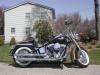
BTW I like that work I am assuming you did on the seat, very nicely done..
Cruiser
Joined: Jul 2007
Posts: 220
Likes: 0
From:
RE: reg oil or syn oil?
***Spike_96?????????????? You gotta be kidding me!I feel like someone just showed up to my birthday party wearing the same dress as me. ***
I had to thinkup something fast.[8D]
Nice scoot Man!
***I had to thinkup something fast.[8D]
Nice scoot Man!
Road Master
Joined: Jun 2007
Posts: 852
Likes: 3
RE: reg oil or syn oil?
I was talking to a local autoparts owner, who is very well in-tuned with motorcycles. He's an old cat with a couple of older type bikes, and does all his own work on them. He told me a while ago about trying out AMSoil which he sells and tries to get other bikers to try it.
I asked him the other day that I'll make the switch aftr my 1000 mile checkup. He said it would be probably be better to wait until the next oil change, say 3000miles before using syn oil, due to syn oil being a slippery oil. He'd much rather see the bike really broken in before going synthetic....
any thoughts???
[sm=interesting.gif]
I asked him the other day that I'll make the switch aftr my 1000 mile checkup. He said it would be probably be better to wait until the next oil change, say 3000miles before using syn oil, due to syn oil being a slippery oil. He'd much rather see the bike really broken in before going synthetic....
any thoughts???
[sm=interesting.gif]
May our Moderator Rest in Peace
Joined: Sep 2006
Posts: 11,386
Likes: 35
From: Rochester, NY
RE: reg oil or syn oil?
ORIGINAL: ronyd
I asked him the other day that I'll make the switch aftr my 1000 mile checkup. He said it would be probably be better to wait until the next oil change, say 3000miles before using syn oil, due to syn oil being a slippery oil. He'd much rather see the bike really broken in before going synthetic....
any thoughts???
I asked him the other day that I'll make the switch aftr my 1000 mile checkup. He said it would be probably be better to wait until the next oil change, say 3000miles before using syn oil, due to syn oil being a slippery oil. He'd much rather see the bike really broken in before going synthetic....
any thoughts???
So IMHO don't worry about it you can goSynthetic at thefirst 1000 mile change without a problem. I did.
BTW the second oil change is at 5000 miles acording to Harley not 3000, but I'm a little like your friend and don't "exacty trust the factory recomendations. Especially with the heat these newer engines seem to like to make. So I did it at 1000 and again at3000 and will continue to doit every 3000 till I'm too old to ride the bike.
HD Forum Stories
The Best of Harley-Davidson for Lifelong Riders

7 Surprising Harley-Davidson Products that Are Not Motorcycles
Verdad Gallardo
8 Best Harley-Davidson Motorcycles Ever
Pouria Savadkouei
10 Worst Harley-Davidson Motorcycles Ever
Pouria Savadkouei
Killer Custom's Jail Break Is The Breakout That Refused to Blend In
Verdad Gallardo
Crazy Bunderbike Build Looks Amazing, But Is It Impossible to Ride?
Verdad Gallardo
Harley-Davidson Reveals Super Cool Cafe Racer Concept
Verdad Gallardo
Engraved Rebellion: Inside Bundnerbike's Glam Rock II
Verdad Gallardo
10 Motorcycles You Should Never Buy
Joe Kucinski
