
Advice on steering rake


Thread Starter
|
Cruiser

Joined: Jul 2007
Posts: 138
Likes: 0
From:
 Advice on steering rake
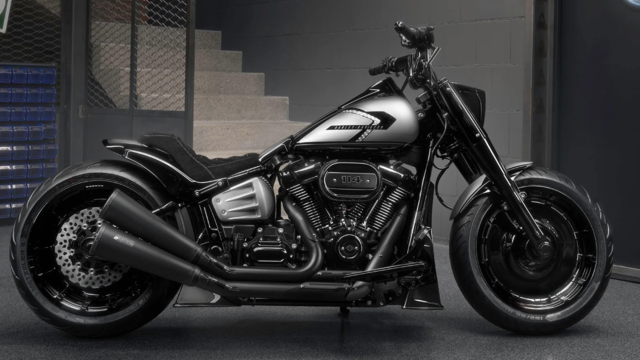
Thinking about swapping out my stock triple trees for a nice set of billet pro-ones,thing thats got me confused is the variety of rake degrees available....I'm assuming that zero degrees is stock and then anything above that will push the front end out by varying amounts...have I got it right?..3 degrees seems pretty common but how much will that push the front out and,I'm guessing,will it lower the bike a little....forgive my ignorance guys but any help/advice would be much appreciated...photos even better,my bike is 2006 Softail standard
Tourer
Joined: Oct 2008
Posts: 437
Likes: 0
From: South Carolina
You basically have it all answered for yourself. You dont want to go over 3degrees on your tree rake. Pushing it any more would throw your trail off and cause the bike to become unstable at higher speeds. It will move your front tire out and lower the bike in the front a little if you use stock tube length. However, a 3degree rake both of these will be so small it would be basically unnoticeable. To properly rake a bike out, you need to do it at the neck (typically cut and weld); however, AME does make a kit that simulates this and doesnt negatively effect your trail.

Tourer
Joined: Jan 2008
Posts: 314
Likes: 5
From: Albany Oregon
3 degree trees will give you about 35 dgrees total. A very managable and still safe number. It will lower the front about 3/4 inch with the stock tubes. It will be slightly harder to turn at walking speed or slower. And I do mean slightly. You would be amazed at what a difference in looks you will have though.

Stellar HDF Member
Joined: Mar 2006
Posts: 2,395
Likes: 153
From: Utah
This is something I have never completely settled in opinion on myself, mainly because I don't fully understand the engineering of it... however...
I have heard many discussions about handling when talking about fork length, frame neck rake, and triple tree rake and the variations therein.
First, you can change the front fork length on a Honda dirt bike on purpose by moving the forks up in the triple tree. So, obviously, the resulting handling is a matter of preference. I know a dirt tracker that changes his in 1/8" increments depending upon the composition of the track for example.
I have also heard that you can get a 'bind' in the steering by creating too much difference between the frame neck rake and the triple tree rake. I don't relish this job, so I haven't tried all the options but I used a 1-1/2 degree raked triple tree and 4" overs back in the 70's and rode the bike everywhere. It did not take curves like stock, though, that's for sure. I also think that there is a built in difference beween the neck rake and triple tree rake so that the bike doesn't 'ride up' when you turn the handle bars... but this is not a measured or official bit of information.
I saw a night train with an added 1/2 degree rake and you could see it because 'something' was different and the bike looked cool (had a rear end lowering kit on it too) but it wasn't obvious. I think you could see a 3 degree difference between neck and fork and I wouldn't like that, personally.
Steering geometry is a science... I will say that, too.
C#
I have heard many discussions about handling when talking about fork length, frame neck rake, and triple tree rake and the variations therein.
First, you can change the front fork length on a Honda dirt bike on purpose by moving the forks up in the triple tree. So, obviously, the resulting handling is a matter of preference. I know a dirt tracker that changes his in 1/8" increments depending upon the composition of the track for example.
I have also heard that you can get a 'bind' in the steering by creating too much difference between the frame neck rake and the triple tree rake. I don't relish this job, so I haven't tried all the options but I used a 1-1/2 degree raked triple tree and 4" overs back in the 70's and rode the bike everywhere. It did not take curves like stock, though, that's for sure. I also think that there is a built in difference beween the neck rake and triple tree rake so that the bike doesn't 'ride up' when you turn the handle bars... but this is not a measured or official bit of information.
I saw a night train with an added 1/2 degree rake and you could see it because 'something' was different and the bike looked cool (had a rear end lowering kit on it too) but it wasn't obvious. I think you could see a 3 degree difference between neck and fork and I wouldn't like that, personally.
Steering geometry is a science... I will say that, too.
C#

Thread
Thread Starter
Forum
Replies
Last Post
Rich Train Driver
Frame/Suspension/Front End/Brakes
16
Mar 24, 2007 04:15 PM