



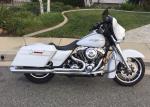



Screwed this up

Tourer
Joined: Aug 2008
Posts: 335
Likes: 2
From: Taylorsville, Utah

Were you using a INCH POUNDS torque wrench?

Road Warrior

Joined: Nov 2014
Posts: 1,962
Likes: 140
From: NY
A=md to add to that dont forget to use some blue loctite when installing the new studs for axle cap in the forks and also on other ends when tightening the axle nuts too.
Scott

Seasoned HDF Member


Joined: Jul 2011
Posts: 27,096
Likes: 4,673
From: Frozelandia, Minnysota


HDF Community Team


Joined: Nov 2012
Posts: 6,189
Likes: 2,419
From: USA

Just a speculation, based on observation of what I see. You didn't have the wheel held up into the fork and were pulling it up with the cap. That's not a good way to put it together. Either shim the wheel up into the fork, or lower the bike down onto the axle, then attach the cap. You don't need the bike sitting heavy on the axle (which would make adjustment impossible), but you do want minimal clearance. The cap studs are small and not well suited to lifting the comparatively heavy wheel assembly up into the fork.

Seasoned HDF Member


Joined: Jan 2006
Posts: 11,471
Likes: 2,998
From: Charleston, SC
Just a speculation, based on observation of what I see. You didn't have the wheel held up into the fork and were pulling it up with the cap. That's not a good way to put it together. Either shim the wheel up into the fork, or lower the bike down onto the axle, then attach the cap. You don't need the bike sitting heavy on the axle (which would make adjustment impossible), but you do want minimal clearance. The cap studs are small and not well suited to lifting the comparatively heavy wheel assembly up into the fork.
100 something Foot Pounds later (which is crazy to think a little nut/stud would require that - first clue) the Cap broke and he looked and went "Uh Oh! Look what I dids!" It happens... I guess...
Last edited by lp; Jan 30, 2015 at 05:38 AM.

Road Master
Joined: Jun 2010
Posts: 1,221
Likes: 4
From: Annemasse (border of Geneva-Switzerland) facing Mt-Blanc.
A low intensity arc welder connected across your two studs will slowly build up heat across the two threads you need to loosen and will not damage the varnish of the fork. An electrician can promptly do this for you while you keep your attention on the temperature of the fork leg. Time is your ally in this case.
HD Forum Stories
The Best of Harley-Davidson for Lifelong Riders

7 Surprising Harley-Davidson Products that Are Not Motorcycles
Verdad Gallardo
8 Best Harley-Davidson Motorcycles Ever
Pouria Savadkouei
10 Worst Harley-Davidson Motorcycles Ever
Pouria Savadkouei
Killer Custom's Jail Break Is The Breakout That Refused to Blend In
Verdad Gallardo
Crazy Bunderbike Build Looks Amazing, But Is It Impossible to Ride?
Verdad Gallardo
Harley-Davidson Reveals Super Cool Cafe Racer Concept
Verdad Gallardo
Engraved Rebellion: Inside Bundnerbike's Glam Rock II
Verdad Gallardo
10 Motorcycles You Should Never Buy
Joe Kucinski
10 Things Harley-Davidson Needs to Fix in 2026
Verdad Gallardo
Grand HDF Member
Joined: Aug 2014
Posts: 3,609
Likes: 1,601
From: Eastern Ohio
A low intensity arc welder connected across your two studs will slowly build up heat across the two threads you need to loosen and will not damage the varnish of the fork. An electrician can promptly do this for you while you keep your attention on the temperature of the fork leg. Time is your ally in this case.