Brake Rotor Bolts

Seasoned HDF Member


Joined: Apr 2008
Posts: 23,399
Likes: 8,509
From: Spartan Country, Michigan

WP50..... damn good info there. I knew that about the markings on the bolt head, but vast majority do not know or understand. I worked in manufacturing for over 30 years and that was one thing I always had to be aware of when ordering fasteners. We are fortunate to have several industrial supply houses in our area. Fastenal, McMaster-Carr, Grainger are good sources.

Seasoned HDF Member


Joined: Apr 2011
Posts: 6,185
Likes: 2,134
From: W. Texas
WP50..... damn good info there. I knew that about the markings on the bolt head, but vast majority do not know or understand. I worked in manufacturing for over 30 years and that was one thing I always had to be aware of when ordering fasteners. We are fortunate to have several industrial supply houses in our area. Fastenal, McMaster-Carr, Grainger are good sources.
Saved me lots of trouble over the years
WP

Road Master

Joined: Aug 2007
Posts: 822
Likes: 261
From:
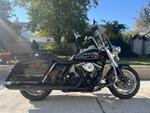
The wheel is from a company called Mototeks out of California. The new rear rotor bolts that I ordered from a different company are the dimensions that you stated but they don’t fit the hub of the rear wheel nor do they fit the holes in the aftermarket rear rotor. I’d really rather not have to hassle with sending the wheel back to have the hub corrected, because it already has a tire mounted on it by my local Harley dealer, and try and find a different rear rotor with the proper bolt holes that matches the front. It appears that the rotor mounting holes on the rear hub are now the same as the mounting holes on the front hub, so my thought was to just go to the hardware store and get the proper sized bolts, this is the simplest solution, but wanted to make sure there wasn’t some specific reason that the rear bolts were beefier than the front to begin with.

Road Warrior

Joined: Feb 2023
Posts: 1,468
Likes: 896
From: Sacto
And I could show you a FSM (probably from before they started applying a dry patch of loctite to new bolts) that states to clean the threads and apply Blue to rotor bolts and Red to pulley bolts

Stellar HDF Member

Joined: Apr 2009
Posts: 2,191
Likes: 843
You are correct 3/8-16- for rear 5/16-18 front
HD Forum Stories
The Best of Harley-Davidson for Lifelong Riders

7 Surprising Harley-Davidson Products that Are Not Motorcycles
Verdad Gallardo
8 Best Harley-Davidson Motorcycles Ever
Pouria Savadkouei
10 Worst Harley-Davidson Motorcycles Ever
Pouria Savadkouei
Killer Custom's Jail Break Is The Breakout That Refused to Blend In
Verdad Gallardo
Crazy Bunderbike Build Looks Amazing, But Is It Impossible to Ride?
Verdad Gallardo
Harley-Davidson Reveals Super Cool Cafe Racer Concept
Verdad Gallardo
Engraved Rebellion: Inside Bundnerbike's Glam Rock II
Verdad Gallardo
10 Motorcycles You Should Never Buy
Joe Kucinski
10 Things Harley-Davidson Needs to Fix in 2026
Verdad Gallardo
Seasoned HDF Member
Joined: Dec 2005
Posts: 19,921
Likes: 8,026
From: poway
Every HD big twin I've seen since late evos has 5/16-18 in the front, 3/8-16 for the rear brake and 7/16-14 for the rear sprocket.. I would guess that the steel wire wheel hub could use the fine threads at the same location as they are nutted but would have the same diameter.