






suspension

Thread Starter
|
Road Master


Joined: Aug 2008
Posts: 1,168
Likes: 326
 suspension
I'm the unlucky soul who had a major problem with my 08 flht the other day. It's supposedly fixed and I was able to give it a work out last night with NO problems. It WAS the large ecu connection under the seat. The dealer has had 5 cases of it already. Like the sharp poster mentioned in the other thread-my fast idle/no throttle was NOT a problem but just a sign from the ecu that something was wrong.
Anyway, here's my suspension question-I am told NEVER to use a high compression air source to fool with the suspension. I believe that it will fill too fast. What do you guys use? did you pony up for the H-D tool or do you use something else.
I have a craftman 19v system at home and I have the air compressor with digital meter. Can that be used? I would think as long as I'm carefull it would be ok but figured I'd ask.
What is the pressure stock? one sales man said 22psi. I am about 155 and my fiance is about 110 if soak'n wet. what would be a good setting for us both and then just me. I saw the settings in the manual but honestly the table wasn't very clear. I know I have to dial it in for my prefrence but what is a good starting point.
AGAIN-I am new to the H-D bikes and want to ask the ones who KNOW.
Anyway, here's my suspension question-I am told NEVER to use a high compression air source to fool with the suspension. I believe that it will fill too fast. What do you guys use? did you pony up for the H-D tool or do you use something else.
I have a craftman 19v system at home and I have the air compressor with digital meter. Can that be used? I would think as long as I'm carefull it would be ok but figured I'd ask.
What is the pressure stock? one sales man said 22psi. I am about 155 and my fiance is about 110 if soak'n wet. what would be a good setting for us both and then just me. I saw the settings in the manual but honestly the table wasn't very clear. I know I have to dial it in for my prefrence but what is a good starting point.
AGAIN-I am new to the H-D bikes and want to ask the ones who KNOW.
Thread Starter
|
Road Master
Joined: Aug 2008
Posts: 1,168
Likes: 326

Outstanding HDF Member
Joined: Sep 2007
Posts: 2,272
Likes: 3
From: Slidell, Louisiana
There are others out there but i purchased the HD for $30 bucks new shipped. It was worth the price to me. It is made well and works. I would never use compressed air. It only takes 1 mistake with compressed air to justify the cost of the HD pump. The shocks take so little air. The 1 thing i really like about the HD pump is you don't loose air when you disconnect it. Ride with 10psi as a starter pressure and go up from there to find the sweet spot.
Thread Starter
|
Road Master
Joined: Aug 2008
Posts: 1,168
Likes: 326
Say no more. "The right tool for the job". It's not worth creating a problem. I guess $50 bucks isn't allot to pay for the ability to dial in AIR RIDE suspension.
I'll pick it up at the dealer tonight or this weekend.
from what I am hearing me(150)+her (110)=about 25-30lbs and just me should be about 15 or so.
I am gonna start with the 10.....ride and dial.
Thanks guys.
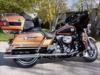
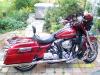
(the 105th color looks pretty sweet on a glide....haven't seen them till I saw your pictures)
I'll pick it up at the dealer tonight or this weekend.
from what I am hearing me(150)+her (110)=about 25-30lbs and just me should be about 15 or so.
I am gonna start with the 10.....ride and dial.
Thanks guys.
(the 105th color looks pretty sweet on a glide....haven't seen them till I saw your pictures)
Trending Topics
Tourer
Joined: May 2008
Posts: 350
Likes: 0
From: El Paso, TX
Question, if you release air from your rear shocks will it lower the bike any? I was told that it will not lower it!
HD Forum Stories
The Best of Harley-Davidson for Lifelong Riders

Jason Momoa Is Turning Classic Harleys Into PHEVs
Verdad Gallardo
Harley-Davidson Fat Boy Becomes a Dark, Decepticon-Inspired Custom
Verdad Gallardo
6 Weirdest Harley-Davidsons Ever Sold to the Public
Verdad Gallardo
7 Times Harley-Davidson Chucked Tradition Out the Window
Verdad Gallardo
7 Surprising Harley-Davidson Products that Are Not Motorcycles
Verdad Gallardo
8 Best Harley-Davidson Motorcycles Ever
Pouria Savadkouei
10 Worst Harley-Davidson Motorcycles Ever
Pouria Savadkouei
Killer Custom's Jail Break Is The Breakout That Refused to Blend In
Verdad Gallardo
Crazy Bunderbike Build Looks Amazing, But Is It Impossible to Ride?
Verdad Gallardo
Thread Starter
|
Road Master
Joined: Aug 2008
Posts: 1,168
Likes: 326
Here is a good article I found just now. As long as YOU guys agree that the numbers are still relevant (don't know when it was published) the I will use their figures. Any other wet behind the ears new guy or gal might like to read it. again-thanks guys.
How To Check Harley Davidson Motorcycle Suspension
Keeping FL Air Shocks At Their Peak
One of the best reasons to ride a Harley-Davidson FL model is for the supple ride. There's not a bike in the lineup that affords the rider a smooth, responsive ride while still having the ability to soak up bumps in the road with ease. The problem with many riders is that they very rarely, if ever, check the air pressure in the stock rear shocks, even though it's critical to not only a good ride but also, more importantly, a stable, predictable, and safe ride.
The shocks are designed to work over a large range of air pressures, thus allowing you the ability to fine-tune the suspension based on how much weight you place on the bike. They are not designed to change the ride height of the bike for purely cosmetic reasons. Adding air pressure within the shocks' limits gives you the ability to add more weight on the bike while still maintaining a high-quality ride.
Checking the air pressure and making adjustments to the system is really quite simple. There is an air fitting located behind the right saddlebag on pre-'06 models and on the left side on '06 models. Air is introduced to the system via this Schrader-style valve with a hand-held air pump, available from Harley (the Touring Suspension Air Pump; part No. 54630-03A, MSRP: $39.95). The pump comes complete with a gauge so you are able to monitor exactly how much air is in the system. Since the shocks hold a very small volume of air, the pressure increases or decreases very quickly as air is introduced to or removed from the system.
Considering that there's always more than one way to skin a cat, we scrounged up some parts lying around the shop and put together an assembly that would allow us to precisely control the air pressure in the system, utilizing compressed air from the shop. It is simply a pressure regulator with a gauge on the low-pressure side, a needle valve, and an air chuck to introduce air into the system.
0-10 lbs for a 150-lb to 200-lb rider.5-15 lbs for a 200-lb to 250-lb rider.20-25 lbs for a rider with passenger.FL air preload rear suspension range is 0-35 lbs of pressure.FLHRS and FLXH low-profile shocks are 0-50 lbs max.
How To Check Harley Davidson Motorcycle Suspension
Keeping FL Air Shocks At Their Peak
One of the best reasons to ride a Harley-Davidson FL model is for the supple ride. There's not a bike in the lineup that affords the rider a smooth, responsive ride while still having the ability to soak up bumps in the road with ease. The problem with many riders is that they very rarely, if ever, check the air pressure in the stock rear shocks, even though it's critical to not only a good ride but also, more importantly, a stable, predictable, and safe ride.
The shocks are designed to work over a large range of air pressures, thus allowing you the ability to fine-tune the suspension based on how much weight you place on the bike. They are not designed to change the ride height of the bike for purely cosmetic reasons. Adding air pressure within the shocks' limits gives you the ability to add more weight on the bike while still maintaining a high-quality ride.
Checking the air pressure and making adjustments to the system is really quite simple. There is an air fitting located behind the right saddlebag on pre-'06 models and on the left side on '06 models. Air is introduced to the system via this Schrader-style valve with a hand-held air pump, available from Harley (the Touring Suspension Air Pump; part No. 54630-03A, MSRP: $39.95). The pump comes complete with a gauge so you are able to monitor exactly how much air is in the system. Since the shocks hold a very small volume of air, the pressure increases or decreases very quickly as air is introduced to or removed from the system.
Considering that there's always more than one way to skin a cat, we scrounged up some parts lying around the shop and put together an assembly that would allow us to precisely control the air pressure in the system, utilizing compressed air from the shop. It is simply a pressure regulator with a gauge on the low-pressure side, a needle valve, and an air chuck to introduce air into the system.
0-10 lbs for a 150-lb to 200-lb rider.5-15 lbs for a 200-lb to 250-lb rider.20-25 lbs for a rider with passenger.FL air preload rear suspension range is 0-35 lbs of pressure.FLHRS and FLXH low-profile shocks are 0-50 lbs max.
Thread Starter
|
Road Master
Joined: Aug 2008
Posts: 1,168
Likes: 326
That's covered in that article I just posted......It doesn't. but I hear of allot of guys using the lowered ones from h-d. but you are supposed to change the front as well. That is what you sould do on ANY bike (change one side-ya gotta change the other). Regardless of what some people tend to do.