? about tires

Thread Starter
|
Supporter
Joined: Jul 2007
Posts: 2,196
Likes: 10
From: Shenandoah, TX
 ? about tires
I know, its been talked to death. But, I've alway heard and my Brother even called Metzler and was told about 5 years ago, that the ME 880 radials were made in Germany and bais tire were made in Brazil. Yesterday, I bought 3 Me 880's from Cycle Gear ( they're having a 20% sale on all street tire sale). I bought two 140-90-16's (rear) and one 130-90-16 (front). One rear for now, and the other two when Its ready for both. The problem is, the two rear tires are made in Germany and the front is made in Brazil and niether says anything about being bias or radial. Cycle Gear's manager didn't have a clue what I was talking about. 
Anyone know the corect answer to this?
Anyone know the corect answer to this?
I know, its been talked to death. But, I've alway heard and my Brother even called Metzler and was told about 5 years ago, that the ME 880 radials were made in Germany and bais tire were made in Brazil. Yesterday, I bought 3 Me 880's from Cycle Gear ( they're having a 20% sale on all street tire sale). I bought two 140-90-16's (rear) and one 130-90-16 (front). One rear for now, and the other two when Its ready for both. The problem is, the two rear tires are made in Germany and the front is made in Brazil and niether says anything about being bias or radial. Cycle Gear's manager didn't have a clue what I was talking about.
Anyone know the corect answer to this?
Anyone know the corect answer to this?
I have never seen that before, I have seen 140/90B16, i'll have a look on the website and see if I can find it.
Ok on the metzeler site it says that if there is a letter 'B' in the tyre size designation it is Bias Belted, if no letter and just a '-' present then it is Bias (conventional tyre), and if it has a letter 'R' in the tyre size designation then it is a Radial.
Examples;
140/90R16 = Radial
140/90ZR16 = Radial (Additional Z = speed rating)
140/90B16 = Bias Belted
140/90VB16 = Bias Belted (additional V = speed rating)
I fear I have no idea about the Bias setup which they term 'conventional tyres. he examples they give on their website are;- (Below is a direct cut and paste quote). To me those sizes look like cross ply tyres, which in the UK hardly ever get used anymore except on vintage vehicles, and I sure as $#it wouldnt put em on a bike..
Bias tyres – also called "conventional tyres" are designated by a dash in the size designation,
e.g.: 3.50 - 19, 23/4 - 17, 3.25 - 21
Examples;
140/90R16 = Radial
140/90ZR16 = Radial (Additional Z = speed rating)
140/90B16 = Bias Belted
140/90VB16 = Bias Belted (additional V = speed rating)
I fear I have no idea about the Bias setup which they term 'conventional tyres. he examples they give on their website are;- (Below is a direct cut and paste quote). To me those sizes look like cross ply tyres, which in the UK hardly ever get used anymore except on vintage vehicles, and I sure as $#it wouldnt put em on a bike..
Bias tyres – also called "conventional tyres" are designated by a dash in the size designation,
e.g.: 3.50 - 19, 23/4 - 17, 3.25 - 21
Thread Starter
|
Supporter
Joined: Jul 2007
Posts: 2,196
Likes: 10
From: Shenandoah, TX
Thanks Wild Bill. That does help alot. Still don't know why the 140 is made in Germany and the 130 is made in Brazil?
Trending Topics
Ok I've had a little think about this and the last set of sizes shown in my last post and referred to by Metzeler as ' Bias ' or ' Conventional ' tyres are indeed crossply.
The give away is that there is no aspect ratio, and crossply have an aspect ratio of 100 so its not included. Up untill the 60's there was not really any such thing as different aspect ratios, they were all 100.
So if the tyre only has its width (and this will usually be in inches), and the rim size, then its going to be a crossply.
Personally I wouldnt put a crossply on a wheel barrow.
IMHO the best choice is a radial.
Having said that it looks like the stock tyres are bias belted, and so far they are good. (not that there is any other choice at the moment).
The give away is that there is no aspect ratio, and crossply have an aspect ratio of 100 so its not included. Up untill the 60's there was not really any such thing as different aspect ratios, they were all 100.
So if the tyre only has its width (and this will usually be in inches), and the rim size, then its going to be a crossply.
Personally I wouldnt put a crossply on a wheel barrow.
IMHO the best choice is a radial.
Having said that it looks like the stock tyres are bias belted, and so far they are good. (not that there is any other choice at the moment).
HD Forum Stories
The Best of Harley-Davidson for Lifelong Riders
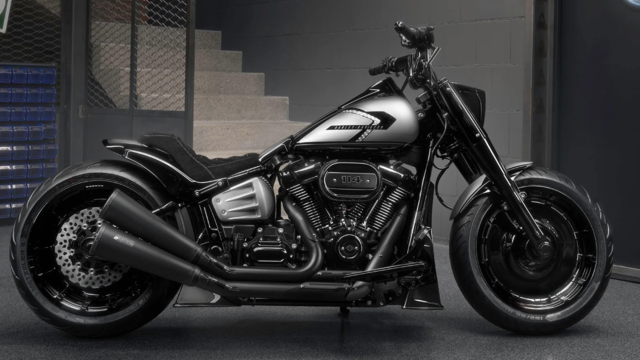
Harley-Davidson Fat Boy Becomes a Dark, Decepticon-Inspired Custom
Verdad Gallardo
6 Weirdest Harley-Davidsons Ever Sold to the Public
Verdad Gallardo
7 Times Harley-Davidson Chucked Tradition Out the Window
Verdad Gallardo
7 Surprising Harley-Davidson Products that Are Not Motorcycles
Verdad Gallardo
8 Best Harley-Davidson Motorcycles Ever
Pouria Savadkouei
10 Worst Harley-Davidson Motorcycles Ever
Pouria Savadkouei
Killer Custom's Jail Break Is The Breakout That Refused to Blend In
Verdad Gallardo
Crazy Bunderbike Build Looks Amazing, But Is It Impossible to Ride?
Verdad Gallardo