

103"/Se204 Charts ?
 Compression
At least the local H-D techs around me are in agreement re: 204 compression. They all recommend using the stock .052 gaskets (compressed to .045) with this cam. Now, they all have different favorites but at least I'd know what set-up to use. The 204 just sounds like a nice medium to the 255/211. Troop
 SE204's w/ 1.725 Rockers; Quick cam calculation
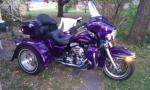
Sorry I'm late on this reply, but the newly built motor with the 204's and SE 1.725 rockers just got on the road. Used the flat-tops which are supposed to be 10:1 (using Harley's 103 "kit" head gaskets). I used the SE ovate conical valve springs along with forged rocker supports (originally I was going to use cams w/ .575 lift, so I had the springs and supports on hand). As my Trike is 1200 pounds and needed lots of clutch slippage to get it moving before the build, I added a Rivera Pro clutch. Also a SE compensator while I was at it, and a Baker +1 Qt Pan. I'm using a Super Tuner, the stock intake runner w/ a Zippers A/C, V&H TRU Duals, and the long Python mufflers. Has a nice cam rumble, nice smooth slip to 1400 or 1500 RPM and away it goes. It IS heavy. Starts pulling nice at 1800 or so, and it's real torquey. I'll post more as I get some miles on it, and will Dyno it after 1000 miles. It's pretty tight now. I think you'd like this set up on your FLHT. I'd be afraid to use the Andrews TW54's. With their late intake closing (42 degrees), they may be a bit weak on low end when taking off at the stop light.
If you're still looking at cams, below is some good info (especially the cam selection spreadsheet), and the method I use to estimate a cam's power band. There's plenty of room for error, but it has worked well for me and has came very close on my last two builds.
I invite any additions/corrections (be kind)! -The Andrews TW55 cams I’m running in my Springer were designed by John Sachs, a well known engine builder (he ported and milled my heads, and put her together). They are medium duration cams (intake 248 deg) with the intake timing closing the valves late (open 22 deg BTDC, close 46 deg ABDC). Take the 180 degrees of the intake stroke, add 22+ 46 and you get 248 deg. total for the event. If you already know this I apologize, but no harm done. Now, to calculate the power-band for my Springer "approximately", take the intake closure degree, 46, multiply timed 100, subtract 500, and you get the mid-point of your power-band, which for my cam is 4600 - 500 = 4100 RPM. Another general rule is the power band width, which is about 3000 RPM wide (wider on long duration cams, narrower on short duration cams). Note that the short duration cams produce more torque and at lower RPM, while the long duration cams make more HP, but at higher RPM. Anyway, this makes the usable power Band on my Springer 2600 RPM to 5600 RPM. Because of other factors such as LSA (Lobe separation angle), 104 deg in this case, and Overlap (the time BOTH valves are open), 42 deg in this case, the power band can move one direction or the other, or, with long duration cams with a large LSA, it can widen. Looking at the attached Dyno run for my Springer, you will see that it is very close to the calculated range, just a tad wider. For the SE204, intake’s 22/34 @236 deg. This puts the center of the power band around 2900 RPM, with a power-band of 1400 to 4400 RPM. Most mechanics and builders I’ve talked to, say this cam settles down and begins to pull hard at 1800. I am anxious to see how it acts below that. Perhaps with the advanced intake timing it may not want to run as low as other cams, we'll see. As for the top end, Bob told me the kits he’s installed begin to run out of power around 4800. If a motor has what it needs to breath like my Springer (57mm Kury intake w/ high flow injectors, headwork, exhaust, etc.), it would likely pull to 5800. BUT, to make things more favorable on the low end, I left the heads on my trike stock (smaller valves work better for low end torque), left the intake stock (the Big Kury intake on my other motor only helps in high flow circumstances, like above 4000), and for that matter I really don’t care about power much above 4500 on my trike anyway. I ran SE255’s on my CVO110 several years back. Same thing, it ran out of power by 4300, but kept revving to 5500, just didn’t feel much acceleration after 4300 (the 255's had Great low end I might add!) I'd of used them again, but wanted more upper midrange, and I just HAD to experiment! As for the Andrews 54’s you’re considering. They look like good cams, if you ride light or without a passenger. Intake timing is 16/42 @ 238 deg., exhaust duration is also 238. The reduction in duration should contribute to torque produced. At 0.555 they are higher lift, this will increase torque produced as well (you should use high lift springs, Harley has a set of Screamin’ Eagle ovate conical (beehive) springs for $179, Manley also makes a nice set w/ titanium collars, J&P part no. 434-173 for $159). They’re good for 0.600 lift. Some people run the stock springs at 0.500 lift, I would not, the price if they bind up or float the valves is too high. -The downfall to these cams is the late intake closure, 42 degrees. For baggers, 40 degrees is considered by many the highest you should run, and will make for some additional clutch slipping from a dead stop. Center is 3700, and the power-band starts at 2200 RPM
(exactly what Andrews publishes), to 5200 (Andrews says 5600, with good breathing they should turn up well). They recommend a maximum of 10 to 1 compression, so that’s right on. Something you might want to try is changing out your 32 tooth drive pulley. Low gear is too tall on the ‘07‘s and up, on my trike I went to an Andrews 30T drive pully. Gives you the same ratio in 6th as the bikes built in 2006 and before had (in 6th gear, 75mph = 2830 RPM). And 1st gear pulls better now.
May I suggest, if you don’t want to mess around with changing valve springs and you want to try a different cam than the SE204, try a Head Quarters HQ-TC-500 cam? Call Kevin @ 519-892-6999 and tell him you need a drop in torque cam, he’ll offer some good advice. I've spoke with a couple on the FORUM that run them in their Dresser, Trike, and one other bike and love them. I have no experience with them, but lots use them. Andrews TW37 is also good for “light dressers”, and I’ve heard that Crane HTC-310-2 cams are great form 1500 to 5500 RPM. All the above can use stock springs. Good Luck and Have Fun! I can't believe I typed that much . .
Check this all inclusive cam list before you decide on your cam. Compare specs, etc. You'll change your mind 6 times!
Here is a link to a master cam selection guide:
http://www.nightrider.com/biketech/hdcamsspecs.htm
And here’s an article on making great power w/ mild cams :
http://harleytechtalk.org/htt/index....ic,9360.0.html
You can also compare cams as follows:
lower intake closing = more torque.
shorter duration = more torque
less overlap = more torque
lower lobe separation angle = more torque
more lift = more torque.
-This only works to compare one cam to another, in a relative sort of way.
If you're still looking at cams, below is some good info (especially the cam selection spreadsheet), and the method I use to estimate a cam's power band. There's plenty of room for error, but it has worked well for me and has came very close on my last two builds.
I invite any additions/corrections (be kind)! -The Andrews TW55 cams I’m running in my Springer were designed by John Sachs, a well known engine builder (he ported and milled my heads, and put her together). They are medium duration cams (intake 248 deg) with the intake timing closing the valves late (open 22 deg BTDC, close 46 deg ABDC). Take the 180 degrees of the intake stroke, add 22+ 46 and you get 248 deg. total for the event. If you already know this I apologize, but no harm done. Now, to calculate the power-band for my Springer "approximately", take the intake closure degree, 46, multiply timed 100, subtract 500, and you get the mid-point of your power-band, which for my cam is 4600 - 500 = 4100 RPM. Another general rule is the power band width, which is about 3000 RPM wide (wider on long duration cams, narrower on short duration cams). Note that the short duration cams produce more torque and at lower RPM, while the long duration cams make more HP, but at higher RPM. Anyway, this makes the usable power Band on my Springer 2600 RPM to 5600 RPM. Because of other factors such as LSA (Lobe separation angle), 104 deg in this case, and Overlap (the time BOTH valves are open), 42 deg in this case, the power band can move one direction or the other, or, with long duration cams with a large LSA, it can widen. Looking at the attached Dyno run for my Springer, you will see that it is very close to the calculated range, just a tad wider. For the SE204, intake’s 22/34 @236 deg. This puts the center of the power band around 2900 RPM, with a power-band of 1400 to 4400 RPM. Most mechanics and builders I’ve talked to, say this cam settles down and begins to pull hard at 1800. I am anxious to see how it acts below that. Perhaps with the advanced intake timing it may not want to run as low as other cams, we'll see. As for the top end, Bob told me the kits he’s installed begin to run out of power around 4800. If a motor has what it needs to breath like my Springer (57mm Kury intake w/ high flow injectors, headwork, exhaust, etc.), it would likely pull to 5800. BUT, to make things more favorable on the low end, I left the heads on my trike stock (smaller valves work better for low end torque), left the intake stock (the Big Kury intake on my other motor only helps in high flow circumstances, like above 4000), and for that matter I really don’t care about power much above 4500 on my trike anyway. I ran SE255’s on my CVO110 several years back. Same thing, it ran out of power by 4300, but kept revving to 5500, just didn’t feel much acceleration after 4300 (the 255's had Great low end I might add!)
I'd of used them again, but wanted more upper midrange, and I just HAD to experiment! As for the Andrews 54’s you’re considering. They look like good cams, if you ride light or without a passenger. Intake timing is 16/42 @ 238 deg., exhaust duration is also 238. The reduction in duration should contribute to torque produced. At 0.555 they are higher lift, this will increase torque produced as well (you should use high lift springs, Harley has a set of Screamin’ Eagle ovate conical (beehive) springs for $179, Manley also makes a nice set w/ titanium collars, J&P part no. 434-173 for $159). They’re good for 0.600 lift. Some people run the stock springs at 0.500 lift, I would not, the price if they bind up or float the valves is too high. -The downfall to these cams is the late intake closure, 42 degrees. For baggers, 40 degrees is considered by many the highest you should run, and will make for some additional clutch slipping from a dead stop. Center is 3700, and the power-band starts at 2200 RPM (exactly what Andrews publishes), to 5200 (Andrews says 5600, with good breathing they should turn up well). They recommend a maximum of 10 to 1 compression, so that’s right on. Something you might want to try is changing out your 32 tooth drive pulley. Low gear is too tall on the ‘07‘s and up, on my trike I went to an Andrews 30T drive pully. Gives you the same ratio in 6th as the bikes built in 2006 and before had (in 6th gear, 75mph = 2830 RPM). And 1st gear pulls better now.
May I suggest, if you don’t want to mess around with changing valve springs and you want to try a different cam than the SE204, try a Head Quarters HQ-TC-500 cam? Call Kevin @ 519-892-6999 and tell him you need a drop in torque cam, he’ll offer some good advice. I've spoke with a couple on the FORUM that run them in their Dresser, Trike, and one other bike and love them. I have no experience with them, but lots use them. Andrews TW37 is also good for “light dressers”, and I’ve heard that Crane HTC-310-2 cams are great form 1500 to 5500 RPM. All the above can use stock springs. Good Luck and Have Fun!
I can't believe I typed that much . . Check this all inclusive cam list before you decide on your cam. Compare specs, etc. You'll change your mind 6 times!
Here is a link to a master cam selection guide:
http://www.nightrider.com/biketech/hdcamsspecs.htm
And here’s an article on making great power w/ mild cams :
http://harleytechtalk.org/htt/index....ic,9360.0.html
You can also compare cams as follows:
lower intake closing = more torque.
shorter duration = more torque
less overlap = more torque
lower lobe separation angle = more torque
more lift = more torque.
-This only works to compare one cam to another, in a relative sort of way.
Last edited by Stoood; Mar 16, 2010 at 11:26 AM. Reason: Clarification; attached Dyno is for 103 w/TW55cam
Ultimate HDF Member
Joined: Jun 2009
Posts: 6,899
Likes: 3,413
From: OH
I've got the 204's in my 07 with 96 inches and I'm very happy with the way it runs. It has at least stock levels of low end up to 2500 (actually feels like more) and from there on up, big bonus. It doesn't really flatten out until after 5 grand. Lots of fun. Stock clutch with the easy pull spring is iffy but I'm deliberate with my clutch use. I swapped primary fluid from 10/40 amsoil to royal purple atf which seemed to help the clutch a bit. I went with this cam knowing that down the road I'll have other work done such as mild porting and 103 or maybe S&S's 106 kit. Haven't made my mind up on which way I'll go. Having fun with the way it is right now.
Hi Stoood,
Thanks for the input. I do ride solo 95% of the time, usually do about 2 trips/yr, solo and light gear. I "cruise" 75%/mischevious throttle twisting 25%. I have been in contact with HQ re: the 525's but admit I was a bit calloused towards Kevin. I blame most of that on my lack of knowledge in cam/engine dynamics. Appears the best way to go wit the 525's (with SE 103's) would be going .018 hg route with possibly some intake flange grinding to guarantee sealing. I have NO idea what the use of a .030 hg would result in a loss? Sounds like the 204's with .045 hg in a bagger would work well. I do plan on keeping heads stock. I'll be watching your results. Thx
Thanks for the input. I do ride solo 95% of the time, usually do about 2 trips/yr, solo and light gear. I "cruise" 75%/mischevious throttle twisting 25%. I have been in contact with HQ re: the 525's but admit I was a bit calloused towards Kevin. I blame most of that on my lack of knowledge in cam/engine dynamics. Appears the best way to go wit the 525's (with SE 103's) would be going .018 hg route with possibly some intake flange grinding to guarantee sealing. I have NO idea what the use of a .030 hg would result in a loss? Sounds like the 204's with .045 hg in a bagger would work well. I do plan on keeping heads stock. I'll be watching your results. Thx
Trike, new 103", SE204 w/1.7 rockers, Rivera clutch, Progressive inserts, Baker +1
I hit the jackpot with the SE204's, 1.725 rocker arms, and 103" flat-tops w/ the thick HD gaskets (stock heads, SE beehive springs, and rocker supports just in case). Pulls great from 1400 rpm and up, and Tq. builds linear to 2800, then it begins to rip! No flat spots. I can slog it down below 1000 rpm in town and it feels just fine now that I have a few miles on my motor. Picks right back up. 30T pulley is the Cat's Meow. Pulls nice. If the speed limit was 55, you could drive all day and never exceed 2000 RPM (not that I normally lug motors). 6th is perfect now too. So far I have kept it "below 4000" until I get some more miles on it. The Rivera clutch is Soooooo Smooth, and I like the Progressive springs and mono-gas inserts in the front end. Great improvement in damping, but could use a bit more on my heavy trike. Dives a bit during breaking, but toleratable. The weather hasn't been hot enough to evaluate the Baker 5 Qt pan yet (50's). Engine temp runs 210 in town stop and go; about 180 once rolling. I'm using reg. Harley 20W50, and ATF in the primary. I haven't installed the oil cooler or LaNale Fan yet. Mileage is good with the stock heads and intake, but NEEDs Compression releases (I let my dealer talk me out of them, BIG MISTAKE)! I'd guess it's the advanced intake timing and intake offset w/ the 204's. Hot, I have to hit the starter 3 or 4 times JUST to get it to turn over, and it's still cool outside!!! Come summer, I'll be pulling the heads and adding releases or a different starter & Gear. You'd think the dealer would KNOW THAT!  Oh, and buy the SE big twin Compensator, much smoother drive-train now. -Good Build, so far. I’m one happy camper.
Oh, and buy the SE big twin Compensator, much smoother drive-train now. -Good Build, so far. I’m one happy camper.
HD Forum Stories
The Best of Harley-Davidson for Lifelong Riders

Harley-Davidson Fat Boy Becomes a Dark, Decepticon-Inspired Custom
Verdad Gallardo
6 Weirdest Harley-Davidsons Ever Sold to the Public
Verdad Gallardo
7 Times Harley-Davidson Chucked Tradition Out the Window
Verdad Gallardo
7 Surprising Harley-Davidson Products that Are Not Motorcycles
Verdad Gallardo
8 Best Harley-Davidson Motorcycles Ever
Pouria Savadkouei
10 Worst Harley-Davidson Motorcycles Ever
Pouria Savadkouei
Killer Custom's Jail Break Is The Breakout That Refused to Blend In
Verdad Gallardo
Crazy Bunderbike Build Looks Amazing, But Is It Impossible to Ride?
Verdad Gallardo
Harley-Davidson Reveals Super Cool Cafe Racer Concept
Verdad Gallardo
Road Warrior
Joined: Feb 2006
Posts: 1,700
Likes: 0
From: down south
That's awesome to hear stood! I might do the same with mine. 1.725 rocker arms along with the stock heads. Hell if I have to get releases put in them, I might as well send them off to Big Boyz to have them do a port job while their off! Are you using stock pushrods also? Do you know what your compression is at?