Octane Question
Thread Starter
|
Club Member
Joined: Aug 2008
Posts: 479
Likes: 1
From: In the flatlands!
 Octane Question
Tried this in the Engine/Fuel/Intake/Exhaust section but no answer so maybe someone here can help answer this.
Question is: Does high octane fuel burn faster or slower than low octane fuel?
Keep in mind I'm asking about street fuel, street fuel as purchased at your local service station.
Question is: Does high octane fuel burn faster or slower than low octane fuel?
Keep in mind I'm asking about street fuel, street fuel as purchased at your local service station.

Extreme HDF Member
Joined: Dec 2007
Posts: 13,402
Likes: 941
From: Illinois
Octane is the measurement of a fuels resistance to ignition. The higher the octane the harder to ignite and slower to burn.
All gasoline does not fully burn before going out the exhaust. The lower the octane the more fully it burns. If say 87 octane will burn in your motor without pinging then it is likely to give a little more power and mpg than higher octane.
Power in the motor is the expansion of gas that creates the pressure on the piston. All gas regardless of octane has the same Btu's/gallon. About 115,000 Btu's/gallon. So, if lower octane burns more it has more heat thus more expansion in the cylinder.
A stock HD is not that aggressively tuned or high compression and a motor with an oil cooler and running a fuel programmer that provides a 12.1 to 1 AFR will run very strong compared to a stock with the 14.7 to 1 AFR that the stock ECM calls for.
I have a 10 Ultra with 12.1 to 1 AFR and a oil cooler with a 215 degree thermostat that runs strong without any pinging and yields an average of 45 mpg when traveling loaded. It has been run from the top of the Rockies and through Death Valley that way with excellent results on 87 octane.
If one has aggressive cams, higher than stock compression and tune then higher octane will be needed to burn without pinging.
All gasoline does not fully burn before going out the exhaust. The lower the octane the more fully it burns. If say 87 octane will burn in your motor without pinging then it is likely to give a little more power and mpg than higher octane.
Power in the motor is the expansion of gas that creates the pressure on the piston. All gas regardless of octane has the same Btu's/gallon. About 115,000 Btu's/gallon. So, if lower octane burns more it has more heat thus more expansion in the cylinder.
A stock HD is not that aggressively tuned or high compression and a motor with an oil cooler and running a fuel programmer that provides a 12.1 to 1 AFR will run very strong compared to a stock with the 14.7 to 1 AFR that the stock ECM calls for.
I have a 10 Ultra with 12.1 to 1 AFR and a oil cooler with a 215 degree thermostat that runs strong without any pinging and yields an average of 45 mpg when traveling loaded. It has been run from the top of the Rockies and through Death Valley that way with excellent results on 87 octane.
If one has aggressive cams, higher than stock compression and tune then higher octane will be needed to burn without pinging.
Last edited by lh4x4; Jul 16, 2011 at 06:51 PM.
Road Warrior
Joined: May 2006
Posts: 1,479
Likes: 4
From: SoCal
Just because you bike will run on 87 doesn't mean you should:
"Many high-performance engines are designed to operate with a high maximum compression, and thus demand fuels of higher octane. A common misconception is that power output or fuel efficiency can be improved by burning fuel of higher octane than that specified by the engine manufacturer. The power output of an engine depends in part on the energy density of the fuel being burnt. Fuels of different octane ratings may have similar densities, but because switching to a higher octane fuel does not add more hydrocarbon content or oxygen, the engine cannot develop more power. However, burning fuel with a lower octane rating than that for which the engine is designed often results in a reduction of power output and efficiency. Many modern engines are equipped with a knock sensor (a small piezoelectric microphone), which sends a signal to the engine control unit, which in turn retards the ignition timing when detonation is detected. Retarding the ignition timing reduces the tendency of the fuel-air mixture to detonate, but also reduces power output and fuel efficiency. Because of this, under conditions of high load and high temperature, a given engine may have a more consistent power output with a higher octane fuel, as such fuels are less prone to detonation.
I wouldn't think of running 87 octane in my bike, before or after raising my compression ration to 10.5:1. Just an opinion, don't take my word for it, I'm just an old chemist.
"Many high-performance engines are designed to operate with a high maximum compression, and thus demand fuels of higher octane. A common misconception is that power output or fuel efficiency can be improved by burning fuel of higher octane than that specified by the engine manufacturer. The power output of an engine depends in part on the energy density of the fuel being burnt. Fuels of different octane ratings may have similar densities, but because switching to a higher octane fuel does not add more hydrocarbon content or oxygen, the engine cannot develop more power. However, burning fuel with a lower octane rating than that for which the engine is designed often results in a reduction of power output and efficiency. Many modern engines are equipped with a knock sensor (a small piezoelectric microphone), which sends a signal to the engine control unit, which in turn retards the ignition timing when detonation is detected. Retarding the ignition timing reduces the tendency of the fuel-air mixture to detonate, but also reduces power output and fuel efficiency. Because of this, under conditions of high load and high temperature, a given engine may have a more consistent power output with a higher octane fuel, as such fuels are less prone to detonation.
I wouldn't think of running 87 octane in my bike, before or after raising my compression ration to 10.5:1. Just an opinion, don't take my word for it, I'm just an old chemist.
Last edited by Firetender; Jul 18, 2011 at 05:09 PM.
Road Master

Joined: Jan 2011
Posts: 855
Likes: 6
From: Riverside, Ca.
I also doubt that mocco would recommend premium if it didn't need it. Last I looked they weren't linked to the oil companies.
Trending Topics

Outstanding HDF Member
Joined: Jan 2010
Posts: 2,916
Likes: 31
From: earth
All fuel burning equipment manufacturers are linked to the oil companies.
HD Forum Stories
The Best of Harley-Davidson for Lifelong Riders

Jason Momoa Is Turning Classic Harleys Into PHEVs
Verdad Gallardo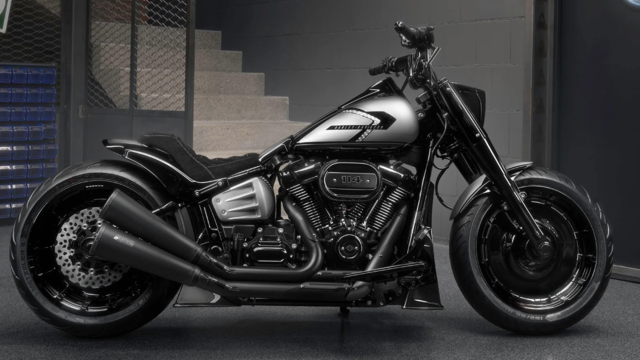
Harley-Davidson Fat Boy Becomes a Dark, Decepticon-Inspired Custom
Verdad Gallardo
6 Weirdest Harley-Davidsons Ever Sold to the Public
Verdad Gallardo
7 Times Harley-Davidson Chucked Tradition Out the Window
Verdad Gallardo
7 Surprising Harley-Davidson Products that Are Not Motorcycles
Verdad Gallardo
8 Best Harley-Davidson Motorcycles Ever
Pouria Savadkouei
10 Worst Harley-Davidson Motorcycles Ever
Pouria Savadkouei
Killer Custom's Jail Break Is The Breakout That Refused to Blend In
Verdad Gallardo
Crazy Bunderbike Build Looks Amazing, But Is It Impossible to Ride?
Verdad Gallardo
Road Master
Joined: Jan 2011
Posts: 855
Likes: 6
From: Riverside, Ca.
Then burn regular and good luck. It's you'r bike not mine. For a buck a tank full it's called being fuelish.