







High rev cam sought

Thread Starter
|
Road Captain
Joined: Jun 2007
Posts: 632
Likes: 86

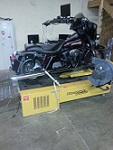
Here's the printout from my wifew Lowrider, she has the SE 211's in it. They work pretty well. Her build at this time was a 96" (stock pistons, heads) V&H short shots, SE A/C and SE 211's. The comparison on the sheet is the same bike, same build without the cams.
I chose these cams for her because she was a relatively new rider at this point, so I didn't want to give her too much down low. These cams work real good in the higher RPM's. The only downfall with them would be if you are cruising at 55 - 60 and want to pass or just take off, you'd want to kick it down a gear.
I chose these cams for her because she was a relatively new rider at this point, so I didn't want to give her too much down low. These cams work real good in the higher RPM's. The only downfall with them would be if you are cruising at 55 - 60 and want to pass or just take off, you'd want to kick it down a gear.
Can you be a little more explicit about what other mods are done to that engine ? What about EFI reprogramming ?
Last edited by leafman60; Nov 27, 2011 at 10:45 AM.
That is EXTREMELY helpful, that graph. Thank you. I was starting to think about head work and a higher-lift cam, maybe a 259E but what you show is what I want. Everything is about the same up to 3500 after which the power and torque dramatically kick in. Gosh, hard to believe you got almost 100 HP and all that torque out of a 96 ! Could it be the dyno variation ?
Can you be a little more explicit about what other mods are done to that engine ? What about EFI reprogramming ?
Can you be a little more explicit about what other mods are done to that engine ? What about EFI reprogramming ?
The bike almost feels like it has a power band in it lol. when accelerating from a low RPM you can definately feel the cams kick in at around 4000 RPM's. If you keep it reved up it runs like it's on steroids for being such a light bike. It really is fun to ride. Like I said, my wife is a small lady and the bike is light, when we put the cams in it she didn't have a whole lot of experience riding, so I wanted to give her something that wouldn't get her in trouble. The bike isn't to powerfull when she is just cruising, but when she wants more, it's there. She just has to wind it out a bit. Now that shes got some miles under her belt, we are going to throw a 107 in it. I already have the heads done and the jugs and pistons. I'm just trying to decide what cams we want to run. We are thinking about keeping the 211's just to experiment with them, if we do I will probably want to take a little off the heads to up the compression (211's like high compression). We'll probably shoot for 11.0 or 11.1:1.
I have an extra set of 211's if you are interested. They have about 1500 miles on them, i'll make you a good deal if you want to try them.
edit: I'm not sure what you mean by "dyno variation", our dyno is a DynoJet 259i, both tunes were done on the same dyno and both by me. The the gains should be comparable. It picked up about 20HP nad 20 TRQ with just the cam change, pretty good results dollar per HP in my book.
Last edited by harleytuner; Nov 27, 2011 at 08:52 PM.

Road Master
Joined: Jun 2010
Posts: 1,221
Likes: 4
From: Annemasse (border of Geneva-Switzerland) facing Mt-Blanc.
Your modified torque plot shows two distinct areas where there is a gain in efficiency preceded by 'stock' values and both areas where you have a gain seem proportional to the speed of the engine.
My bike came with the exhaust changeover valve and operates like this going through the range of 1500-5000 rpm:
- when both exhausts are selected from idle speed upwards= mild acceleration and pleasant sound,
- then only on the smaller exhaust (left side) up to 2400 rpm= pulls stronger feels and sounds like a Guzzi,
- with both pipes just above 2500 rpm= slightly weaker pull but still strong enough to barely feel the lack of back-pressure during the exhaust transition and it sounds like a Harley again,
- then it pulls stronger from 3000 before diminishing again near 4800 rpm.
Above 5000 rpm, someone puts a foot on the oxygen tube

Thread Starter
|
Road Captain
Joined: Jun 2007
Posts: 632
Likes: 86
The build is a bone stock 96", stock pistons, SE adjustable pushrods, stock heads, injectors, T.B. etc. The only mods are the 211 cams, the SE stage one air filter kit and Vance and Hines short shots. I did both the tunes on the bike (the priginal with just the pipes and the A/C then when we added the cams), the tuner is a SE race tuner. The bike is an '08 Low Rider.
Now that shes got some miles under her belt, we are going to throw a 107 in it. I already have the heads done and the jugs and pistons. I'm just trying to decide what cams we want to run. We are thinking about keeping the 211's just to experiment with them, if we do I will probably want to take a little off the heads to up the compression (211's like high compression). We'll probably shoot for 11.0 or 11.1:1.
Now that shes got some miles under her belt, we are going to throw a 107 in it. I already have the heads done and the jugs and pistons. I'm just trying to decide what cams we want to run. We are thinking about keeping the 211's just to experiment with them, if we do I will probably want to take a little off the heads to up the compression (211's like high compression). We'll probably shoot for 11.0 or 11.1:1.
Dang ! Looks like almost 100 HP would be plenty for anyone on a Low Rider. Of course, I know the old adage, " too much is just right."
My comment about dyna variation alludes to the fact that different dyno machines and different operators can yield different readouts.
I considered a more ambitious build-up for mine but I am worried about the crank bearing holding-up under the increased power. Does that not concern you ?
PM'd you on the cams.
Last edited by leafman60; Nov 28, 2011 at 08:21 AM.
Do you have an exhaust crossover valve to vary the back-pressure on this bike?
Your modified torque plot shows two distinct areas where there is a gain in efficiency preceded by 'stock' values and both areas where you have a gain seem proportional to the speed of the engine.
My bike came with the exhaust changeover valve and operates like this going through the range of 1500-5000 rpm:
- when both exhausts are selected from idle speed upwards= mild acceleration and pleasant sound,
- then only on the smaller exhaust (left side) up to 2400 rpm= pulls stronger feels and sounds like a Guzzi,
- with both pipes just above 2500 rpm= slightly weaker pull but still strong enough to barely feel the lack of back-pressure during the exhaust transition and it sounds like a Harley again,
- then it pulls stronger from 3000 before diminishing again near 4800 rpm.
Above 5000 rpm, someone puts a foot on the oxygen tube
Your modified torque plot shows two distinct areas where there is a gain in efficiency preceded by 'stock' values and both areas where you have a gain seem proportional to the speed of the engine.
My bike came with the exhaust changeover valve and operates like this going through the range of 1500-5000 rpm:
- when both exhausts are selected from idle speed upwards= mild acceleration and pleasant sound,
- then only on the smaller exhaust (left side) up to 2400 rpm= pulls stronger feels and sounds like a Guzzi,
- with both pipes just above 2500 rpm= slightly weaker pull but still strong enough to barely feel the lack of back-pressure during the exhaust transition and it sounds like a Harley again,
- then it pulls stronger from 3000 before diminishing again near 4800 rpm.
Above 5000 rpm, someone puts a foot on the oxygen tube
Dang ! Looks like almost 100 HP would be plenty for anyone on a Low Rider. Of course, I know the old adage, " too much is just right."
My comment about dyna variation alludes to the fact that different dyno machines and different operators can yield different readouts.
I considered a more ambitious build-up for mine but I am worried about the crank bearing holding-up under the increased power. Does that not concern you ?
PM'd you on the cams.
My comment about dyna variation alludes to the fact that different dyno machines and different operators can yield different readouts.
I considered a more ambitious build-up for mine but I am worried about the crank bearing holding-up under the increased power. Does that not concern you ?
PM'd you on the cams.
Got your PM and responded. Thanks
HD Forum Stories
The Best of Harley-Davidson for Lifelong Riders

7 Surprising Harley-Davidson Products that Are Not Motorcycles
Verdad Gallardo
8 Best Harley-Davidson Motorcycles Ever
Pouria Savadkouei
10 Worst Harley-Davidson Motorcycles Ever
Pouria Savadkouei
Killer Custom's Jail Break Is The Breakout That Refused to Blend In
Verdad Gallardo
Crazy Bunderbike Build Looks Amazing, But Is It Impossible to Ride?
Verdad Gallardo
Harley-Davidson Reveals Super Cool Cafe Racer Concept
Verdad Gallardo
Engraved Rebellion: Inside Bundnerbike's Glam Rock II
Verdad Gallardo
10 Motorcycles You Should Never Buy
Joe Kucinski
10 Things Harley-Davidson Needs to Fix in 2026
Verdad Gallardo
Road Master
Joined: Jun 2010
Posts: 1,221
Likes: 4
From: Annemasse (border of Geneva-Switzerland) facing Mt-Blanc.
So how can one explain the two lumps and the symmetry of the plot when the lowest value is equal to stock? It's also interesting to see there is no (horizontal) offset that normally occurs when you have cams with a higher lift. Could the mapping of the original fuel injection produce this?
I'm interested for my own bike, this is why I ask.
I'm interested for my own bike, this is why I ask.
Thread Starter
|
Road Captain
Joined: Jun 2007
Posts: 632
Likes: 86
Yesterday I had a conversation with Branch-OKeefe ( B-O, aka Branch Flowmetrics) about their head work.
They do not get a lot of promo these days. Other porters are keen on tying to forum formats like this and pushing their services while B-O has been lying low.
They still do a lot of work and I think I would choose them to do my Twin Cam heads. They've done great work for me in the past.
Anyone researching head porters should check them out.
http://www.branchokeefe.com/index.html
They are well aware of what other porters are doing and they make a good case for the type of approach they themselves take.
1. Regarding the often criticized mirror finish polishing job that they do on their intake ports - B-O is well aware of other porters who contend that this can condense or collect fuel particles on the slick walls and create droplets of non-atomized fuel to drip into the cylinders. B-O acknowledges that this effect can be detected on intake tracts of long dimensions as with automotive manifolds. They have tested the Harley intake tract many times and this effect is very minimal if existing at all. The H-D intake is too short to create a problem with this. Further, they have noticed that fuel injection models are even less likely to create this effect. The smooth polishing does aid greater flow velocity and that is why they do it. B-O will, however, finish the ports with a rougher, blasted finish if desired by the customer.
2. CNC porting versus hand porting - Fixing the stock heads in a jig and letting a programmed CNC machine mill the ports out based on the theoretical blue print of the head is not always practical. If there was a core shift during the molding of the heads or any variation during the head molding process, the program for the CNC will not get the milling correct for those particlar heads. They make the case that the human touch can better allow for and accommodate variations in the castings of stock heads.
I was also impressed by B-O in that they referrred to other shops and the cams etc that they sold and did not negatively criticize some of these other products that they, B-O, did not sell. They even recommended some of the products sold by S&S as well as some of the shops that so often promote their products on this forum. B-O say they can work with any of these other fine offerings of cams, pistons and they like. B-O does sell name-brand products too.
I was also impressed that B-O went into some detail about how much better the stock Twin Cam heads are and how much better they flow than the past Evo and Shovelhead offerings.
They are very cordial and informative and seem to know what they're talking about. The Wild Man from Tennessee himself who fixed-up Elvis with his first Harley (Jerry Branch) still stops by but is apparently enjoying his retirement.
Anyway, who knows. I just wanted to get some more info out there about another well-established, capable and dependable head porter.
They do not get a lot of promo these days. Other porters are keen on tying to forum formats like this and pushing their services while B-O has been lying low.
They still do a lot of work and I think I would choose them to do my Twin Cam heads. They've done great work for me in the past.
Anyone researching head porters should check them out.
http://www.branchokeefe.com/index.html
They are well aware of what other porters are doing and they make a good case for the type of approach they themselves take.
1. Regarding the often criticized mirror finish polishing job that they do on their intake ports - B-O is well aware of other porters who contend that this can condense or collect fuel particles on the slick walls and create droplets of non-atomized fuel to drip into the cylinders. B-O acknowledges that this effect can be detected on intake tracts of long dimensions as with automotive manifolds. They have tested the Harley intake tract many times and this effect is very minimal if existing at all. The H-D intake is too short to create a problem with this. Further, they have noticed that fuel injection models are even less likely to create this effect. The smooth polishing does aid greater flow velocity and that is why they do it. B-O will, however, finish the ports with a rougher, blasted finish if desired by the customer.
2. CNC porting versus hand porting - Fixing the stock heads in a jig and letting a programmed CNC machine mill the ports out based on the theoretical blue print of the head is not always practical. If there was a core shift during the molding of the heads or any variation during the head molding process, the program for the CNC will not get the milling correct for those particlar heads. They make the case that the human touch can better allow for and accommodate variations in the castings of stock heads.
I was also impressed by B-O in that they referrred to other shops and the cams etc that they sold and did not negatively criticize some of these other products that they, B-O, did not sell. They even recommended some of the products sold by S&S as well as some of the shops that so often promote their products on this forum. B-O say they can work with any of these other fine offerings of cams, pistons and they like. B-O does sell name-brand products too.
I was also impressed that B-O went into some detail about how much better the stock Twin Cam heads are and how much better they flow than the past Evo and Shovelhead offerings.
They are very cordial and informative and seem to know what they're talking about. The Wild Man from Tennessee himself who fixed-up Elvis with his first Harley (Jerry Branch) still stops by but is apparently enjoying his retirement.
Anyway, who knows. I just wanted to get some more info out there about another well-established, capable and dependable head porter.
Last edited by leafman60; Nov 29, 2011 at 07:10 AM.