

fuel octane ?
Road Warrior
Joined: Sep 2011
Posts: 1,308
Likes: 3
From: Central Texas

octane reflects the ability of the fuel to resist ignition.
High octane fuel allows higher compression ratios and more advanced ignition timing ( which is good for economy and a little power)
in a high compression mtor, low octane fuel may self ignite like a diesel motor, before the sparkplug fires, resulting in lost power and gasses expanding while the piston is still coming up on the compression stroke.
so- fuel octane requirement is more a function of compression ratio
You should stay with high octane fuel ( and carry octane boost if you are going into areas where supplied fuel is low octane... like Texas- http://www.consumeraffairs.com/news0...e-content.html )*
the older H-D motors ran compression ratios more like 8.2 or 8.5 to 1, the Twin Cam 103 is at 9.6:1
- Compression ratios are "nominal" and are affected by cam profile and rpm. Nominal compression ratios are calculated by the volume of the cylinder with the piston all the way down, then the volume of the remaining area when the piston is all the way up- at normal atmospheric pressures.
Certain cams at certain rpms with a tuned exhaust system may get more than 100% cylinder fill due to velocity of the incoming air charge-- ( this is sometimes called scavenging and is really the art of tuning, calculating the inter-performance of parts to get extra gains at specified rpms)
-turbo and superchargers also increase the cylinder fill beyond 100% by boosting the pressure of the air entering the intake
mike
* this is a joke, Texas has good gas, mostly--the link is to an article about a Texas convenience store chain selling regular as premium in 143 of their pumps
High octane fuel allows higher compression ratios and more advanced ignition timing ( which is good for economy and a little power)
in a high compression mtor, low octane fuel may self ignite like a diesel motor, before the sparkplug fires, resulting in lost power and gasses expanding while the piston is still coming up on the compression stroke.
so- fuel octane requirement is more a function of compression ratio
You should stay with high octane fuel ( and carry octane boost if you are going into areas where supplied fuel is low octane... like Texas- http://www.consumeraffairs.com/news0...e-content.html )*
the older H-D motors ran compression ratios more like 8.2 or 8.5 to 1, the Twin Cam 103 is at 9.6:1
- Compression ratios are "nominal" and are affected by cam profile and rpm. Nominal compression ratios are calculated by the volume of the cylinder with the piston all the way down, then the volume of the remaining area when the piston is all the way up- at normal atmospheric pressures.
Certain cams at certain rpms with a tuned exhaust system may get more than 100% cylinder fill due to velocity of the incoming air charge-- ( this is sometimes called scavenging and is really the art of tuning, calculating the inter-performance of parts to get extra gains at specified rpms)
-turbo and superchargers also increase the cylinder fill beyond 100% by boosting the pressure of the air entering the intake
mike
* this is a joke, Texas has good gas, mostly--the link is to an article about a Texas convenience store chain selling regular as premium in 143 of their pumps
Supporter
Joined: Aug 2008
Posts: 5,189
Likes: 16
From: N.E. Wisconsin
Believe what you want but Harley is not AMF any more ! I know for an (undisclosed) Fact ! Harley hires the Best of the Best Mech., Elect., Engineers. Marketing, Accounting, etc. people. Why ?....because they can Afford Too ! When they say run 91 octane or better there are several legitimate reasons !!!  Ahwww....
Oh !.........P.S. Same ideology as da Packers.....eh ?
Ahwww.... Oh !.........P.S. Same ideology as da Packers.....eh ?

Road Warrior
Joined: Apr 2011
Posts: 1,905
Likes: 66
From: Hartford, AL
For the purpose of this discussion, the catalyst is downsream of the combustion chamber, it does not impact the total amount of heat in the heads that effect octane requirement. Mild enrichment cools the exhaust and ultimately the rider, it doesn't cool the engine enough to reduce pinging and the lower octane requirement. If you are experiencing carbon build up, that indicates significant enrichment, and that causes a gradual increase in compression which will eventually lead to pinging also, no matter what octane fuel you use. If you run a rich tune, "winding it up" occasionally won't clean the carbon out of your heads, but it might blow some soot out of the muffler, the extra throttle used to wind it up puts you into an even more enriched sector of the map, so it really just adds to total acumulation of carbon.
Only reason I am engaged in this discussion is so many people believe everything HD says, unless they have something else they want to believe, (octane booster for example,) and people are wasting money on petroleum products, gas and oil, that they do not need to. How many times have you seen the Honda Civic driver put in premium grade gas because "it's better gas".
To the person who believes that 9.6:1 in an air cooled engine is high compression. My 1970 Porsche 911-S 2.2L at 12:1 was a high compression air cooled engine. 9.6 ain't.
But it's your money to spend anyway you wish. Great thing about this country, you have the freedom to be right and wrong.

Cruiser
Joined: Feb 2008
Posts: 240
Likes: 3
From: Norman Oklahoma
Been running the cheap stuff for thousands of miles with NO problems.I ride in a lot of areas where there is no premium fuel.If it pings back off the throttle and down shift to relief the load on the engine.

Seasoned HDF Member


Joined: Nov 2010
Posts: 17,548
Likes: 7,208
From: Oxford, Nc
Yeah, or you could just buy premium fuel and 'forgetaboutit'!

Ultimate HDF Member
Joined: May 2008
Posts: 7,439
Likes: 884
From: 'Noke, VA
Partially true, partially incomplete. The EPA tune that HD uses to get this engine to be accepted is lean, real lean. Lean is excessive heat in the combustion chamber. Enriching with a tuner can reduce the combustion temperatures and tendency of pre-ignition or pinging. Timing changes in a fuel map will also change the tendency of pinging. Opening it up does help keep the combustion chambers cleaner whether you wish to believe it or not.
Only reason I am engaged in this discussion is so many people believe everything HD says, unless they have something else they want to believe, (octane booster for example,) and people are wasting money on petroleum products, gas and oil, that they do not need to. How many times have you seen the Honda Civic driver put in premium grade gas because "it's better gas".
To the person who believes that 9.6:1 in an air cooled engine is high compression. My 1970 Porsche 911-S 2.2L at 12:1 was a high compression air cooled engine. 9.6 ain't.
But it's your money to spend anyway you wish. Great thing about this country, you have the freedom to be right and wrong.
Only reason I am engaged in this discussion is so many people believe everything HD says, unless they have something else they want to believe, (octane booster for example,) and people are wasting money on petroleum products, gas and oil, that they do not need to. How many times have you seen the Honda Civic driver put in premium grade gas because "it's better gas".
To the person who believes that 9.6:1 in an air cooled engine is high compression. My 1970 Porsche 911-S 2.2L at 12:1 was a high compression air cooled engine. 9.6 ain't.
But it's your money to spend anyway you wish. Great thing about this country, you have the freedom to be right and wrong.
Lean isn't "more heat in the combustion chamber". A lean condition will burn nominally hotter than a richer mixture, but the impact of AFR regarding engine heat is vastly overstated. In the long run, a too-rich map will do as much or more damage to the engine as a too-lean map.
Timing isn't part of the fuel map, timing is a separate adjustment (the spark map) that effects when and how efficiently the air/fuel charge is ignited.
There's a difference between static compression ratio and actual compression ratio. Your 1970 Porsche ran a higher static compression ratio with much more overlap in the camshafts (not to mention a far less precise fuel metering system). Your 2010 FLHTK has negative 5 degrees of overlap, creating far higher dynamic compression (cylinder pressure). This lack of overlap also holds more heat in the engine.
Now with all that said, you're right....There are a lot of people out there who use a higher-grade fuel than they need to. With modern knock sensors, most vehicles can run whatever fuel is available without risk of damage. Some vehicles (and your Harley is one of them) will benefit from increased octane, as that allows more spark advance (and less retard in reaction to detonation), which gives the engine more power and better efficiency.
Cruiser
Joined: Feb 2008
Posts: 240
Likes: 3
From: Norman Oklahoma
Ignorance can be cured but stupid is forever. Read my post it said i ride where there is no Hi octane fuel. If you pull in to a station that only has low octane with 10% ethanol what are you going to do. I can see by the number of post some people ride and some just talk a good ride .
Road Warrior
Joined: Apr 2011
Posts: 1,905
Likes: 66
From: Hartford, AL
Indeed, so let me try to correct you.
Timing isn't part of the fuel map, timing is a separate adjustment (the spark map) that effects when and how efficiently the air/fuel charge is ignited.
Your 1970 Porsche ran a higher static compression ratio with much more overlap in the camshafts (not to mention a far less precise fuel metering system). Y
detonation), which gives the engine more power and better efficiency.
Timing isn't part of the fuel map, timing is a separate adjustment (the spark map) that effects when and how efficiently the air/fuel charge is ignited.
Your 1970 Porsche ran a higher static compression ratio with much more overlap in the camshafts (not to mention a far less precise fuel metering system). Y
detonation), which gives the engine more power and better efficiency.
The 911 had a mechanical FI, not the most advanced, but certainly good for 70. Should have seen the linkage. Fortunately it stayed adjusted.
I had wondered about power output with various grades of gas but since I haven't put it on a dyno, and don't race it, I have not noticed any difference. I have noticed a better MPG with regular grade, which frankly did surprise me. Better by 2-3. I did some switching back and forth early on and it seemed to be consistent. Perhaps just a coincident though. Also perhaps my set-up, while not special by any means, works with the lower grades.
Perhaps an apples to oranges comparison. But one of the Kaw V-twins I had recommended regular and would carbon up if higher grades were used too much. The compression was similar, 9.5 vs 9.6, it was injected, but it was more advanced with water cooled heads and SOHC.
This subject is certainly being beat to death, but like those things that are certain, death and taxes, I am sure it will revive to a new question in the future, along with an oil thread or 2.
HD Forum Stories
The Best of Harley-Davidson for Lifelong Riders
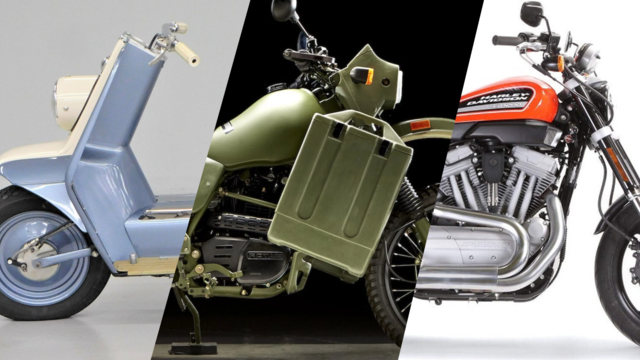
6 Weirdest Harley-Davidsons Ever Sold to the Public
Verdad Gallardo
7 Times Harley-Davidson Chucked Tradition Out the Window
Verdad Gallardo
7 Surprising Harley-Davidson Products that Are Not Motorcycles
Verdad Gallardo
8 Best Harley-Davidson Motorcycles Ever
Pouria Savadkouei
10 Worst Harley-Davidson Motorcycles Ever
Pouria Savadkouei
Killer Custom's Jail Break Is The Breakout That Refused to Blend In
Verdad Gallardo
Crazy Bunderbike Build Looks Amazing, But Is It Impossible to Ride?
Verdad Gallardo
Harley-Davidson Reveals Super Cool Cafe Racer Concept
Verdad Gallardo