






Does engine Chrome raise temp??

Tourer


Joined: Apr 2013
Posts: 313
Likes: 84
From: Central KY

This is a topic discussed on almost every website dedicated to a particular brand of motorcycle.
In my opinion, the more bare alloy or cast iron you have in an engine the better it will dissipate heat (and rough, unpolished metal at that). Vintage racers typically avoid any chrome, paint or coatings on engine components to avoid the problems with heat dissipation that coatings cause. Chrome is for looks; not for performance.
When's the last time you saw an aircooled race engine with a lot of chrome on it?
In my opinion, the more bare alloy or cast iron you have in an engine the better it will dissipate heat (and rough, unpolished metal at that). Vintage racers typically avoid any chrome, paint or coatings on engine components to avoid the problems with heat dissipation that coatings cause. Chrome is for looks; not for performance.
When's the last time you saw an aircooled race engine with a lot of chrome on it?

Road Master
Joined: Jun 2010
Posts: 1,221
Likes: 4
From: Annemasse (border of Geneva-Switzerland) facing Mt-Blanc.
There are three modes of heat transfer. They are conduction, convection and radiation. An air cooled engines main mode of cooling is convection. Your engine hopefully does not come in contact with any other body or mass so conduction is out of the question. That leaves radiation. A materials relative ability of its surface to emit energy by radiation is called emissivity. Just like flat black objects absorb more radiant heat from say the sun. A flat black body will also emit more radiant energy or heat. Thats why wood stoves and solar water heaters are back. On the contrary, shiny reflective surfaces are very poor at absorbing and emitting radiant energy. So while air is rushing buy your engine it is convective cooling,. The greater the duration and volume of air the greater the sum of exchange. The greater the temperature differential the greater the rate of exchange. Radiant cooling is only affected buy the surfaces ability to emit heat waves, therefore black bike components will cool quicker than chrome, all else being equal. BUT the same holds true for absorption, black components will also absorb a greater sum of solar radiation at a greater rate than chrome. Stay out of the sun and drive into the wind and you will have no problems right .
.
.I rode from Key West today but no air cooling was available, only immersion worked


Supporter
Joined: Aug 2008
Posts: 5,189
Likes: 16
From: N.E. Wisconsin
Speaking of driving your boat....are you say'in you were having sex from Key West ?
Last edited by drukanfu; May 10, 2013 at 09:53 PM.

Seasoned HDF Member


Joined: Sep 2009
Posts: 17,149
Likes: 6,174
From: SE Michigan
There are three modes of heat transfer. They are conduction, convection and radiation. An air cooled engines main mode of cooling is convection. Your engine hopefully does not come in contact with any other body or mass so conduction is out of the question. That leaves radiation. A materials relative ability of its surface to emit energy by radiation is called emissivity. Just like flat black objects absorb more radiant heat from say the sun. A flat black body will also emit more radiant energy or heat. Thats why wood stoves and solar water heaters are back. On the contrary, shiny reflective surfaces are very poor at absorbing and emitting radiant energy. So while air is rushing buy your engine it is convective cooling,. The greater the duration and volume of air the greater the sum of exchange. The greater the temperature differential the greater the rate of exchange. Radiant cooling is only affected buy the surfaces ability to emit heat waves, therefore black bike components will cool quicker than chrome, all else being equal. BUT the same holds true for absorption, black components will also absorb a greater sum of solar radiation at a greater rate than chrome. Stay out of the sun and drive into the wind and you will have no problems right.
.
Road Master
Joined: Jun 2010
Posts: 1,221
Likes: 4
From: Annemasse (border of Geneva-Switzerland) facing Mt-Blanc.
If you come across an old Porsche 911 cylinder you will see chome inside and sandblast finish outside. In the early 70's they knew how to make use of heat to improve performance.

Cruiser
Joined: Mar 2012
Posts: 157
Likes: 0
From: North Shore of Minnesota

Newton's cooling law is a solution of the differential equation given by Fourier's law:

Where:
 is the thermal energy in joules
 is the heat transfer coefficient (assumed independent of T here) (W/m2 K)
 is the surface area of the heat being transferred (m2)
 is the temperature of the object's surface and interior (since these are the same in this approximation)
 is the temperature of the environment; i.e. the temperature suitably far from the surface
 is the time-dependent thermal gradient between environment and object
Last edited by taconite; May 11, 2013 at 07:49 AM.
HD Forum Stories
The Best of Harley-Davidson for Lifelong Riders

Jason Momoa Is Turning Classic Harleys Into PHEVs
Verdad Gallardo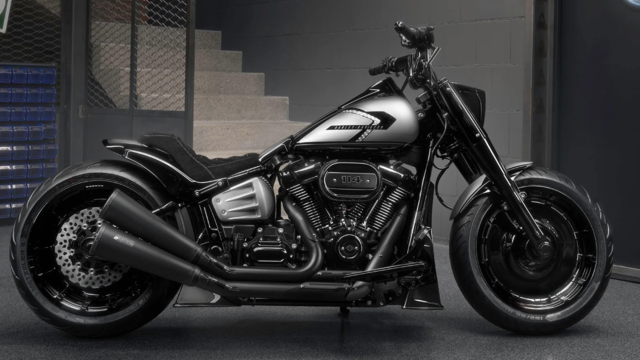
Harley-Davidson Fat Boy Becomes a Dark, Decepticon-Inspired Custom
Verdad Gallardo
6 Weirdest Harley-Davidsons Ever Sold to the Public
Verdad Gallardo
7 Times Harley-Davidson Chucked Tradition Out the Window
Verdad Gallardo
7 Surprising Harley-Davidson Products that Are Not Motorcycles
Verdad Gallardo
8 Best Harley-Davidson Motorcycles Ever
Pouria Savadkouei
10 Worst Harley-Davidson Motorcycles Ever
Pouria Savadkouei
Killer Custom's Jail Break Is The Breakout That Refused to Blend In
Verdad Gallardo
Crazy Bunderbike Build Looks Amazing, But Is It Impossible to Ride?
Verdad Gallardo
 Whats next? which tires are better? geeeezzzzzz
Tourer
Joined: Jan 2013
Posts: 354
Likes: 88
From: British Columbia, Canada
Newton's cooling law is a solution of the differential equation given by Fourier's law:
Where:
is the thermal energy in joules is the heat transfer coefficient (assumed independent of T here) (W/m2 K)
is the surface area of the heat being transferred (m2)
is the temperature of the object's surface and interior (since these are the same in this approximation)
is the temperature of the environment; i.e. the temperature suitably far from the surface is the time-dependent thermal gradient between environment and object
Where:
is the thermal energy in joules is the heat transfer coefficient (assumed independent of T here) (W/m2 K) is the surface area of the heat being transferred (m2) is the temperature of the object's surface and interior (since these are the same in this approximation) is the temperature of the environment; i.e. the temperature suitably far from the surface is the time-dependent thermal gradient between environment and object