




Lugging

Cruiser
Joined: Jun 2009
Posts: 153
Likes: 3

I bought my first Harley about 4 years ago. I remember at that time seeing lots of used bikes advertised with 30 to 40K miles and just having the engine upper-end redone. Being a Goldwing guy I wondered what could cause need to rebuild the upper part of the engine (other than performance mods) at only 30 to 40K? I wonder if that is a result of lugging. I sold my Deuce and now have an 07 Electra Glide Ultra. I find it is the smoothest and very responsive at 2500-2800 (and up ) so I try to run it in that range unless the road is flat and no acceleration needed. Sometimes this means 3rd gear at 30-35 mph. It also seems that the tapping (valve?) noise goes away at that rpm as well.
Just my 2 cents.
Just my 2 cents.
Road Captain
Joined: Jan 2006
Posts: 601
Likes: 5
From: Pinellas County, Florida
My rule of thumb, or wrist is 10 mph is 1st, 20 2nd, 30 3rd, 40 4th 50 and up 5th.
I don't have a tach on my 2004.
http://www.docstoc.com/docs/82264604/28_RatiosMPG-pg28
I don't have a tach on my 2004.
http://www.docstoc.com/docs/82264604/28_RatiosMPG-pg28
Stellar HDF Member


Joined: Aug 2012
Posts: 2,664
Likes: 184
From: Indiana, USA
Many Harley do not have a tach. The compensator sprocket by design will make noises in your primary when lugging. We have all heard it and all learn very quickly that we don't want to operate in that zone and the zone varies with the gear you are in.
I like to ride in the lower zones and frequently ride my '03 EG 5 spd at 35 MPH in 5th gear, 1500 RPM. Not lugging, just cruising, if the drivetrain seems to lug I downshift. I ride my '13 EG 6 spd the same in town and sometimes even find myself in 6th gear, the compensator sprocket starts making that clanging noise in the primary as it slides up and down the compensating ramps, again I change gears.
Harley's have 2 large diameter cylinders and are designed for torque, not horsepower. The like the lower RPM ranges Most metric have 4 smaller diameter cylinders and are designed for horspower, not torque. They like the higher RPM ranges.
I have owned 5 Harleys in almost 35 years and they all speak the same language, noise in the primary tells me the gear is too tall for the road codition and speed. No tach required.
I like to ride in the lower zones and frequently ride my '03 EG 5 spd at 35 MPH in 5th gear, 1500 RPM. Not lugging, just cruising, if the drivetrain seems to lug I downshift. I ride my '13 EG 6 spd the same in town and sometimes even find myself in 6th gear, the compensator sprocket starts making that clanging noise in the primary as it slides up and down the compensating ramps, again I change gears.
Harley's have 2 large diameter cylinders and are designed for torque, not horsepower. The like the lower RPM ranges Most metric have 4 smaller diameter cylinders and are designed for horspower, not torque. They like the higher RPM ranges.
I have owned 5 Harleys in almost 35 years and they all speak the same language, noise in the primary tells me the gear is too tall for the road codition and speed. No tach required.

Advanced
Joined: Sep 2012
Posts: 72
Likes: 0
From: Schaefferstown, Pa.
My rule of thumb, or wrist is 10 mph is 1st, 20 2nd, 30 3rd, 40 4th 50 and up 5th.
I don't have a tach on my 2004.
http://www.docstoc.com/docs/82264604/28_RatiosMPG-pg28
I don't have a tach on my 2004.
http://www.docstoc.com/docs/82264604/28_RatiosMPG-pg28
What he said....
Outstanding HDF Member
Joined: Jan 2008
Posts: 3,328
Likes: 15
From: Pacific Northwest
If you open the throttle on your bike and the engine starts to buck, stutter, accelerate at a slow and very labored pace or refuse to accelerate at all - you are lugging the engine.
Anything else is simply running along at low rpm's.
Anything else is simply running along at low rpm's.
Tourer
Joined: Sep 2012
Posts: 336
Likes: 0
From: Queen Creek, AZ
RPM's is one factor. I'm surprised that no one has talked about weight. Someone mentioned lugging is when the engine is bucking and lurching - this is true. Also, when it is strained to accelerate, especially riding 2-up and loaded.
As long as your solo, unloaded and the engine is not bucking it's fine. A rider should be able to feel this in his seat, rather than referring to a tach.
As long as your solo, unloaded and the engine is not bucking it's fine. A rider should be able to feel this in his seat, rather than referring to a tach.
HD Forum Stories
The Best of Harley-Davidson for Lifelong Riders

Jason Momoa Is Turning Classic Harleys Into PHEVs
Verdad Gallardo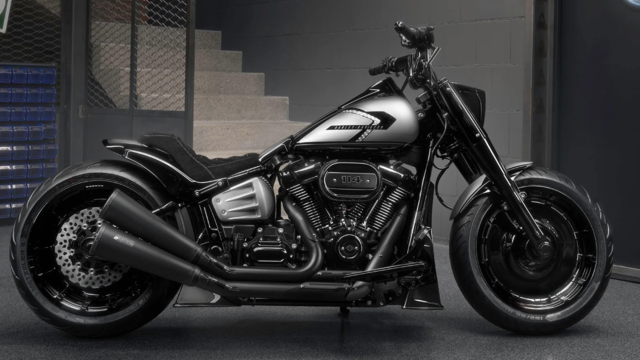
Harley-Davidson Fat Boy Becomes a Dark, Decepticon-Inspired Custom
Verdad Gallardo
6 Weirdest Harley-Davidsons Ever Sold to the Public
Verdad Gallardo
7 Times Harley-Davidson Chucked Tradition Out the Window
Verdad Gallardo
7 Surprising Harley-Davidson Products that Are Not Motorcycles
Verdad Gallardo
8 Best Harley-Davidson Motorcycles Ever
Pouria Savadkouei
10 Worst Harley-Davidson Motorcycles Ever
Pouria Savadkouei
Killer Custom's Jail Break Is The Breakout That Refused to Blend In
Verdad Gallardo