





gearing down...aka, engine braking. How to do it?

Stellar HDF Member


Joined: Dec 2013
Posts: 2,198
Likes: 282
From: Long Island NY

Having said that, I will ride with someone that does not downshift once. Once. After that, I will try to help them learn, if they do not understand, or explain my reasons, if they do. If they still refuse, I choose to not ride with them. It affects my safety as well as theirs, and I'll not be a party to it.Flame away.
Road Captain
Joined: Jul 2011
Posts: 648
Likes: 24
From: New Jersey
I mostly do not engine brake, but of course I downshift as needed to match the speed of traffic, adjust to speed limit changes, for turns, to pass, etc. I was taught to apply the brakes and shift down through the gears in line with the suggested gear-to-speed parameters. This method is what I have read in various books on riding and what I learned in the MSF course -- all of which was reinforced by a trusted tech early on. A bike isn't a truck, so I don't know why anyone would compare the two vehicles in this case. If anyone told me they wouldn't ride with me because of how I downshift, then I would laugh and ride (happily) alone.
So if someone doesn't ride the way you do or someone refuses to do exactly as you say you refuse to ride with them ever again? Your way or the highway? WOW, a little extreme, don't you think? I can't see how someone using or not using the engine to slow them down would affect your safety, I don't use the engine and I've never even come close to having any problems, that's the way I ride. Someone popping wheelies, excessive speeding or aggressive riding, yes, I'd avoid them but how someone brakes, a personal choice based on their training, well, as long as they're safe they can ride with me anytime.

It is a safety issue. I pray that any that disagree with me never find out the hard way WHY it is a safety issue.
I choose not to ride with folks who do not ride safely.
Road Captain
Joined: Oct 2013
Posts: 563
Likes: 4
From: Raleigh, NC
Engine braking is easier on your clutch, transmission, and engine parts than accelerating.
Why? Because when you are accelerating, you are adding fuel to the equation. Brake pads may be cheap, but brake discs are not, and our Harley stock discs are easily warped by over braking.
Engine braking is one of the first skills taught in the BASIC MSF course. The purpose of your transmission is to match engine speed to road speed, and easing out the clutch is critical to a smooth engine brake as you shift down. In a normal, non emergency stop, you will find you don't even need to use your brakes until the very last few mph, as RK 2014 stated. Coasting to a stop with your clutch in while you shift down, using only your brakes, is not matching your engine speed to your road speed, and can easily overheat your brakes, causing pad glazing and disc warpage.
For those who talk about the lack of brake light: MSF also teaches the first thing in any braking action--every time!-- is to check your rear view mirror, so you know what is behind you. As dieseldave and my67ponycar stated, tap your brakes enough to illuminate your brake light if you have vehicles behind. But the guy behind you that is looking down and texting isn't going to notice you regardless if you tap your brakes or not---so keep checking that mirror!
Why? Because when you are accelerating, you are adding fuel to the equation. Brake pads may be cheap, but brake discs are not, and our Harley stock discs are easily warped by over braking.
Engine braking is one of the first skills taught in the BASIC MSF course. The purpose of your transmission is to match engine speed to road speed, and easing out the clutch is critical to a smooth engine brake as you shift down. In a normal, non emergency stop, you will find you don't even need to use your brakes until the very last few mph, as RK 2014 stated. Coasting to a stop with your clutch in while you shift down, using only your brakes, is not matching your engine speed to your road speed, and can easily overheat your brakes, causing pad glazing and disc warpage.
For those who talk about the lack of brake light: MSF also teaches the first thing in any braking action--every time!-- is to check your rear view mirror, so you know what is behind you. As dieseldave and my67ponycar stated, tap your brakes enough to illuminate your brake light if you have vehicles behind. But the guy behind you that is looking down and texting isn't going to notice you regardless if you tap your brakes or not---so keep checking that mirror!

Grand HDF Member
Joined: Mar 2007
Posts: 4,928
Likes: 285
From: Edmond Oklahoma
When I downshift to engine brake, I don't move the throttle. In most cases the rev jump up is about what I would need if I blip the throttle.
The engineer in me says engine braking does cause more wear. But all things are relative, the wear is insignificant over the life span of the engine. I've driven standard shifts all my life because I get a better feel of the engine. I have owned a dozen standard cars putting 200,000 miles on half of them. I'm a down shifting fool and I have (knock on wood) never had a transmission issue or replaced a worn out clutch. And I get long life out of my brakes.
As for downshifting to first gear at 60 miles an hour, nothing tested our marriage more than my wife confessing to that very thing in my corvette. Lucky for one, the other is ok.
Beary
The engineer in me says engine braking does cause more wear. But all things are relative, the wear is insignificant over the life span of the engine. I've driven standard shifts all my life because I get a better feel of the engine. I have owned a dozen standard cars putting 200,000 miles on half of them. I'm a down shifting fool and I have (knock on wood) never had a transmission issue or replaced a worn out clutch. And I get long life out of my brakes.
As for downshifting to first gear at 60 miles an hour, nothing tested our marriage more than my wife confessing to that very thing in my corvette. Lucky for one, the other is ok.
Beary
Road Master
Joined: Sep 2004
Posts: 892
Likes: 8
From: Central Florida
Ever ridden behind someone who uses engine braking but does not tap the brakes? I made the mistake of riding in a group behind an old guy (78 at the time) who did this regularly. Nobody warned me. Worst part is it was in the mountains. Going around curves, I found myself on his *** several times...he slowed way down, but never touched his brakes. Not sure if he was downshifting, or just letting go of the throttle. He got all pissy when I mentioned it. After that, I refused to ride behind him. An accident waiting to happen for sure.
Also be aware that if/when you change cams, your engine braking will change significanlty. I learned this from personal experience. Much less engine braking with longer duration cams, so be ready for it.
Also be aware that if/when you change cams, your engine braking will change significanlty. I learned this from personal experience. Much less engine braking with longer duration cams, so be ready for it.

Novice
Joined: May 2013
Posts: 16
Likes: 0
From: Fort Worth, Texas
Brakes are the back-up system to the engine braking - not the primary. Save your brakes for emergency stopping or slow-speed parking lot situations.
HD Forum Stories
The Best of Harley-Davidson for Lifelong Riders

7 Surprising Harley-Davidson Products that Are Not Motorcycles
Verdad Gallardo
8 Best Harley-Davidson Motorcycles Ever
Pouria Savadkouei
10 Worst Harley-Davidson Motorcycles Ever
Pouria Savadkouei
Killer Custom's Jail Break Is The Breakout That Refused to Blend In
Verdad Gallardo
Crazy Bunderbike Build Looks Amazing, But Is It Impossible to Ride?
Verdad Gallardo
Harley-Davidson Reveals Super Cool Cafe Racer Concept
Verdad Gallardo
Engraved Rebellion: Inside Bundnerbike's Glam Rock II
Verdad Gallardo
10 Motorcycles You Should Never Buy
Joe Kucinski
10 Things Harley-Davidson Needs to Fix in 2026
Verdad Gallardo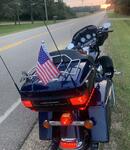
Seasoned HDF Member


Joined: Jan 2011
Posts: 28,842
Likes: 16,582
From: Wisconsin, USA
This is a good thread:
https://www.hdforums.com/forum/touring-models/699568-engine-braking-blip-or-no-blip.html
I sometimes use engine braking only, sometimes engine and brakes, and sometimes brakes only. Depends on how fast I need to stop, distance to light, grade . Whatever style you decide on, don't forget to tap your brakes, otherwise people behind you might not realize you are slowing.
If you are on a long downhill, you must use engine braking to avoid overheating your brakes. Learned that lesson on a 1968 Dodge Dart in the Catskills.
https://www.hdforums.com/forum/touring-models/699568-engine-braking-blip-or-no-blip.html
I sometimes use engine braking only, sometimes engine and brakes, and sometimes brakes only. Depends on how fast I need to stop, distance to light, grade . Whatever style you decide on, don't forget to tap your brakes, otherwise people behind you might not realize you are slowing.
If you are on a long downhill, you must use engine braking to avoid overheating your brakes. Learned that lesson on a 1968 Dodge Dart in the Catskills.
Ever ridden behind someone who uses engine braking but does not tap the brakes? I made the mistake of riding in a group behind an old guy (78 at the time) who did this regularly. Nobody warned me. Worst part is it was in the mountains. Going around curves, I found myself on his *** several times...he slowed way down, but never touched his brakes. Not sure if he was downshifting, or just letting go of the throttle. He got all pissy when I mentioned it. After that, I refused to ride behind him. An accident waiting to happen for sure.
Also be aware that if/when you change cams, your engine braking will change significanlty. I learned this from personal experience. Much less engine braking with longer duration cams, so be ready for it.
Also be aware that if/when you change cams, your engine braking will change significanlty. I learned this from personal experience. Much less engine braking with longer duration cams, so be ready for it.
And am considering getting a set of the saddlebag brake lights and hooking them to this...
https://www.hdforums.com/forum/touri...e-flasher.html
https://gearbrake.com/
Last edited by SafetyMan; Sep 10, 2014 at 10:56 AM.