





EITMS active below 80

I haven't heard of a single problem caused by it in the last 7 years.
My RAM shuts down 4 cylinders at highway speeds, so I doubt a Harley will do any harm at idle.

Thread Starter
|
Road Captain


Joined: Aug 2011
Posts: 693
Likes: 67
From: LI, NY

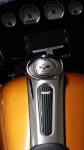
Went Christmas shopping, got caught in traffic jam, waited for stopped school bus, had to circle to find a parking spot at the mall. I figured it was getting hot so I let it idle while I took the helmet off & saw this. 28 degrees below the ambient air temp threshold and the EITMS kicked in. The bike is 8 months old with 13,200 miles, totally stock and runs great.
Cruiser
Joined: Nov 2010
Posts: 210
Likes: 0
From: Phoenix AZ
Temperature
I have read this issue on here before I was just thinking of trying to take a picture of mine cause it has also activated in the 60's, that is a good pic 52 and active, heat is an issue cause it is an air cooled motor,
I would rather have it come on when the engine is hot, not air temp cause engine heat is a problem and unless you are moving the motor is not getting cool air across it , I just wonder though did Harley do for rider comfort or to protect the motor? I can say it does seem a little more comfortable in stop and go traffic, especially when stopped. I mean if it was meant for engine temperature what difference would it make witch cylinder was shut off why not turn off the front cylinder or since it is run by computer shut off the front for a minute then the rear switch back and forth ? after all it don't turn on unless the motor is running for four minutes or more.
I think they do it for rider comfort.
I would rather have it come on when the engine is hot, not air temp cause engine heat is a problem and unless you are moving the motor is not getting cool air across it , I just wonder though did Harley do for rider comfort or to protect the motor? I can say it does seem a little more comfortable in stop and go traffic, especially when stopped. I mean if it was meant for engine temperature what difference would it make witch cylinder was shut off why not turn off the front cylinder or since it is run by computer shut off the front for a minute then the rear switch back and forth ? after all it don't turn on unless the motor is running for four minutes or more.
I think they do it for rider comfort.
Thread Starter
|
Road Captain
Joined: Aug 2011
Posts: 693
Likes: 67
From: LI, NY
I've seen lots of conjecture as to why, but it's just that; conjecture. Only H-D can say for sure. And you might get a different answer depending on where you ask, engineering vs sales.
My guess is it actives when the engine is hot to reduce new heat generated, but activates at 80 ambient for both reasons (rider comfort & heat reduction).
The rear cylinder was chosen because it is less open to ambient air. Another guess
My guess is it actives when the engine is hot to reduce new heat generated, but activates at 80 ambient for both reasons (rider comfort & heat reduction).
The rear cylinder was chosen because it is less open to ambient air. Another guess

Road Warrior

Joined: Aug 2014
Posts: 1,937
Likes: 320
From: Vancouver, WA
The rear cyl runs the hottest, yes because of less exposure to ambient air plus the heat off of the front cyl preheating some of the air before it reaches the rear cyl. When the the ECM shuts down the rear cyl, the front cyl has to compensate for the increased load that the rear was providing by increasing air and fuel to the front to keep the RPMs at the proper speed at idle. So the rear one is the only one that would benefit by shutting down. If the front was to be cut off, it would only make matters worse. My opinion is that cutting off the rear cylinder is primarily for rider comfort and engine temp as a secondary benefit.
I've seen lots of conjecture as to why, but it's just that; conjecture. Only H-D can say for sure. And you might get a different answer depending on where you ask, engineering vs sales.
My guess is it actives when the engine is hot to reduce new heat generated, but activates at 80 ambient for both reasons (rider comfort & heat reduction).
The rear cylinder was chosen because it is less open to ambient air. Another guess
My guess is it actives when the engine is hot to reduce new heat generated, but activates at 80 ambient for both reasons (rider comfort & heat reduction).
The rear cylinder was chosen because it is less open to ambient air. Another guess
....but still baffled.
I'm the first to admit I don't know everything, or much, for that matter. I'm a common sense guy, and take the manufacturer at par, until proven otherwise.
You, Sir, have proven what the mfgr put out to be wrong.

Road Warrior
Joined: Oct 2013
Posts: 1,446
Likes: 5
From: Mesquite Tx
I know the base map for my FHLX has changed at least twice. When I plug in my SEPST it will tell you if the base map is out of date and needs to be updated. Twice I have had to copy all my tuning data over to the new base map and load it. Of course you can't see the changes that were made in the base map because the changes are hidden changes. It could be that HD has changed the parameters and those of us that have updated our base maps have the new parameters and those that are stock or haven't updated the base map have the old settings.
Thread Starter
|
Road Captain
Joined: Aug 2011
Posts: 693
Likes: 67
From: LI, NY
Webo, if you meant to post that in response to eitms-active-below-80 please explain the relationship between base map & EITMS. Cuz it went way over my head.
HD Forum Stories
The Best of Harley-Davidson for Lifelong Riders

7 Surprising Harley-Davidson Products that Are Not Motorcycles
Verdad Gallardo
8 Best Harley-Davidson Motorcycles Ever
Pouria Savadkouei
10 Worst Harley-Davidson Motorcycles Ever
Pouria Savadkouei
Killer Custom's Jail Break Is The Breakout That Refused to Blend In
Verdad Gallardo
Crazy Bunderbike Build Looks Amazing, But Is It Impossible to Ride?
Verdad Gallardo
Harley-Davidson Reveals Super Cool Cafe Racer Concept
Verdad Gallardo
Engraved Rebellion: Inside Bundnerbike's Glam Rock II
Verdad Gallardo
10 Motorcycles You Should Never Buy
Joe Kucinski
10 Things Harley-Davidson Needs to Fix in 2026
Verdad Gallardo


I know the base map for my FHLX has changed at least twice. When I plug in my SEPST it will tell you if the base map is out of date and needs to be updated. Twice I have had to copy all my tuning data over to the new base map and load it. Of course you can't see the changes that were made in the base map because the changes are hidden changes. It could be that HD has changed the parameters and those of us that have updated our base maps have the new parameters and those that are stock or haven't updated the base map have the old settings.
Cruiser
Joined: Nov 2010
Posts: 210
Likes: 0
From: Phoenix AZ
Updates ?
What if you are like a lot of guys and do your own service.
could you bring your bike in for an update, for free ?
I know some dealers will flash your bcm so the spot lights will stay on when the high beams are on, at no charge. when you buy the harley boom audio amp harley gives you the software update free, But you have to pay the dealer the labor.
I guess if it was an emissions or safety thing harley would send you a letter.
I guess if it ain't broke don't fix it.
When I brought my bike in for the 1K service my dealer said they would check for updates, how would you know, bike still runs the same, I do know one thing that when it is cold 60 or less the bike hates the cold till the motor warms up.