When you click on links to various merchants on this site and make a purchase, this can result in this site earning a commission. Affiliate programs and affiliations include, but are not limited to, the eBay Partner Network.
I bought a 2020 FXBB and it's my first bike with TBW and I'm really hating the throttle response. It is extremely twitchy where it's difficult for me even hitting bumps on the road, causing the throttle to spike.
I will be riding maintaining a consistent speed and just moving the throttle the tiniest little amount feels like it's way too much. It's difficult to ride a set speed.
I'm an experienced rider (well, at least with cable throttles..) and I'm not gripping the throttle too tightly or anything, I've never experienced this before. Could there be an issue with the throttle sensor or something?
The previous owner installed a Bassani RR3 exhaust and Tbars, but he said he never bothered tuning it so I assume that isn't the issue, but who knows if he's being truthful.
Before I start investigating further, I thought I'd check if this is relatively normal behavior for TBW? If not, any suggested steps? Could it be throttle tube or a sensor?
I had a similar feeling when I bought my 21 Street Bob. I've eventually gotten used to it. I believe there is a setting in the ECM called Throttle Progresstivity that can be adjusted with Powervision, possibly other tuners. In stock form the ECM won't let the throttle blade open fully until a certain RPM. Kind of like training wheels from the factory. I guess it's possible this got changed on your bike, but if he never had it tuned it's doubtful.
Does it have aftermarket cam? Those with a lot of low end torque can exhibit what you describe. Cam or not, tuning software has the ability to adjust what's called "throttle progressivity".
My bike has some pretty strong roll on with the SEPST SE8-477 Cam tune. With the FuelMoto USA tune the roll on is much smoother and consistant.
You may want to see if the tune is overly aggressive on the throttle.
If it was never tuned after exhaust installation, it may also be a "lean surge", which feels kind of the same. TTS, Direct Link, or PowerVision tuners all have tables that, when used to calibrate the map in the ECM to the actual components installed, result in a smooth operating vehicle.
I have complained about this forever... I believe that the issue is caused by a slow BCM which needs to handle a finer input from the throttle but it isn't able to do that without a major upgrade of the BCM to more bits. When you twist the throttle so that it senses the output by the TBW the space between the requested RPMs is too wide for the ability of the BCM to return a more accurate output of the throttle...
I have/had a similar issue with my 2018 M8, in regards of just opening the throttle off idle in low gears, i.e. it will in effect change from being slightly open to as if you pull the throttle back to quick and surge forwards, you had to be very carful especially in the wet.
I did have an exact same bike & model to compare it to and have had several fly by wire bikes.
Basically I will talk about the V&H FP3 as this is what I had and I am fully aware that the throttle setting can be adjusted by other means but it also helps for a basic and simplistic explanation!
So initially, as I had an FP3 I could set the throttle to the least aggressive throttle opening setting, this had some effect. (Note it was on Standard Plus and no where near the most aggressive setting!)
I then read up about some early faulty throttle grip sensors, and substituted the throttle sensor, again made a small difference.
The next thing I looked at was the actual throttle settings, there are two, Primary & Secondary, with the FP3 you can set which gear it would change over and adjusted this again made a small difference! (It is set in the above picture to gear change over 7 to ensure it didn't change to secondary throttle in the custom setting, I have it set to 4)
I then started to think about changing the actual table settings, obviously no real experience with this, I was somewhat reluctant to do this, I just happened to then be on a Road Trip with a Dealer Master Tech and happened to ask him about this and had he come across any issues and what I had done.
He said he had and it could well be the ECU, but as it all works electrically and at low volage, go through all the connections in the throttle circuit you only need one pin not making a good contact and that could be the cause. It could also be the throttle actuator on the throttle body as well.
This winter I did go through all the connectors and again it has made another slight difference, but still there, no where near as bad but still noticeable!
So my advice here would be start cheap, check all the connectors in the circuit first, then look to having it dyno tuned and the software adjusted the best it can, this may well get rid of the issue before considering replacing expensive hardware!
Last edited by SJC69; Apr 25, 2024 at 04:45 AM.
Reason: Spelling
You'd think by now engine programmers would have come up with a good, average response gain. Instead, motorcycles are over-gained twitchy, and trucks are under-gained hesitant (hence the proliferation of throttle tuners for truck ecms).
Seeing all the comments about twitchy Harley's leads me to think they come off the floor over-gained, i.e., it's not loose connectors or something else. Anyone know of aftermarket throttle gain ecm apps?
I would try to determine if it's been tuned. That year bike still has a "throttle blade control" table and people think maxxing out the values makes more power. All it does is create the situation you're describing. A properly tuned tbw bike is smooth as glass everywhere.
Seeing all the comments about twitchy Harley's leads me to think they come off the floor over-gained, i.e., it's not loose connectors or something else. Anyone know of aftermarket throttle gain ecm apps?
There are, they are tuners such as Dynojet, V&H Fuel packs etc. as well as any tuning device that can flash or amend the ECU program or amend the the throttle tables.
Basically the H-D fly-by wire throttle in this case operates by low voltage electrical signals, with two basically mechanical electrical devices, controlled by the ECU and pre-programmed tables of how it is to operate.
The throttle sensor is basically a variable resistor controlled by being turned by the twist grips which alters the electrical signal to the ECU, the ECU reads this signal and uses the pre-programed tables as well as considering other various inputs and then sends out an electrical signal to infect a a mechanical stepping motor which then physically moves the throttle blade.
The main control of the throttle that can be easily changed is those installed throttle tables, this will effect how and when and what speed in response the actual throttle blade in the throttle body moves in relation to the position and speed the twist grip is turned.
In the case of the V&H Fuel Pack 3 they gave the option of a simplified adjustment of the throttle settings to preset tables in various stages form an aggressive throttle response, such as Race to Custom with Standard and Standard Plus being the nearest to stock tables and operation, you can also read and amend these tables individually cell, by cell giving the capability of adjusting very precise areas and parameters, this is how you may be able to in effect 'tune out' an issue.
The earlier M8 Tourers there was a known issue of problems with the throttle sensor not responding correctly.
7 Surprising Harley-Davidson Products that Are Not Motorcycles
Slideshow: The bar-and-shield logo shows up on far more than motorcycles, some of the company's most unexpected products have nothing to do with riding.
Slideshow: From the troubled AMF years to modern misfires, these bikes earned reputations for reliability issues, questionable engineering, or disappointing performance.
Crazy Bunderbike Build Looks Amazing, But Is It Impossible to Ride?
Slideshow: The Swiss custom shop has taken a Harley Softail and stretched it into something so long and low that it looks closer to a rolling sculpture than a conventional motorcycle.
Engraved Rebellion: Inside Bundnerbike's Glam Rock II
Slideshow: A standard cruiser becomes an intricate metal canvas in the hands of a Swiss custom house known for pushing Harley-Davidson platforms far beyond their factory brief.
Slideshow: Harley-Davidson's challenges aren't abstract; they show up in dropping shipments, shrinking dealer traffic, and strategic decisions that aren't yet translating into growth.



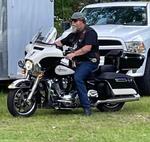


 Overly sensitive throttle-by-wire