







* HOW TO * under fifty bux *

Building the index I found some missing image links and asked OP's to repair them. Here's the first contribution by Chengdave2003:
post# 861 ..... suck in turn signals ....................................... chengdave2003
post# 861 ..... license plate backup ..................................... chengdave2003
Thanks, David!
FXD2003Rider
post# 861 ..... suck in turn signals ....................................... chengdave2003
post# 861 ..... license plate backup ..................................... chengdave2003
Thanks, David!
FXD2003Rider

Intermediate
Joined: Jun 2009
Posts: 27
Likes: 0
From: San Francisco
Are the risers 6"? and how wide (or short) of a drag bar did you use?

Advanced
Joined: Dec 2009
Posts: 63
Likes: 0
From: in NC
Backrest
I was looking at available seats / backrests that HD and others offered and I got to thinking maybe I could make my own backrest for the OME seat. If I screwed up the seat… well I was thinking of buying a new seat anyway. And I wanted to make it using what I have and spending as little money as possible.
For the back rest bar I first folded a piece of angle iron by heating and hammering it flat. I then welded the fold shut:
Attachment 100772
I then cut and welded two pieces of angel iron together to form a sleeve:
Attachment 100773
The really hard part was deciding were to mount the sleeve (I lucked out here). I made and welded brackets for the sleeve that fit the curve of the frame. I then cut into the existing vinyl covering and seat frame and added carriage bolts to hold the sleeve in place. All parts were then cleaned up and painted.
Attachment 100774
I use a piece of ¼” plywood for the rest. After adding rope to the back outside edge (this gave me a recess area for the back cover) I laid out the foam and vinyl, stapled the vinyl to the board and used Velcro to attach the vinyl covered back cover.
Attachment 100777
The finished product:
Attachment 100776
If, or should I say when, I redo the backrest I’ll resize to something smaller and add piping. But that will have to wait until I can find a reasonably priced sewing machine that can handle that.
Cost of the vinyl = $4, foam = $8.
For the back rest bar I first folded a piece of angle iron by heating and hammering it flat. I then welded the fold shut:
Attachment 100772
I then cut and welded two pieces of angel iron together to form a sleeve:
Attachment 100773
The really hard part was deciding were to mount the sleeve (I lucked out here). I made and welded brackets for the sleeve that fit the curve of the frame. I then cut into the existing vinyl covering and seat frame and added carriage bolts to hold the sleeve in place. All parts were then cleaned up and painted.
Attachment 100774
I use a piece of ¼” plywood for the rest. After adding rope to the back outside edge (this gave me a recess area for the back cover) I laid out the foam and vinyl, stapled the vinyl to the board and used Velcro to attach the vinyl covered back cover.
Attachment 100777
The finished product:
Attachment 100776
If, or should I say when, I redo the backrest I’ll resize to something smaller and add piping. But that will have to wait until I can find a reasonably priced sewing machine that can handle that.
Cost of the vinyl = $4, foam = $8.
Last edited by soldierbot; Apr 2, 2021 at 07:46 AM.

Thread Starter
|
Club Member
Joined: May 2006
Posts: 14,564
Likes: 9,223
From: the 50s & the 60s

.
Nice job on the backrest fwms.
Nice shop too.
Looks like there might be an interesting project going on in the background as well.
.
.
.
Advanced
Joined: Dec 2009
Posts: 63
Likes: 0
From: in NC
Last edited by fwms; Mar 8, 2010 at 07:59 AM.

May our Moderator Rest in Peace
Joined: Sep 2006
Posts: 11,386
Likes: 35
From: Rochester, NY
The finished product:
Attachment 100776
If, or should I say when, I redo the backrest I’ll resize to something smaller and add piping. But that will have to wait until I can find a reasonably priced sewing machine that can handle that.
Attachment 100776
If, or should I say when, I redo the backrest I’ll resize to something smaller and add piping. But that will have to wait until I can find a reasonably priced sewing machine that can handle that.
The sewing machines used by shoe makers are capable of going through seriously heavy leather and hard rubber like shoe/boot soles, so thin seat vinyl and plastic piping wouldn't faze it at all.
A small job like that shouldn't cost much and it will get done with professional results.
Advanced
Joined: Dec 2009
Posts: 63
Likes: 0
From: in NC
Nice job, but instead of buying a heavy duty sewing machine you might look into farming that kind of little job out to an upholstery shop or better yet a shoe maker.
The sewing machines used by shoe makers are capable of going through seriously heavy leather and hard rubber like shoe/boot soles, so thin seat vinyl and plastic piping wouldn't faze it at all.
A small job like that shouldn't cost much and it will get done with professional results.
The sewing machines used by shoe makers are capable of going through seriously heavy leather and hard rubber like shoe/boot soles, so thin seat vinyl and plastic piping wouldn't faze it at all.
A small job like that shouldn't cost much and it will get done with professional results.

Road Master
Joined: Feb 2010
Posts: 804
Likes: 1
From: 415
The Legacy lives on
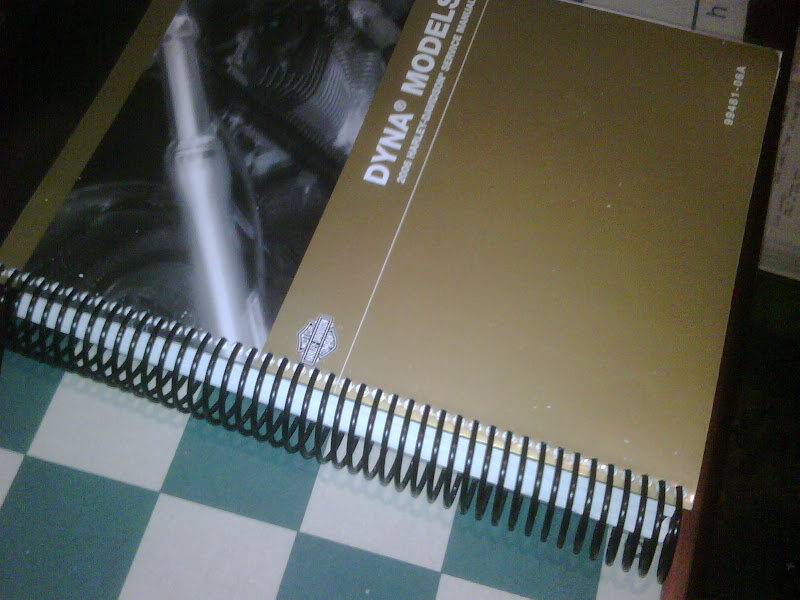
I joined this forum because of this thread, and even though I am still back on page 73 and I haven't caught up to you guys yet I have already put a couple cheap mods into play. Here's the one that cost me seven dollars. Big thanks to mister Mud and the rest of the contributors, and when I catch up I'll see if I can add anything.
And also thanks Mud for introducing me to Terry Allen, by way of using the CD case as a prop stand.
And also thanks Mud for introducing me to Terry Allen, by way of using the CD case as a prop stand.
Last edited by macnab_sf; Mar 9, 2010 at 09:15 PM. Reason: shpellink
HD Forum Stories
The Best of Harley-Davidson for Lifelong Riders

8 Best Harley-Davidson Motorcycles Ever
Pouria Savadkouei
10 Worst Harley-Davidson Motorcycles Ever
Pouria Savadkouei
Killer Custom's Jail Break Is The Breakout That Refused to Blend In
Verdad Gallardo
Crazy Bunderbike Build Looks Amazing, But Is It Impossible to Ride?
Verdad Gallardo
Harley-Davidson Reveals Super Cool Cafe Racer Concept
Verdad Gallardo
Engraved Rebellion: Inside Bundnerbike's Glam Rock II
Verdad Gallardo
10 Motorcycles You Should Never Buy
Joe Kucinski
10 Things Harley-Davidson Needs to Fix in 2026
Verdad Gallardo
Southpaw Super Glide: A Left-Hand-Drive 1979 Harley FXE Built to Fit the Rider
Verdad Gallardo
Ultimate HDF Member
Joined: May 2008
Posts: 6,642
Likes: 48
From: Ogden, UT
Gain 1/2" rear tire clearance each side
A cheap easy way to gain a 1/2" of clearance on each side for slightly wider tires.
When I switched to a 160 instead of the stock 150 I found I had a bit of a clearance problem due to the wheel not being exactly centered under the fender.
An easy way to gain clearance was by using T-nuts instead of regular nuts and bolts.
You have to drill the strut out using a 7/16" bit to allow for the T-nut, and buy slightly shorter bolts. On mine 3/8" x 16 x 1" bolts work perfectly unless you have easy brackets or some other mounting system for bags, then 1-1/2" bolts work fine.
The T-nut installed

In case you are not familiar with T-nuts


This is why I prefer stainless over chrome bolts
The T-nuts are stainless too, you can get them at Lowes or Home Depot
This is why you may need 1-1/2" bolts if you use easy brackets

They held themselves in place for tightening, but if you find they slip you can see they have a couple holes, you can make a simple tool to hold, you should not need to though.
When I switched to a 160 instead of the stock 150 I found I had a bit of a clearance problem due to the wheel not being exactly centered under the fender.
An easy way to gain clearance was by using T-nuts instead of regular nuts and bolts.
You have to drill the strut out using a 7/16" bit to allow for the T-nut, and buy slightly shorter bolts. On mine 3/8" x 16 x 1" bolts work perfectly unless you have easy brackets or some other mounting system for bags, then 1-1/2" bolts work fine.
The T-nut installed
In case you are not familiar with T-nuts
This is why I prefer stainless over chrome bolts
The T-nuts are stainless too, you can get them at Lowes or Home Depot
This is why you may need 1-1/2" bolts if you use easy brackets
They held themselves in place for tightening, but if you find they slip you can see they have a couple holes, you can make a simple tool to hold, you should not need to though.
Last edited by 8541hog; Mar 14, 2010 at 10:05 AM.
 Homemade Oil Cooler
I had a 4x6" piece of aluminum mill stock laying around that I first polished because I like polishing things:

Next, I set up the drill press to get a straight starter hole into each end so I could follow that with my long 1/4" drill bit:

A layout is done with center punches to drill ventilation holes (3/8" for centers, 5/16" for ends) between the galleries. NOTE: Punch them deep; the aluminum allows the drillbit to wander and screw up the holes:

Cross-gallery holes are drilled from one main gallery to the one on the other side:

Then these crossover holes are tapped for allen plugs. I decided to tap deeper on the two ends for perfect built-in mounts:

The drill shavings scratched the heck out of it despite putting a paintbrush next to the drillbits, so I had to resand it, starting at 400 grit. It looks almost annealed or glass beaded at this grit - tempting:

After 400, 600, 800, 1500, the 2000 grit begins to reflect a bit:

Next, I set up the drill press to get a straight starter hole into each end so I could follow that with my long 1/4" drill bit:
A layout is done with center punches to drill ventilation holes (3/8" for centers, 5/16" for ends) between the galleries. NOTE: Punch them deep; the aluminum allows the drillbit to wander and screw up the holes:
Cross-gallery holes are drilled from one main gallery to the one on the other side:
Then these crossover holes are tapped for allen plugs. I decided to tap deeper on the two ends for perfect built-in mounts:
The drill shavings scratched the heck out of it despite putting a paintbrush next to the drillbits, so I had to resand it, starting at 400 grit. It looks almost annealed or glass beaded at this grit - tempting:
After 400, 600, 800, 1500, the 2000 grit begins to reflect a bit:
Last edited by Quadancer; Mar 14, 2010 at 09:01 PM.