



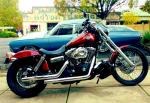


Temps 320+ and tuning not helping...

Road Master
Joined: Aug 2010
Posts: 1,153
Likes: 42
From: AZ

My bike hit 283 degrees in 113 degree air temp. In 106 degrees it will run 260 to 270's. Your riding conditions are mild. Something is definately not right to be generating the sort of temps you're getting in such mild conditions. Don't ride anywhere its hot until you get this staightened out.

Outstanding HDF Member
Joined: Aug 2012
Posts: 3,217
Likes: 90
From: Detroit
My bike hit 283 degrees in 113 degree air temp. In 106 degrees it will run 260 to 270's. Your riding conditions are mild. Something is definately not right to be generating the sort of temps you're getting in such mild conditions. Don't ride anywhere its hot until you get this staightened out.
Last edited by Warp Factor; Jun 21, 2015 at 03:37 PM.
Timing question
Does the addition of a stage 1 have anything to do with modding the timing?
Rather, would modification of the timing the required with the addition of a high flow air cleaner and pipes?
Rather, would modification of the timing the required with the addition of a high flow air cleaner and pipes?
So, what I've just gone and done (will test tomorrow) is went and made a copy of my original backup tune and edited it. I left the timing and other variables at the stock settings. I did however take the AFRs and copy/paste them from two different tunes. One was right from DynoJet (the "2404" tune) and another from one of the users here on hdforums. I noticed things like gear ratios and timing, among others, were different from stock. The way I figure it is that timing has to do with the cams mostly. That shouldn't be adjusted since I haven't done any cam work. There were other sections such as PE start/stops that I went down the middle. Updates tomorrow.
Update
So, the tune seems to run well. I get some hard starts, after it's warmed up (like heading to get some fuel, then starting after fueling), but, it seems to work. However, the temps do seem to get warm still.
I did an auto tune run to work this AM and it ran cooler than normal. Much cooler.
Here's a question:
If I flash the Fuel Moto map and run auto tunes to get the % of change really dialed in, would it be feesible to THEN adjust AFR? I was thinking that since a user on roadglide dot org forum explained this to another user:
I was thinking about using my stock map to go off of, since the VE tables should be spot on. If the VE tables shouldn't change from stock (without head or cam work or intake/exhaust mods) then the stock map should be loaded correctly, right? However, the addition of the stage 1 changes the airflow. Therefore the VE tables from the FM maps would be better calibrated to my setup. Additionally, FM timing/spark tables would be better calibrated to the cylinders' VE. So the use of the STOCK timing tables on a stage 1 setup isn't on exactly where they should be, since the amount and speed of air intake/exhaust has now been changed. Timing may need to be advanced or retarded to compensate for the new VE.
How I USED to see it is like this:
AFR is what you decide you want for whatever reasons (power, temp control, fuel economy, etc). Volumetric Efficiency (VE) then trims it to the AFR you've set.
The way I see it NOW is like so:
Cam, head work, air cleaner or intake, and exhaust mods change the way/speed and some cases the amount of fuel and air the cylinders can process. To be EFFICIENT in this process of handling the proper amount of A/F in each cylinder the throttle position (TPS or TP) is sensed (thus telling the the ECM how much fuel is being injected) and the engine speed/tach is guaged to determine the SUPPOSED VE. If you change intake/exhaust then re-calibration needs to happen here.
After the proper VE is established then the AFR/lambda can be adjusted to the rider's desire. The ECM will already know what the amount of fuel to be injected at all the cells/areas of a TPS and RPM since the VE has been dialed in.
Other questions I have are:
What area tells the ECM that intake/exhaust mods have been made? I would assume that air and pressure sensors should be in the cylinders to properly monitor this, instead of TPS and RPM. If the airflow rate is SUPPOSED to be "X" with a stock intake and you upgrade it to a high-flow, then what's to tell the ECM that the amount of air flowing in is now at "Y"? The same query applies to the exhaust.
Also, what determines the best spark for a bike? I understand the need to adjust timing to suit the level or expected level of pressure of a cylinder to create the best combustion, but what measures that pressure?
Holy chit, I typed a lot...
Anyways, summary- I think I should use FM maps to AT the VE tables and then adjust AFR. Correct me anywhere I'm wrong please.
Thanks folks!
I did an auto tune run to work this AM and it ran cooler than normal. Much cooler.
Here's a question:
If I flash the Fuel Moto map and run auto tunes to get the % of change really dialed in, would it be feesible to THEN adjust AFR? I was thinking that since a user on roadglide dot org forum explained this to another user:
Im not really using auto tune to get best power, but best ridability. I used fuel motos map to auto tune with to perfect it and then played around with my air/fuel ratio table until I got it good enough to suit my needs. Im running 13.1 in most of the mid-cruise range of the table. Mostly to keep things cool. Fuel motos map is leaner.
Auto tune, is not a end all be all tuning solution. What it will do is correct the volumetric efficiency table for front and rear cyclinders to match your the flow of your AC/exhaust/cam combo. The ECU then uses this new VE table to keep the set A:F exactly what you have it set to in the A:F table. You can then display real time A:F from the wide bands on the power vision to monitor what your A:F ratio is actually reading. Once you done some good long auto tune sessions, your A:F should be reading exactly or very close to what you set them to in the A:F table.
In simpler terms, after doing a good auto tune session, If you were to set the intire A:F table to 13.1, then you should be seeing 13.1 displayed by the wide bands on the power vision at every rpm/throttle (MAP) combination.
Now, if you want your tune perfect for the best power possible, your still going to need a dyno to measure power. But you've pretty much got half the work already done for your tuner person.
Auto tune, is not a end all be all tuning solution. What it will do is correct the volumetric efficiency table for front and rear cyclinders to match your the flow of your AC/exhaust/cam combo. The ECU then uses this new VE table to keep the set A:F exactly what you have it set to in the A:F table. You can then display real time A:F from the wide bands on the power vision to monitor what your A:F ratio is actually reading. Once you done some good long auto tune sessions, your A:F should be reading exactly or very close to what you set them to in the A:F table.
In simpler terms, after doing a good auto tune session, If you were to set the intire A:F table to 13.1, then you should be seeing 13.1 displayed by the wide bands on the power vision at every rpm/throttle (MAP) combination.
Now, if you want your tune perfect for the best power possible, your still going to need a dyno to measure power. But you've pretty much got half the work already done for your tuner person.
How I USED to see it is like this:
AFR is what you decide you want for whatever reasons (power, temp control, fuel economy, etc). Volumetric Efficiency (VE) then trims it to the AFR you've set.
The way I see it NOW is like so:
Cam, head work, air cleaner or intake, and exhaust mods change the way/speed and some cases the amount of fuel and air the cylinders can process. To be EFFICIENT in this process of handling the proper amount of A/F in each cylinder the throttle position (TPS or TP) is sensed (thus telling the the ECM how much fuel is being injected) and the engine speed/tach is guaged to determine the SUPPOSED VE. If you change intake/exhaust then re-calibration needs to happen here.
After the proper VE is established then the AFR/lambda can be adjusted to the rider's desire. The ECM will already know what the amount of fuel to be injected at all the cells/areas of a TPS and RPM since the VE has been dialed in.
Other questions I have are:
What area tells the ECM that intake/exhaust mods have been made? I would assume that air and pressure sensors should be in the cylinders to properly monitor this, instead of TPS and RPM. If the airflow rate is SUPPOSED to be "X" with a stock intake and you upgrade it to a high-flow, then what's to tell the ECM that the amount of air flowing in is now at "Y"? The same query applies to the exhaust.
Also, what determines the best spark for a bike? I understand the need to adjust timing to suit the level or expected level of pressure of a cylinder to create the best combustion, but what measures that pressure?
Holy chit, I typed a lot...
Anyways, summary- I think I should use FM maps to AT the VE tables and then adjust AFR. Correct me anywhere I'm wrong please.
Thanks folks!

Elite HDF Member
Joined: Aug 2013
Posts: 3,789
Likes: 277
From: Hawkeye state
I redirected you here. You need to be asking these ?'s in this section. Good luck.
https://www.hdforums.com/forum/ignit...admin-738.html
https://www.hdforums.com/forum/ignit...admin-738.html
HD Forum Stories
The Best of Harley-Davidson for Lifelong Riders

7 Surprising Harley-Davidson Products that Are Not Motorcycles
Verdad Gallardo
8 Best Harley-Davidson Motorcycles Ever
Pouria Savadkouei
10 Worst Harley-Davidson Motorcycles Ever
Pouria Savadkouei
Killer Custom's Jail Break Is The Breakout That Refused to Blend In
Verdad Gallardo
Crazy Bunderbike Build Looks Amazing, But Is It Impossible to Ride?
Verdad Gallardo
Harley-Davidson Reveals Super Cool Cafe Racer Concept
Verdad Gallardo
Engraved Rebellion: Inside Bundnerbike's Glam Rock II
Verdad Gallardo
10 Motorcycles You Should Never Buy
Joe Kucinski
10 Things Harley-Davidson Needs to Fix in 2026
Verdad Gallardo
So, messing with the tunes help a little, but, I still am having elevated temps. I was reading a lot on heat issues online and found that the clutch can cause excessive heat. Around a week and a half ago I adjusted/tightened my somewhat slacked clutch cable. It seems to be a little slacked again. Not a lot. It is a little over 1/8" play though. I haven't had any major shifting issues, other than the occasional p****footing 1st to 2nd and hitting neutral. And that's maybe once a week at most. I do have a tendency to ride the clutch when in no-pass/stop-and-go traffic.
I've been meaning to change the primary oil, but, still haven't got my stand back from one of my buddies. Should I change out the spring and/or anything else when I do? I'll probably get my stand back this week or figure out something to keep her upright to get the primary oil change done.
Any thoughts on if the clutch and the above maintenance will help my heat issues?
I've been meaning to change the primary oil, but, still haven't got my stand back from one of my buddies. Should I change out the spring and/or anything else when I do? I'll probably get my stand back this week or figure out something to keep her upright to get the primary oil change done.
Any thoughts on if the clutch and the above maintenance will help my heat issues?
Last edited by devildocjames; Jul 8, 2015 at 10:05 AM. Reason: spellingses
Changed the primary oil...
The drain but seemed like it was barely hand right... Barely.
I'm no expert but I could definitely tell there wasn't even a quart in it. Took a full quart of BelRay primary fluid to touch the chain.
I'm no expert but I could definitely tell there wasn't even a quart in it. Took a full quart of BelRay primary fluid to touch the chain.