









What is your average miles per gallon ?

Intermediate
Joined: Jun 2010
Posts: 26
Likes: 0

Well I guess that's one method of figuring your mpg. How about just zeroing your trip meter when you fill up and then dividing the amount you have to put in the tank at the next refill into the miles you have riden?
Road Master
Joined: Jan 2010
Posts: 859
Likes: 14
From: Millsboro Delaware
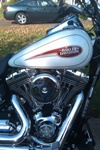
07 Low Rider, stock 96" with VH Big Shots, Fuelpak and some sort of high flow air filter. Around town I get about 40 mpg and on the highway 50 mpg. Probably could get some more if I was a little easier on the throttle. I also zero the B trip odometer with every fill up because i don"t trust the gauge. I divide the gallons of fuel into the miles riden.
Cruiser
Joined: Sep 2010
Posts: 144
Likes: 45
From: WI
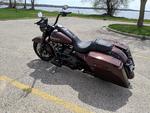
Just ran through a full tank. put on 170 miles, pretty much all to and from work which is alot of start and stop (and occasional heavy throttle, of course!). Guage is on the empty line. Figure there at a 4.6 gal tank comes out to 37 mpg. Probably could go a bit more... so I'm figuring 37-40mpg city driving. '05 fxdli.

Road Master


Joined: May 2012
Posts: 867
Likes: 160
From: Vermont
I haven't read every single post as this is a long thread, but of what I did read I seen no mention of speedometer error. Accurate mileage calculations will only happen when your speedometer is reading correctly. Calibrate your speedo to a GPS and then figure your fuel mileage.
Dyna FXD2003
Fuel consumption measured over a period of 15 years, 77,596 miles and 1,643 gal makes 47,2 mpg
Fuel consumption measured over a period of 15 years, 77,596 miles and 1,643 gal makes 47,2 mpg
HD Forum Stories
The Best of Harley-Davidson for Lifelong Riders

7 Surprising Harley-Davidson Products that Are Not Motorcycles
Verdad Gallardo
8 Best Harley-Davidson Motorcycles Ever
Pouria Savadkouei
10 Worst Harley-Davidson Motorcycles Ever
Pouria Savadkouei
Killer Custom's Jail Break Is The Breakout That Refused to Blend In
Verdad Gallardo
Crazy Bunderbike Build Looks Amazing, But Is It Impossible to Ride?
Verdad Gallardo
Harley-Davidson Reveals Super Cool Cafe Racer Concept
Verdad Gallardo
Engraved Rebellion: Inside Bundnerbike's Glam Rock II
Verdad Gallardo
10 Motorcycles You Should Never Buy
Joe Kucinski
10 Things Harley-Davidson Needs to Fix in 2026
Verdad Gallardo
Seasoned HDF Member

Joined: Jan 2015
Posts: 16,013
Likes: 7,137
From: Sandy Eggo's North County
Forum members were questioning my average mpg on another thread they said it did not sound right , my mpg that day was 57 mpg which was done with a riding partner with his pocket calculator using my mileages and 2 gas receipts he was also present at both fuel stops , actually he could not believe it either because at times i was heavy on the throttle , we rode on the highway and backroads that day and put on about 200 miles, he rides a 1978 1/2 lowrider which has over 50,000 on it and he has been doing his averages since he bought the bike brand new back in 78 , do numbers lie ?
Step 1
Fill up your tank at a gas station and write down the mileage that the odometer says before you leave. An example would be your odometer says 31,000 miles. Make sure to fill the tank, not just get some gas. Place the paper in a safe place where you will know where it is when you need it next.
Step 2
Drive the vehicle until you need to put more gas in it. It doesn't have to be empty, but you will want to put some mileage on it to get a good average.
Step 3
Fill the tank up again and write down how many gallons it took to fill it up. Let's say you need 10 gallons of gas to completely fill the tank.
Step 4
Write down the new mileage on your paper. Subtract the first mileage (from Step1) from the new mileage and write down the answer. Your new mileage is 31, 200. Take the new mileage reading of 31,200 and subtract the first mileage reading of 31,000. You are left with 200 miles.
Step 5
Divide the number of miles you drove by the number of gallons of gas it took to fill the tank. The answer will be your miles per gallon. Divide the 200 miles you drove by the 10 gallons of gas you used; 200 divided by 10 equals 20. You are getting 20 miles to the gallon in our example.
Step 1
Fill up your tank at a gas station and write down the mileage that the odometer says before you leave. An example would be your odometer says 31,000 miles. Make sure to fill the tank, not just get some gas. Place the paper in a safe place where you will know where it is when you need it next.
Step 2
Drive the vehicle until you need to put more gas in it. It doesn't have to be empty, but you will want to put some mileage on it to get a good average.
Step 3
Fill the tank up again and write down how many gallons it took to fill it up. Let's say you need 10 gallons of gas to completely fill the tank.
Step 4
Write down the new mileage on your paper. Subtract the first mileage (from Step1) from the new mileage and write down the answer. Your new mileage is 31, 200. Take the new mileage reading of 31,200 and subtract the first mileage reading of 31,000. You are left with 200 miles.
Step 5
Divide the number of miles you drove by the number of gallons of gas it took to fill the tank. The answer will be your miles per gallon. Divide the 200 miles you drove by the 10 gallons of gas you used; 200 divided by 10 equals 20. You are getting 20 miles to the gallon in our example.

Seasoned HDF Member
Joined: Feb 2012
Posts: 13,456
Likes: 10,452
From: Sunshine State
Forum members were questioning my average mpg on another thread they said it did not sound right , my mpg that day was 57 mpg which was done with a riding partner with his pocket calculator using my mileages and 2 gas receipts he was also present at both fuel stops , actually he could not believe it either because at times i was heavy on the throttle , we rode on the highway and backroads that day and put on about 200 miles, he rides a 1978 1/2 lowrider which has over 50,000 on it and he has been doing his averages since he bought the bike brand new back in 78 , do numbers lie ?
Step 1
Fill up your tank at a gas station and write down the mileage that the odometer says before you leave. An example would be your odometer says 31,000 miles. Make sure to fill the tank, not just get some gas. Place the paper in a safe place where you will know where it is when you need it next.
Step 2
Drive the vehicle until you need to put more gas in it. It doesn't have to be empty, but you will want to put some mileage on it to get a good average.
Step 3
Fill the tank up again and write down how many gallons it took to fill it up. Let's say you need 10 gallons of gas to completely fill the tank.
Step 4
Write down the new mileage on your paper. Subtract the first mileage (from Step1) from the new mileage and write down the answer. Your new mileage is 31, 200. Take the new mileage reading of 31,200 and subtract the first mileage reading of 31,000. You are left with 200 miles.
Step 5
Divide the number of miles you drove by the number of gallons of gas it took to fill the tank. The answer will be your miles per gallon. Divide the 200 miles you drove by the 10 gallons of gas you used; 200 divided by 10 equals 20. You are getting 20 miles to the gallon in our example.
Step 1
Fill up your tank at a gas station and write down the mileage that the odometer says before you leave. An example would be your odometer says 31,000 miles. Make sure to fill the tank, not just get some gas. Place the paper in a safe place where you will know where it is when you need it next.
Step 2
Drive the vehicle until you need to put more gas in it. It doesn't have to be empty, but you will want to put some mileage on it to get a good average.
Step 3
Fill the tank up again and write down how many gallons it took to fill it up. Let's say you need 10 gallons of gas to completely fill the tank.
Step 4
Write down the new mileage on your paper. Subtract the first mileage (from Step1) from the new mileage and write down the answer. Your new mileage is 31, 200. Take the new mileage reading of 31,200 and subtract the first mileage reading of 31,000. You are left with 200 miles.
Step 5
Divide the number of miles you drove by the number of gallons of gas it took to fill the tank. The answer will be your miles per gallon. Divide the 200 miles you drove by the 10 gallons of gas you used; 200 divided by 10 equals 20. You are getting 20 miles to the gallon in our example.
Yes, I edited my post...*chuckles
Last edited by Tampa Fatboy; Jul 27, 2020 at 01:01 PM.