



HD ECM O2 AFR correct info inside
Thread Starter
|
Road Master
Joined: Apr 2010
Posts: 795
Likes: 1
 HD ECM O2 AFR correct info inside
Many members are confused about whether the ECM adapts to intake and exhaust changes of the 07+ bikes (06 for the dyna) that use narrow band oxygen sensors. Yes and no are the answers. In closed loop (below 3750 RPM and under 40% load) the ECM will adjust to the parameters of the NBO2 sensors. These parameters are small and will keep you at 14.6 AFR. The open loop map (above 3750 RPM and more than 40% load) is not adjusted by the feedback of the NBO2 sensors. They are a preloaded map with AFR of 12.5 - 13.9. Once that VE is changed by intake or exhaust the AFR will change. How much is the question. I have read as much as .4 which would lead to AFR as high as 14.3 under load which is dangerous. Sure, 14.3 is richer than 14.6 but under load at higher RPMs it needs to be richer - below 13.1 is preferred. That is why HD puts the disclaimers on the SE parts. So yes, without stage 1 remap the closed loop AFR will stay at 14.6 but open loop under load will not adjust and will be leaner than factory preset map AFR.
*Recalibration is required for proper installation, and will allow engine to rev to 6200 RPM. See dealer for details. Labor cost not included.
CAUTION: Dealer installation required – failure to comply may
result in a lean fuel condition and severe engine damage.
CAUTION: Harley-Davidson EFI systems will not compensate
for any component changes. Do not mill heads or increase compression
in any way. Do not use cams other than those supplied
in the kit. Do not change kit components. Failure to comply may
result in engine damage.
These are the disclaimers printed by HD.
*Recalibration is required for proper installation, and will allow engine to rev to 6200 RPM. See dealer for details. Labor cost not included.
CAUTION: Dealer installation required – failure to comply may
result in a lean fuel condition and severe engine damage.
CAUTION: Harley-Davidson EFI systems will not compensate
for any component changes. Do not mill heads or increase compression
in any way. Do not use cams other than those supplied
in the kit. Do not change kit components. Failure to comply may
result in engine damage.
These are the disclaimers printed by HD.
Last edited by joflewbyu2; Jul 24, 2010 at 12:00 AM.
Road Warrior
Joined: Apr 2009
Posts: 1,360
Likes: 4
Do you know any facts about the adaptive fuel control feature, where the ECU carries over what it learns in closed loop operation to open loop mode? Does this have any affect on the numbers you posted? What is the comparative significance of the different fuels you may get today from tank to tank. Including the various ethanol concentrations, and that gas evaporating faster than ethanol which makes tanks that have been setting for awhile (so called slow stations) have a different concentration... and how that may effect heat build up and wear and tear. How does this correlate with the fact that the HD motor will run at an AFR of 15 all day without complaint, a bit more wear and tear perhaps... but maybe a story for another day?
Seems to be so much to worry about, between HD lawyer speak and VEs, that I better keep the bike parked in the garage, or set it up in the living room as a work of art...
Seems to be so much to worry about, between HD lawyer speak and VEs, that I better keep the bike parked in the garage, or set it up in the living room as a work of art...

Road Master
Joined: Jul 2008
Posts: 1,021
Likes: 2
I replied in your other thread to this.
https://www.hdforums.com/forum/7042684-post40.html
But I think Coldcase pretty much covered it.
https://www.hdforums.com/forum/7042684-post40.html
But I think Coldcase pretty much covered it.

Tourer
Joined: May 2010
Posts: 348
Likes: 5
From: The mitten state
First of all, the VE's "do not adapt"! The fuel control adaptive is by CELL and is called LTM ( long term memory). These cell values by speed and load are used to correct the integrator ( short term fuel control) and are a seperate stored value from the VE tables!
Additionally, as I have posted before, some of those "adaptive cell" values are used to correct fueling even in OPEN LOOP! The values "learned" in closed loop( in specific cells) are also used during open loop operation.
But VE tables are set values that are not changed during closed loop operation! The Stage I download does have different VE's for the open exhaust and air cleaner. ( However, those VE values are specific to the SE aircleaner and SE exhaust. ) To be absolutely correct if using other than those SPECIFIC SE parts, as dyno tune would need to be done, for the best VE calibration!
And as COLDCASE mentioned, Harley picked open loop A/F ratios based on the fact that E10 is a fact of life.
VE's are only one part of fuel delivered pulse width calculation. They predict mass of air ( as the VE is really a perecntage of cylinder fill, and cylinder volume is a constant.)
And lastly!! The fuel control as defined by closed loop O2 sensor operation IS NOT 14.6! Narrow band sensors are designed to control to STOICHometeric A/F ratio. Stoich varies significantly wihtin even a "given" fuel. ie. not all E10 or E0 Fuel have the same Stoich as that Stoich is dependant on many other factors! SO! Those narrow band sensor are calibrated to control plus or minus a value "close to stoich." By changing the CLB ( closed loop bias ) or fuel control switch point, the software ( ECM ) will be closed loop, but not
Necessarily at 14.6 A/F!!
And as the Stoich value of the fuel changes, so does the controlled closed loop A/F ratio!
Additionally, as I have posted before, some of those "adaptive cell" values are used to correct fueling even in OPEN LOOP! The values "learned" in closed loop( in specific cells) are also used during open loop operation.
But VE tables are set values that are not changed during closed loop operation! The Stage I download does have different VE's for the open exhaust and air cleaner. ( However, those VE values are specific to the SE aircleaner and SE exhaust. ) To be absolutely correct if using other than those SPECIFIC SE parts, as dyno tune would need to be done, for the best VE calibration!
And as COLDCASE mentioned, Harley picked open loop A/F ratios based on the fact that E10 is a fact of life.
VE's are only one part of fuel delivered pulse width calculation. They predict mass of air ( as the VE is really a perecntage of cylinder fill, and cylinder volume is a constant.)
And lastly!! The fuel control as defined by closed loop O2 sensor operation IS NOT 14.6! Narrow band sensors are designed to control to STOICHometeric A/F ratio. Stoich varies significantly wihtin even a "given" fuel. ie. not all E10 or E0 Fuel have the same Stoich as that Stoich is dependant on many other factors! SO! Those narrow band sensor are calibrated to control plus or minus a value "close to stoich." By changing the CLB ( closed loop bias ) or fuel control switch point, the software ( ECM ) will be closed loop, but not
Necessarily at 14.6 A/F!!
And as the Stoich value of the fuel changes, so does the controlled closed loop A/F ratio!
Last edited by FBRR; Jul 23, 2010 at 07:02 PM.
Thread Starter
|
Road Master
Joined: Apr 2010
Posts: 795
Likes: 1
First of all, the VE's "do not adapt"! The fuel control adaptive is by CELL and is called LTM ( long term memory). These cell values by speed and load are used to correct the integrator ( short term fuel control) and are a seperate stored value from the VE tables!
Additionally, as I have posted before, some of those "adaptive cell" values are used to correct fueling even in OPEN LOOP! The values "learned" in closed loop( in specific cells) are also used during open loop operation.
But VE tables are set values that are not changed during closed loop operation! The Stage I download does have different VE's for the open exhaust and air cleaner. ( However, those VE values are specific to the SE aircleaner and SE exhaust. ) To be absolutely correct if using other than those SPECIFIC SE parts, as dyno tune would need to be done, for the best VE calibration!
And as COLDCASE mentioned, Harley picked open loop A/F ratios based on the fact that E10 is a fact of life.
VE's are only one part of fuel delivered pulse width calculation. They predict mass of air ( as the VE is really a perecntage of cylinder fill, and cylinder volume is a constant.)
And lastly!! The fuel control as defined by closed loop O2 sensor operation IS NOT 14.6! Narrow band sensors are designed to control to STOICHometeric A/F ratio. Stoich varies significantly wihtin even a "given" fuel. ie. not all E10 or E0 Fuel have the same Stoich as that Stoich is dependant on many other factors! SO! Those narrow band sensor are calibrated to control plus or minus a value "close to stoich." By changing the CLB ( closed loop bias ) or fuel control switch point, the software ( ECM ) will be closed loop, but not
Necessarily at 14.6 A/F!!
And as the Stoich value of the fuel changes, so does the controlled closed loop A/F ratio!
Additionally, as I have posted before, some of those "adaptive cell" values are used to correct fueling even in OPEN LOOP! The values "learned" in closed loop( in specific cells) are also used during open loop operation.
But VE tables are set values that are not changed during closed loop operation! The Stage I download does have different VE's for the open exhaust and air cleaner. ( However, those VE values are specific to the SE aircleaner and SE exhaust. ) To be absolutely correct if using other than those SPECIFIC SE parts, as dyno tune would need to be done, for the best VE calibration!
And as COLDCASE mentioned, Harley picked open loop A/F ratios based on the fact that E10 is a fact of life.
VE's are only one part of fuel delivered pulse width calculation. They predict mass of air ( as the VE is really a perecntage of cylinder fill, and cylinder volume is a constant.)
And lastly!! The fuel control as defined by closed loop O2 sensor operation IS NOT 14.6! Narrow band sensors are designed to control to STOICHometeric A/F ratio. Stoich varies significantly wihtin even a "given" fuel. ie. not all E10 or E0 Fuel have the same Stoich as that Stoich is dependant on many other factors! SO! Those narrow band sensor are calibrated to control plus or minus a value "close to stoich." By changing the CLB ( closed loop bias ) or fuel control switch point, the software ( ECM ) will be closed loop, but not
Necessarily at 14.6 A/F!!
And as the Stoich value of the fuel changes, so does the controlled closed loop A/F ratio!
Trending Topics
Tourer
Joined: May 2010
Posts: 348
Likes: 5
From: The mitten state
"What are your thoughts on XiED? Do you think the NBO2 voltage divider will effect open loop figures? If so, how? Will they cause problems on a stage 1 bike with the HD digital Tech recalibration?"
My thoughts on the XiED is it is an imperfect and highly variable solution to real tuning! Yes they will impact ECM fuel control and learned values.
Any "add on" device that isn't modifiing actual ECM values are less than optimal solutions. And even tuners that modify actual ECM software values should be "tuned" by someone that knows how the software finctions to avoid unintended "issues."
The XiED site states that it is OK to run with "check engine" lights on in history, demonstartes how little they know and understand about the software function. Even before a "light" is turned on, ( depending on which CEL is detecting a fault!) the software can modify "normal" function! And while the XiED site states the "cels" are in history, when the fuel control diagnostics detect a fault there are impacts to other algorithm function!!
They (XiED) clearly do not understand everything with regrads to Harley software function and diagnostic fault codes!
My thoughts on the XiED is it is an imperfect and highly variable solution to real tuning! Yes they will impact ECM fuel control and learned values.
Any "add on" device that isn't modifiing actual ECM values are less than optimal solutions. And even tuners that modify actual ECM software values should be "tuned" by someone that knows how the software finctions to avoid unintended "issues."
The XiED site states that it is OK to run with "check engine" lights on in history, demonstartes how little they know and understand about the software function. Even before a "light" is turned on, ( depending on which CEL is detecting a fault!) the software can modify "normal" function! And while the XiED site states the "cels" are in history, when the fuel control diagnostics detect a fault there are impacts to other algorithm function!!
They (XiED) clearly do not understand everything with regrads to Harley software function and diagnostic fault codes!
Last edited by FBRR; Jul 23, 2010 at 08:10 PM.
HD Forum Stories
The Best of Harley-Davidson for Lifelong Riders
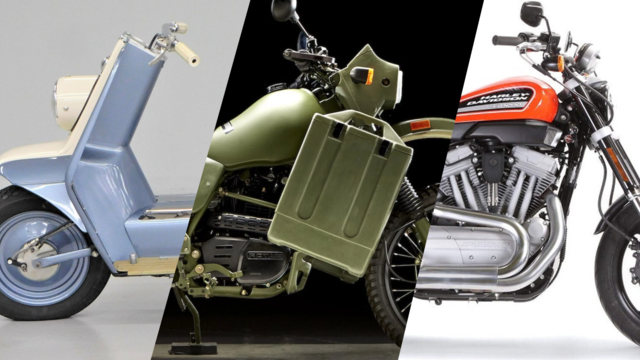
6 Weirdest Harley-Davidsons Ever Sold to the Public
Verdad Gallardo
7 Times Harley-Davidson Chucked Tradition Out the Window
Verdad Gallardo
7 Surprising Harley-Davidson Products that Are Not Motorcycles
Verdad Gallardo
8 Best Harley-Davidson Motorcycles Ever
Pouria Savadkouei
10 Worst Harley-Davidson Motorcycles Ever
Pouria Savadkouei
Killer Custom's Jail Break Is The Breakout That Refused to Blend In
Verdad Gallardo
Crazy Bunderbike Build Looks Amazing, But Is It Impossible to Ride?
Verdad Gallardo
Harley-Davidson Reveals Super Cool Cafe Racer Concept
Verdad Gallardo
Engraved Rebellion: Inside Bundnerbike's Glam Rock II
Verdad Gallardo
Road Master
Joined: Jul 2008
Posts: 1,021
Likes: 2
Again, this is Ford's adaptive strategy, so I'm curious how the Delphi system compares.
Road Master
Joined: Jul 2008
Posts: 1,021
Likes: 2
BTW guys, if you want solid information listen to FBRR. He was kind enough to chat with me offline about EFI. Not sure if he would want me to share his history, but I will say you won't find a much better source of inromation.