




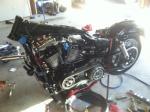

Tmax crapped out

Thread Starter
|
Road Captain
Joined: Jan 2011
Posts: 619
Likes: 0
From: Corona Ca

The Neg battery cable was pinched in the battery caddy, the bolt was too long and held the cable tight againts the caddy, after a few years of service the Terminal actually pulled out from the cable...
All issues are takin care of, new battery, New neg cable.. I was talkin with Zippers trying to find out what the problem was with the Tmax, several tests revealed the IAC was not working, I put a new IAC in and tested again, Fail, put the OEM ECM back in and the IAC worked fine, Called Zippers and they said that because of the Surge, The warrenty would not cover the Tmax ECM.....
All issues are takin care of, new battery, New neg cable.. I was talkin with Zippers trying to find out what the problem was with the Tmax, several tests revealed the IAC was not working, I put a new IAC in and tested again, Fail, put the OEM ECM back in and the IAC worked fine, Called Zippers and they said that because of the Surge, The warrenty would not cover the Tmax ECM.....
Thread Starter
|
Road Captain
Joined: Jan 2011
Posts: 619
Likes: 0
From: Corona Ca
Pha...are you sure it didn't just blow the fuse? If I remember correctly, there is a fuse specific for the ECM. My guess is the Tmat runs off that same fuse.
There is a fuse diagram inside the electrical panel cover. Refer to it as I don't remember the exact location of that fuse.
There is a fuse diagram inside the electrical panel cover. Refer to it as I don't remember the exact location of that fuse.
I understand he pulled out, but how come it caused the surge? I can't get my head round it, I assume by a surge you mean an increase in voltage?
Thread Starter
|
Road Captain
Joined: Jan 2011
Posts: 619
Likes: 0
From: Corona Ca
Surge is the TERM Zippers used to explain why the ECM fried, I dont know what it actually did... A Spike in current? Too much/too little current? what i do know is, If there is a surge/spike in your elect system, Zippers WILL NOT WARRANTY THE ECM.......
Thread Starter
|
Road Captain
Joined: Jan 2011
Posts: 619
Likes: 0
From: Corona Ca
From the Thundermax Warranty info sheet!!!!!!!
(if the product fails under normal use due to an electronic component failure withen the warranty period, ZPP will repair or replace at our discretion the defective item with a new, repaired or factory rebuilt replacement. The warranty will be equal to the original warrenty period on the original product. All services must be performed by ZPP)
(if the product fails under normal use due to an electronic component failure withen the warranty period, ZPP will repair or replace at our discretion the defective item with a new, repaired or factory rebuilt replacement. The warranty will be equal to the original warrenty period on the original product. All services must be performed by ZPP)

Outstanding HDF Member
Joined: Jul 2010
Posts: 2,427
Likes: 2
From: Smack Dab in the Middle of Louisiana
Shorts are shorts, they usually happen when a lead line (positive wire) grounds out and blows a fuse (safety link). Most new electronics are negative switched to stop carbon arching of power wires (lead line).
The only power surging you will get from a motorcycles electrical system is if there is failure with a voltage regulator and the embedded triple stack diode system stops working. Then you might get higher voltages through the system as motor RPM's increase, as the stator (charging) system is a dynamo.
Warranties usually imply defects of material and workmanship, not from outside sources that cause said damage. Especially in electronics.
OK the hard part for me to understand in the first place is; someone spends (say) $900 for a system that overrides the factory ECM. When you can buy a factory interface for $400 that is compatible with factory stuff and reprograms the ECM, not override it, then do the setup and be done with it.
Oh! I forgot most people don't want to pay the cost for a Dyno. Why not? With the laws of physics being what they are and manufacturing standards what they are, there are tolerances that are/can be up to -20%~+20% that leaves a 40% (or -10%~+10% = 20%) variable in my mind that is too much guess work. A Dyno tune (a proper one) brings all these variables together as much as possible without blueprinting and balancing the motor for it to run the best it can.
Now the Bull **** marketing of products that say they can do the same job for less money is simply "Marketing Propaganda", people see only what they want to see and they want to see $ savings in their pockets without doing the research on the physical properties of what they are buying.
I guess a lifetime as a mechanic/service technician, not a parts changer, has made me a cynic to the fast and furious ways of making a buck within this world of physics.
My advise, for what its worth; Start researching all the variables that go into any changes you want to do to your vehicles, whether it's you bike or your cage. Not just the cost factor. For every change you have two counter changes, (i.e.) change exhaust for sound and performance (1st change), change air induction to allow motor to breath better (2nd change), the ECM has to be adjusted and or modified (3rd change). It is all about how we go about it that makes the world of difference.
Even in the day of carburetors you needed to change jets to compensate Fuel Air Ratio's, and most people just started changing the main fuel jets instead of air correction jets to try and find that balance. You see most people did not take in to consideration that the cubic feet per minute (CFM) of free air was built into the casting of the carburetor. Yes, they had problems unless they took it to someone who knew how to do the adjustments properly, or they just got lucky without really knowing what they were doing (one of those seat of the pants things).
Although, you can disregard the me-ambling's of my post as I sit here nursing a injured/torn rotator-cup in the left shoulder and can't ride today.
The only power surging you will get from a motorcycles electrical system is if there is failure with a voltage regulator and the embedded triple stack diode system stops working. Then you might get higher voltages through the system as motor RPM's increase, as the stator (charging) system is a dynamo.
Warranties usually imply defects of material and workmanship, not from outside sources that cause said damage. Especially in electronics.
OK the hard part for me to understand in the first place is; someone spends (say) $900 for a system that overrides the factory ECM. When you can buy a factory interface for $400 that is compatible with factory stuff and reprograms the ECM, not override it, then do the setup and be done with it.
Oh! I forgot most people don't want to pay the cost for a Dyno. Why not? With the laws of physics being what they are and manufacturing standards what they are, there are tolerances that are/can be up to -20%~+20% that leaves a 40% (or -10%~+10% = 20%) variable in my mind that is too much guess work. A Dyno tune (a proper one) brings all these variables together as much as possible without blueprinting and balancing the motor for it to run the best it can.
Now the Bull **** marketing of products that say they can do the same job for less money is simply "Marketing Propaganda", people see only what they want to see and they want to see $ savings in their pockets without doing the research on the physical properties of what they are buying.
I guess a lifetime as a mechanic/service technician, not a parts changer, has made me a cynic to the fast and furious ways of making a buck within this world of physics.
My advise, for what its worth; Start researching all the variables that go into any changes you want to do to your vehicles, whether it's you bike or your cage. Not just the cost factor. For every change you have two counter changes, (i.e.) change exhaust for sound and performance (1st change), change air induction to allow motor to breath better (2nd change), the ECM has to be adjusted and or modified (3rd change). It is all about how we go about it that makes the world of difference.
Even in the day of carburetors you needed to change jets to compensate Fuel Air Ratio's, and most people just started changing the main fuel jets instead of air correction jets to try and find that balance. You see most people did not take in to consideration that the cubic feet per minute (CFM) of free air was built into the casting of the carburetor. Yes, they had problems unless they took it to someone who knew how to do the adjustments properly, or they just got lucky without really knowing what they were doing (one of those seat of the pants things).
Although, you can disregard the me-ambling's of my post as I sit here nursing a injured/torn rotator-cup in the left shoulder and can't ride today.
Last edited by SteveO-ll; Oct 22, 2011 at 01:47 PM.
HD Forum Stories
The Best of Harley-Davidson for Lifelong Riders

7 Surprising Harley-Davidson Products that Are Not Motorcycles
Verdad Gallardo
8 Best Harley-Davidson Motorcycles Ever
Pouria Savadkouei
10 Worst Harley-Davidson Motorcycles Ever
Pouria Savadkouei
Killer Custom's Jail Break Is The Breakout That Refused to Blend In
Verdad Gallardo
Crazy Bunderbike Build Looks Amazing, But Is It Impossible to Ride?
Verdad Gallardo
Harley-Davidson Reveals Super Cool Cafe Racer Concept
Verdad Gallardo
Engraved Rebellion: Inside Bundnerbike's Glam Rock II
Verdad Gallardo
10 Motorcycles You Should Never Buy
Joe Kucinski
10 Things Harley-Davidson Needs to Fix in 2026
Verdad Gallardo
Ultimate HDF Member
Joined: May 2008
Posts: 6,642
Likes: 48
From: Ogden, UT
Shorts are shorts, they usually happen when a lead line (positive wire) grounds out and blows a fuse (safety link). Most new electronics are negative switched to stop carbon arching of power wires (lead line).
The only power surging you will get from a motorcycles electrical system is if there is failure with a voltage regulator and the embedded triple stack diode system stops working. Then you might get higher voltages through the system as motor RPM's increase, as the stator (charging) system is a dynamo.
Warranties usually imply defects of material and workmanship, not from outside sources that cause said damage. Especially in electronics.
OK the hard part for me to understand in the first place is; someone spends (say) $900 for a system that overrides the factory ECM. When you can buy a factory interface for $400 that is compatible with factory stuff and reprograms the ECM, not override it, then do the setup and be done with it.
Oh! I forgot most people don't want to pay the cost for a Dyno. Why not? With the laws of physics being what they are and manufacturing standards what they are, there are tolerances that are/can be up to -20%~+20% that leaves a 40% (or -10%~+10% = 20%) variable in my mind that is too much guess work. A Dyno tune (a proper one) brings all these variables together as much as possible without blueprinting and balancing the motor for it to run the best it can.
Now the Bull **** marketing of products that say they can do the same job for less money is simply "Marketing Propaganda", people see only what they want to see and they want to see $ savings in their pockets without doing the research on the physical properties of what they are buying.
I guess a lifetime as a mechanic/service technician, not a parts changer, has made me a cynic to the fast and furious ways of making a buck within this world of physics.
My advise, for what its worth; Start researching all the variables that go into any changes you want to do to your vehicles, whether it's you bike or your cage. Not just the cost factor. For every change you have two counter changes, (i.e.) change exhaust for sound and performance (1st change), change air induction to allow motor to breath better (2nd change), the ECM has to be adjusted and or modified (3rd change). It is all about how we go about it that makes the world of difference.
...
Although, you can disregard the me-ambling's of my post as I sit here nursing a injured/torn rotator-cup in the left shoulder and can't ride today.
The only power surging you will get from a motorcycles electrical system is if there is failure with a voltage regulator and the embedded triple stack diode system stops working. Then you might get higher voltages through the system as motor RPM's increase, as the stator (charging) system is a dynamo.
Warranties usually imply defects of material and workmanship, not from outside sources that cause said damage. Especially in electronics.
OK the hard part for me to understand in the first place is; someone spends (say) $900 for a system that overrides the factory ECM. When you can buy a factory interface for $400 that is compatible with factory stuff and reprograms the ECM, not override it, then do the setup and be done with it.
Oh! I forgot most people don't want to pay the cost for a Dyno. Why not? With the laws of physics being what they are and manufacturing standards what they are, there are tolerances that are/can be up to -20%~+20% that leaves a 40% (or -10%~+10% = 20%) variable in my mind that is too much guess work. A Dyno tune (a proper one) brings all these variables together as much as possible without blueprinting and balancing the motor for it to run the best it can.
Now the Bull **** marketing of products that say they can do the same job for less money is simply "Marketing Propaganda", people see only what they want to see and they want to see $ savings in their pockets without doing the research on the physical properties of what they are buying.
I guess a lifetime as a mechanic/service technician, not a parts changer, has made me a cynic to the fast and furious ways of making a buck within this world of physics.
My advise, for what its worth; Start researching all the variables that go into any changes you want to do to your vehicles, whether it's you bike or your cage. Not just the cost factor. For every change you have two counter changes, (i.e.) change exhaust for sound and performance (1st change), change air induction to allow motor to breath better (2nd change), the ECM has to be adjusted and or modified (3rd change). It is all about how we go about it that makes the world of difference.
...
Although, you can disregard the me-ambling's of my post as I sit here nursing a injured/torn rotator-cup in the left shoulder and can't ride today.
The Tmax does not "override" the stock ECM, that is what add-ons like a PC or many others do, the TMax replaces the ECM completely.
Sounds to me like the OP jury-rigged his battery connection and it bit him in the ***, just speculation based on what I am reading here.
If you explained all of this to Zippers, I do not blame them for the position they took. I would imagine if you had simple told them the unit failed and putting the stock ECM back in worked, they would have replaced your TMax.
Pay the 190 and get it replaced, or go buy something else. I am thoroughly pleased with mine.
Thread Starter
|
Road Captain
Joined: Jan 2011
Posts: 619
Likes: 0
From: Corona Ca
No (jury) rigging going on 8541...... Factory bolt put in wrong location.... Bought the bike used...... Search Medahls posts regarding his problems with the same issues as mine, Twice for him, and he didnt have a Surge!!!!! Just went out!!!!!