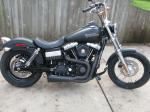




Guys running a 180
Road Captain
Joined: Oct 2009
Posts: 728
Likes: 0
From: So Cal

To the OP: Don't waste your money on the 180. The difference in price between the 180 and 160 is substantial and NOBODY is ever going to come up to you and say, "Man, that's a bitchen rear tire!" When I bought my bike used, it had a 180 on it. The original owner gave me the OEM 160 and, when the 180 wore out (and after seeing the price of a new one) I put the 160 back on. The bike handles better with the 160, which is logical since the bike was built around that size tire.

Cruiser
Joined: Dec 2008
Posts: 127
Likes: 0
From: Kansas
Just looked up the specs for the 2012 WG and you are right the rear rim is 17 in. x 4.5 in. So that 180 tire is made for a 4.5 inch rim, so looks like Harley has 2 180 tires for the 4.5" rim now. The HD kit I am sure will still come with the SE 180 tire "Dunlop" though. I just went with a 5.5" rim because that is what a 180 tire is suppose to be on and has alot more choices of tires. But to your orginal question, you don't need the brackets just make sure that your wires are tucked neatly against the fenders and you are good.
Where did you get the rim from? Did you reuse the same spokes?
Road Captain
Joined: Oct 2009
Posts: 519
Likes: 1
From: Maine
I needed a new rear tire but found that the 180 with the kit was only $30 more so I did it. It may not be a wide 240 but I do think it looks a little better than the 160, filling in the fender more. I have a Low Rider which is 1" lower then I lowered it another inch with shorter shocks. So for me, the kit was extremely helpful because it sends the wires much farther back and out of the way. Also, the 180 is a different series Dunlop than the stock; different tread pattern.
Last edited by JT-FXDL; Feb 14, 2012 at 11:39 PM.
Road Warrior

Joined: Nov 2010
Posts: 1,251
Likes: 30
From: Ashburn, VA

To the OP: Don't waste your money on the 180. The difference in price between the 180 and 160 is substantial and NOBODY is ever going to come up to you and say, "Man, that's a bitchen rear tire!" When I bought my bike used, it had a 180 on it. The original owner gave me the OEM 160 and, when the 180 wore out (and after seeing the price of a new one) I put the 160 back on. The bike handles better with the 160, which is logical since the bike was built around that size tire.

Thread Starter
|
Stellar HDF Member


Joined: Jun 2010
Posts: 2,863
Likes: 172
From: Clarksville, TN
To the OP: Don't waste your money on the 180. The difference in price between the 180 and 160 is substantial and NOBODY is ever going to come up to you and say, "Man, that's a bitchen rear tire!" When I bought my bike used, it had a 180 on it. The original owner gave me the OEM 160 and, when the 180 wore out (and after seeing the price of a new one) I put the 160 back on. The bike handles better with the 160, which is logical since the bike was built around that size tire.
I needed a new rear tire but found that the 180 with the kit was only $30 more so I did it. It may not be a wide 240 but I do think it looks a little better than the 160, filling in the fender more. I have a Low Rider which is 1" lower then I lowered it another inch with shorter shocks. So for me, the kit was extremely helpful because it sends the wires much farther back and out of the way. Also, the 180 is a different series Dunlop than the stock; different tread pattern.
Road Warrior
Joined: Nov 2010
Posts: 1,251
Likes: 30
From: Ashburn, VA
Pretty sure the Wide Glide and Street Bob use the exact same rear fender. Regardless, I have 200 under my stock Street Bob fender and the fender has been lowered as well, so 180 would be a piece of cake.
OP: You could have used your stock brackets, just flatten the hump where the original wiring is routed.
Last edited by jmeiers; Feb 15, 2012 at 12:37 PM.
HD Forum Stories
The Best of Harley-Davidson for Lifelong Riders

7 Surprising Harley-Davidson Products that Are Not Motorcycles
Verdad Gallardo
8 Best Harley-Davidson Motorcycles Ever
Pouria Savadkouei
10 Worst Harley-Davidson Motorcycles Ever
Pouria Savadkouei
Killer Custom's Jail Break Is The Breakout That Refused to Blend In
Verdad Gallardo
Crazy Bunderbike Build Looks Amazing, But Is It Impossible to Ride?
Verdad Gallardo
Harley-Davidson Reveals Super Cool Cafe Racer Concept
Verdad Gallardo
Engraved Rebellion: Inside Bundnerbike's Glam Rock II
Verdad Gallardo
10 Motorcycles You Should Never Buy
Joe Kucinski
10 Things Harley-Davidson Needs to Fix in 2026
Verdad Gallardo
Thread Starter
|
Stellar HDF Member
Joined: Jun 2010
Posts: 2,863
Likes: 172
From: Clarksville, TN
That would have still left the wires exposed. The brackets didn't break the bank so I figured why not. I'm sure once I get them and the new tire on I'll realize I didn't really need them but it gives me something to do while the weather is bad.