






1990 flhtcu charging question

Thread Starter
|
Tourer
Joined: May 2017
Posts: 280
Likes: 21
From: Usa
 1990 flhtcu charging question
I read the sticky, but my issue isnt really there.
anyway...bought a 1990 ultra. Odo shows 29k miles...could be accurate, could be 129k miles...who knows .Cranking pressure, warm, is 185psi. So, that makes me feel good.
but. I have a bit of a voltage issue. I haven't dug in to it yet, since I've only ridden the bike 60 miles, but here's the issue. Engine fires right up, voltage gauge shows about 12.5-13v. This is with the lights off.
turn the lights on, and the voltage gauge shows 9-10v. Turn the lights off, and the voltage goes right back up. The bike wont crank with the lights on, either. But turn the lights off, and it cranks over great.
where do I need to start? Any other pointers or ideas? Thanks in advance!
anyway...bought a 1990 ultra. Odo shows 29k miles...could be accurate, could be 129k miles...who knows .Cranking pressure, warm, is 185psi. So, that makes me feel good.
but. I have a bit of a voltage issue. I haven't dug in to it yet, since I've only ridden the bike 60 miles, but here's the issue. Engine fires right up, voltage gauge shows about 12.5-13v. This is with the lights off.
turn the lights on, and the voltage gauge shows 9-10v. Turn the lights off, and the voltage goes right back up. The bike wont crank with the lights on, either. But turn the lights off, and it cranks over great.
where do I need to start? Any other pointers or ideas? Thanks in advance!
Assuming you went through (and passed) all the tests in the sticky, the next thing I'd do is take a look at the battery. See if there is a date code on it and/or take it to an auto store and have it load tested. If it's old or fails the test, replace it and see what's what from there.
Thread Starter
|
Tourer
Joined: May 2017
Posts: 280
Likes: 21
From: Usa
Battery is fairly new, agm. Passed voltage and amperage test with my battery tester, no issues...I think it's rated at 340cca, measured quite a bit higher amps, voltage was 12.7 or so, I didnt print off the results so i cant remeber exact numbers
Is this a USA spec bike? Your location ("Swva/netn") doesn't register with me.
Anyway, on a (stock) US spec bike, there is no such thing as turning off the lights. Instead, there is a starter relay under the right side cover that cuts out everything else (lights / gauges / radio / etc) when you engage the starter.
Anyway, on a (stock) US spec bike, there is no such thing as turning off the lights. Instead, there is a starter relay under the right side cover that cuts out everything else (lights / gauges / radio / etc) when you engage the starter.
Thread Starter
|
Tourer
Joined: May 2017
Posts: 280
Likes: 21
From: Usa
As far as i know, it is us spec. It was sold new in Chattanooga, tn. The key lock has has the switch that goes lock, ignition, lights, accessories. It's a big chrome key switch below the instrument cluster .I think I explained it correctly. It is possible to start and run the bike with no lights, until you switch the lights on
I get it now : SW Virginia / NE Tennessee!!
If the starter relay is working correctly, all the lights should temporarily cut out when you thumb the starter.
Lets go back to the beginning: You titled the thread "charging question", but then said "I read the sticky, but my issue isnt really there." Well, if it's a charging question, the sticky will answer it.
Did you run through the various tests on the sticky? If not, that's the next thing to do. The charging system on these things isn't complicated at all: You have a stator/rotor in the primary, and a voltage regulator to turn the AC into DC. There really isn't anything else to it.
Edit: You asked "It is possible to start and run the bike with no lights, until you switch the lights on". I don't understand the question, since (assuming it's a standard, US spec bike) there is no such thing as turning the headlight off. (Your spotlights will have a separate toggle switch on the dash. Is that what you're talking about?) If your headlight has an on/off switch, some prior owner has mucked up the wiring, so it's anyone's guess what you're working with.
If the starter relay is working correctly, all the lights should temporarily cut out when you thumb the starter.
Lets go back to the beginning: You titled the thread "charging question", but then said "I read the sticky, but my issue isnt really there." Well, if it's a charging question, the sticky will answer it.
Did you run through the various tests on the sticky? If not, that's the next thing to do. The charging system on these things isn't complicated at all: You have a stator/rotor in the primary, and a voltage regulator to turn the AC into DC. There really isn't anything else to it.
Edit: You asked "It is possible to start and run the bike with no lights, until you switch the lights on". I don't understand the question, since (assuming it's a standard, US spec bike) there is no such thing as turning the headlight off. (Your spotlights will have a separate toggle switch on the dash. Is that what you're talking about?) If your headlight has an on/off switch, some prior owner has mucked up the wiring, so it's anyone's guess what you're working with.
Last edited by 0maha; Aug 19, 2018 at 10:31 PM.

Elite HDF Member
Joined: Oct 2005
Posts: 3,872
Likes: 83
From: Canton, Michigan
All the lights except for you driving lights should be on anytime the key is switched to 'ON'. If you've run the test protocol posted by Dr. Hess, I'd also suspect a faulty battery. Another area to check (after battery replacement) would be the connection between the stator and regulator. Unless the plug is firmly 'snapped' together, you will be getting intermittent charging of the battery, which will severely shorten battery life (personal experience).
Trending Topics
Cruiser
Joined: Feb 2014
Posts: 129
Likes: 11
From: NPR, FL
Yeah sounds like a weak battery. My voltage gauge always shows just under 12v at idle. Sitting at a light with the brakes on it shows around 10v. Rev it up just a tad and its back over 12v. Was even worse with the old battery and before I replaced a bunch of the bulbs to LEDs.
HD Forum Stories
The Best of Harley-Davidson for Lifelong Riders

7 Surprising Harley-Davidson Products that Are Not Motorcycles
Verdad Gallardo
8 Best Harley-Davidson Motorcycles Ever
Pouria Savadkouei
10 Worst Harley-Davidson Motorcycles Ever
Pouria Savadkouei
Killer Custom's Jail Break Is The Breakout That Refused to Blend In
Verdad Gallardo
Crazy Bunderbike Build Looks Amazing, But Is It Impossible to Ride?
Verdad Gallardo
Harley-Davidson Reveals Super Cool Cafe Racer Concept
Verdad Gallardo
Engraved Rebellion: Inside Bundnerbike's Glam Rock II
Verdad Gallardo
10 Motorcycles You Should Never Buy
Joe Kucinski
10 Things Harley-Davidson Needs to Fix in 2026
Verdad Gallardo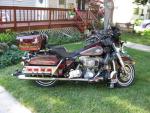
Elite HDF Member
Joined: Mar 2006
Posts: 3,673
Likes: 606
From:
if you are reading the harley voltage gauge on the dash, don't believe it. they are notorious for being inaccurate. use a hand held digital voltage gauge to check the volts at the battery when the motor is running.
Elite HDF Member
Joined: Mar 2006
Posts: 3,673
Likes: 606
From:
Is this a USA spec bike? Your location ("Swva/netn") doesn't register with me.
Anyway, on a (stock) US spec bike, there is no such thing as turning off the lights. Instead, there is a starter relay under the right side cover that cuts out everything else (lights / gauges / radio / etc) when you engage the starter.
Anyway, on a (stock) US spec bike, there is no such thing as turning off the lights. Instead, there is a starter relay under the right side cover that cuts out everything else (lights / gauges / radio / etc) when you engage the starter.