When you click on links to various merchants on this site and make a purchase, this can result in this site earning a commission. Affiliate programs and affiliations include, but are not limited to, the eBay Partner Network.
Before I go any further on disassembly, with ignition on lights, activating the plunger should trigger the brake light, correct? My brake light isn’t working, and I am assuming it is the brake light switch since I messed with the hand controls before it went out. I am assuming the light is on all the time, which is why it appears to not be working. Does that one Phillips screw hold the switch in there? 89 FLT
Before I go any further on disassembly, with ignition on lights, activating the plunger should trigger the brake light, correct? My brake light isn’t working, and I am assuming it is the brake light switch since I messed with the hand controls before it went out. I am assuming the light is on all the time, which is why it appears to not be working. Does that one Phillips screw hold the switch in there? 89 FLT
Wrong. Pushing the switch plunger in should cause the brake light to go off. (it is a "normally closed" switch)
If you were "messing with it" before it started acting up, you possibly didn't have the spacing between the (pictured) housing and the master cylinder set correctly. Doesn't take much to change the behavior of the brake light. Move the switch housing closer to the m/c takes more lever travel to activate light. Further away less travel to activate.
I agree with the spacing comment, but with it apart like this, then the light should go out if I push the plunger all the way in, and come on when I release it, correct? Maybe I worded my question wrong. I’m just trying to verify it is bad before I replace it.
I agree with the spacing comment, but with it apart like this, then the light should go out if I push the plunger all the way in, and come on when I release it, correct? Maybe I worded my question wrong. I’m just trying to verify it is bad before I replace it.
No worries, I may have read it wrong
Correct. Pushing the brake light switch plunger in, should turn the light off.
I agree with the spacing comment, but with it apart like this, then the light should go out if I push the plunger all the way in, and come on when I release it, correct? Maybe I worded my question wrong. I’m just trying to verify it is bad before I replace it.
If it doesn't you may wanna ck the foot light switch, easy to unplug as a rule to take it out of the equation.
If it doesn't you may wanna ck the foot light switch, easy to unplug as a rule to take it out of the equation.
WP
Funny you say that...
I replaced the front brake switch and now the stop light works, from the lever. I have nothing from the rear brake, so I am guessing
1) That switch is out also
2) It operates different and when it is out, the brake light does not come on, as opposed to the front which keeps it on all the time
Now I need to find the rear brake light switch, yes I have a manual.
Last edited by ShrinerRider; Jul 31, 2023 at 08:49 AM.
Funny you say that...
I replaced the front brake switch and nor the stop light works, from the lever. I have nothing from the rear brake, so I am guessing
1) That switch is out also
2) It operates different and when it is out, the brake light does not come on, as opposed to the front which keeps it on all the time
Now I need to find the rear brake light switch, yes I have a manual.
Rear brake switch is hydraulic. Lay down on the right side of the bike and look just inside the frame between the trans and engine. It'll be pointed inward. Has 3 wires - one is 12v + the other 2 tied together are the 12v feed from the front lever. The other one there goes on to the rear (light).
Rear brake switch is hydraulic. Lay down on the right side of the bike and look just inside the frame between the trans and engine. It'll be pointed inward.
Well that looks super easy to get to… switch is ordered.
Well that looks super easy to get to… switch is ordered.
99% of the time, you won't even need to re bleed the rear brake if you are quick and don't touch the lever when the switch is out. In 40 years I have never had to re bleed after a rear brake switch swap....doesn't mean everybody is that lucky though.
99% of the time, you won't even need to re bleed the rear brake if you are quick and don't touch the lever when the switch is out. In 40 years I have never had to re bleed after a rear brake switch swap....doesn't mean everybody is that lucky though.
I’m probably the 1%. I switched it out, quickly, without touching the lever, and now my pedal feels soft. We will see when I get it back together and ready to ride. Still waiting on a screw to get the front hand controls back together.
Slideshow: Jason Momoa's latest restoration project blends 1920s Harley-Davidsons with modern electric technology, creating some of the most unusual hybrid motorcycles ever built.
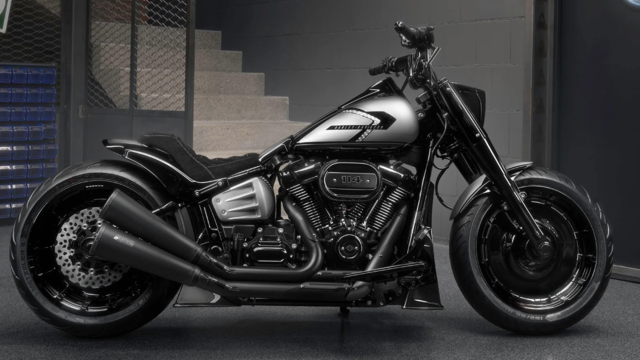
Harley-Davidson Fat Boy Becomes a Dark, Decepticon-Inspired Custom
Slideshow: Killer Custom's latest build relies on styling changes rather than performance upgrades, giving the cruiser an entirely different personality.
7 Surprising Harley-Davidson Products that Are Not Motorcycles
Slideshow: The bar-and-shield logo shows up on far more than motorcycles, some of the company's most unexpected products have nothing to do with riding.
Slideshow: From the troubled AMF years to modern misfires, these bikes earned reputations for reliability issues, questionable engineering, or disappointing performance.
Crazy Bunderbike Build Looks Amazing, But Is It Impossible to Ride?
Slideshow: The Swiss custom shop has taken a Harley Softail and stretched it into something so long and low that it looks closer to a rolling sculpture than a conventional motorcycle.








 Front brake light switch