When you click on links to various merchants on this site and make a purchase, this can result in this site earning a commission. Affiliate programs and affiliations include, but are not limited to, the eBay Partner Network.
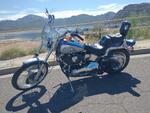
I'm having some problems with my clutch. The bike is a 1997 Road King and the problem is that the clutch engages at almost the end of the lever travel. I've adjusted the clutch to a one full turn out and nothing goes better.
I've been thinking about it and I suppose that maybe the clutch plates are worn and they need to be replaced or maybe if it could be any kind of issue with the clutch cable. If I had to replace the clutch plates, which one would you choose? Any opinions?
Follow the procedure outlined in the shop manual. Back the cable adjustment off a few turns before you adjust the screw on the clutch pack. Turn the screw in until you feel resistance, then back it out a half turn, and then adjust the cable.
This right here^^^. Make sure the cable has plenty of slack, tighten the clutch screw until it just makes slight contact, then back it out 1/2 turn, then adjust the cable until you have just enough slack for a dime to fit between the end of the cable and the clutch perch.
It's worth replacing the clutch pack to eliminate the spring plate.
Just the opposite myself, and without the judder spring plate, clutch becomes more of an on/off switch, and on heaver touring frame bikes, lots of judder when you try to launch the heavier bikes hard without a judder spring plate in play.
So for me, spring plate gets changed every 40K, gives me a change to take a look at the clutch friction plates, and check the clutch basket bearing to see if going south or not (clutch out, rear tire off the ground, trans in gear, then spin the rear tire to spin the inner hub, to make sure outer basket does not start edge dancing in and out as the inner hub is spinning with wheel.
As for not wanting to run the spring plate (aka grenade plate) that if you try to run too long, is going to come apart,
Then can upgrade the upgrade the basket to later style, that uses Belleville spring washer as the judder spring assembly instead.
Newer clutches that did away with the spring plate,
So really, for touring frame bikes, see the extra plate clutch kits as a cop-out, and should have been standard disc amounts, with a better spring plate design like the newer clutches instead.
As for clutch adjustment, 1/2 turn out once bolt will not hold up allen wrench with cable adjusted all the way in, and all is good with the world.
Also, bike level on lift, only fill primary oil (conventional 10-40 motor oil) to here,
If you still have problem, pull the clutch, since will bank that spring plate ($40) is coming apart, and time to replace it. Myself, I change the spring plate about every 30K, since when it does start to come apart (even single rivet coming apart), can kill $400 in parts on the quick side really fast.
And call me old fashion, but with spring plate and organic friction discs, clutch is easy to use since have more lever travel for engagement to lock up, and easy to slip with needed as well. Plus the alto organic discs do not tear up the steel discs like inorganic frictions discs do, so can get at least a second or thirds set of organic friction disc swaps on the oem steel discs, making a clutch rebuild only $60 with new spring plate, and not the $200 that Barnett and others want for their inorganic extra disc clutch kits isntead.
Just the opposite myself, and without the judder spring plate, clutch becomes more of an on/off switch, and on heaver touring frame bikes, lots of judder when you try to launch the heavier bikes hard without a judder spring plate in play.
So for me, spring plate gets changed every 40K, gives me a change to take a look at the clutch friction plates, and check the clutch basket bearing to see if going south or not (clutch out, rear tire off the ground, trans in gear, then spin the rear tire to spin the inner hub, to make sure outer basket does not start edge dancing in and out as the inner hub is spinning with wheel.
As for not wanting to run the spring plate (aka grenade plate) that if you try to run too long, is going to come apart,
Then can upgrade the upgrade the basket to later style, that uses Belleville spring washer as the judder spring assembly instead.
Newer clutches that did away with the spring plate,
So really, for touring frame bikes, see the extra plate clutch kits as a cop-out, and should have been standard disc amounts, with a better spring plate design like the newer clutches instead.
As for clutch adjustment, 1/2 turn out once bolt will not hold up allen wrench with cable adjusted all the way in, and all is good with the world.
Also, bike level on lift, only fill primary oil (conventional 10-40 motor oil) to here,
If you still have problem, pull the clutch, since will bank that spring plate ($40) is coming apart, and time to replace it. Myself, I change the spring plate about every 30K, since when it does start to come apart (even single rivet coming apart), can kill $400 in parts on the quick side really fast.
And call me old fashion, but with spring plate and organic friction discs, clutch is easy to use since have more lever travel for engagement to lock up, and easy to slip with needed as well. Plus the alto organic discs do not tear up the steel discs like inorganic frictions discs do, so can get at least a second or thirds set of organic friction disc swaps on the oem steel discs, making a clutch rebuild only $60 with new spring plate, and not the $200 that Barnett and others want for their inorganic extra disc clutch kits isntead.
Another possible fix would be to use the judder spring setup from a XR1200/Buell XB, I did this when I eliminated the spring plate on my Sportster. I first tried replacing it with two steels and a friction plate, the clutch worked OK but made a VERY annoying squeal when taking off in first gear, sounded like a slipping fan belt. The judder spring retrofit fixed that. I don't know for a fact if this would work on a pre-'98 Evo big twin but the clutch plates are the same as a '91+ XL so it probably would. Anyway the parts required are below, along with two extra steel plates which dealers sell individually. I had to order the three judder spring parts....
[QUOTE=Dano523;21681861]Just the opposite myself, and without the judder spring plate, clutch becomes more of an on/off switch, and on heaver touring frame bikes, lots of judder when you try to launch the heavier bikes hard without a judder spring plate in play.
Hmm, not in my experience, friction zone is just fine, and no juddering, whatever that is.
'97 was the last year for the spring plate on touring bikes, 98+, there's a steel seat, a narrow conical shaped damper spring steel and a narrow fiber that goes in the clutch first, then the normal stack.
7 Surprising Harley-Davidson Products that Are Not Motorcycles
Slideshow: The bar-and-shield logo shows up on far more than motorcycles, some of the company's most unexpected products have nothing to do with riding.
Slideshow: From the troubled AMF years to modern misfires, these bikes earned reputations for reliability issues, questionable engineering, or disappointing performance.
Crazy Bunderbike Build Looks Amazing, But Is It Impossible to Ride?
Slideshow: The Swiss custom shop has taken a Harley Softail and stretched it into something so long and low that it looks closer to a rolling sculpture than a conventional motorcycle.
Engraved Rebellion: Inside Bundnerbike's Glam Rock II
Slideshow: A standard cruiser becomes an intricate metal canvas in the hands of a Swiss custom house known for pushing Harley-Davidson platforms far beyond their factory brief.
Slideshow: Harley-Davidson's challenges aren't abstract; they show up in dropping shipments, shrinking dealer traffic, and strategic decisions that aren't yet translating into growth.







 Upgrading the clutch