









Tire pressure?

Outstanding HDF Member
Joined: Jul 2013
Posts: 2,083
Likes: 247
From: Tulsa, OK

Well, had a local indy tell me to run 40 in front and 45 in rear. Asked him why would I do that and he said higher tire pressure will result in less friction and tires would wear better. I thanked him for the advice, but I figured the tire pressures suggested in manual were there for a reason.

Tourer
Joined: Apr 2017
Posts: 349
Likes: 59
From: Bedford, Nova Scotia
He must be quoting for a 10-speed ... bicycle!

Road Master
Joined: May 2010
Posts: 816
Likes: 57
From: Rijssen, the Netherlands
-if you don't are sure about technical things and the manuals don't provide you with the required information: direct yourself to the manufacturer of the parts concerned.
100% guarantee that you get more reliable and usefull information than turning yourself to a website, full of amateurs and 'Johnny Knows Betters".

Seasoned HDF Member


Joined: Jul 2012
Posts: 9,511
Likes: 13,828
From: Pa.
Oh yes, manuals are providing information and are based on 'genuine parts'. As long as you use genuine parts I follow the manual. And when I apply non-genuine parts' I use the manual as a basic. Or otherwise the guidelines of the manufacturer of the non-genuine parts. I am a qualified engineer myself and if there is one thing I learned in my professional life, this is:
-if you don't are sure about technical things and the manuals don't provide you with the required information: direct yourself to the manufacturer of the parts concerned.
100% guarantee that you get more reliable and usefull information than turning yourself to a website, full of amateurs and 'Johnny Knows Betters".
-if you don't are sure about technical things and the manuals don't provide you with the required information: direct yourself to the manufacturer of the parts concerned.
100% guarantee that you get more reliable and usefull information than turning yourself to a website, full of amateurs and 'Johnny Knows Betters".
Thanks for expanding on that. Point being, the manual can be a good starting point. It's not the be all, end all.

Seasoned HDF Member
Joined: Jan 2005
Posts: 68,021
Likes: 3,276
From:
My 2 cents again. I feel that no matter what tire/tire pressure a person decides to use. No matter what bike/car a person decides to ride/drive, I've found that the best way to get the most out of a set of tires is to keep an eye on the wear pattern of that tire. Once a person has done that, then they can have a better idea of where their sweet spot is on the tire pressure issue.

Ultimate HDF Member
Joined: Jun 2007
Posts: 9,193
Likes: 494
From: Richmond, VA
Here's something that I think very few think about. That's tire gauges.
Many years ago, I worked for the now defunct Trak Auto. One day me and an associate took EVERY SINGLE tire gauge in the store out to the parking lot with a pad of paper. The VAST differences between the readings were staggering. And I promise you.... promise you, price didn't assure accuracy. And there could easily be a solid 3 pound reading discrepancy between the exact same brand and model. As there was close to ten pounds difference in reading between the one that read the highest and the one that read the lowest. Quite some time later I talked to a rep. from some manufacturer and asked about my findings. His response was...... and I'm not kidding:
"Actual pressure is not what's important, what matters is that all the tires are checked with the same gauge, and thus the same pressure."
I of course mentioned bikes, and that I run different pressure in the front than the rear, I run more in the back. He just said, as long as you ALWAYS use the same gauge, your fine. What a bunch of crap.
I guess the point is, if your pretty **** about tire pressure like I am, don't just assume 40psi on the gauge you got at AutoZone is actually 40psi in the tire. Cause my tests showed, that's likely not the case.
Many years ago, I worked for the now defunct Trak Auto. One day me and an associate took EVERY SINGLE tire gauge in the store out to the parking lot with a pad of paper. The VAST differences between the readings were staggering. And I promise you.... promise you, price didn't assure accuracy. And there could easily be a solid 3 pound reading discrepancy between the exact same brand and model. As there was close to ten pounds difference in reading between the one that read the highest and the one that read the lowest. Quite some time later I talked to a rep. from some manufacturer and asked about my findings. His response was...... and I'm not kidding:
"Actual pressure is not what's important, what matters is that all the tires are checked with the same gauge, and thus the same pressure."
I of course mentioned bikes, and that I run different pressure in the front than the rear, I run more in the back. He just said, as long as you ALWAYS use the same gauge, your fine. What a bunch of crap.
I guess the point is, if your pretty **** about tire pressure like I am, don't just assume 40psi on the gauge you got at AutoZone is actually 40psi in the tire. Cause my tests showed, that's likely not the case.
Last edited by bikerlaw; Jun 20, 2017 at 02:32 PM.
Grand HDF Member
Joined: Aug 2014
Posts: 3,616
Likes: 1,614
From: Eastern Ohio
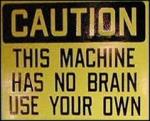
That's an oxymoron if I ever saw one...
HD Forum Stories
The Best of Harley-Davidson for Lifelong Riders

7 Times Harley-Davidson Chucked Tradition Out the Window
Verdad Gallardo
7 Surprising Harley-Davidson Products that Are Not Motorcycles
Verdad Gallardo
8 Best Harley-Davidson Motorcycles Ever
Pouria Savadkouei
10 Worst Harley-Davidson Motorcycles Ever
Pouria Savadkouei
Killer Custom's Jail Break Is The Breakout That Refused to Blend In
Verdad Gallardo
Crazy Bunderbike Build Looks Amazing, But Is It Impossible to Ride?
Verdad Gallardo
Harley-Davidson Reveals Super Cool Cafe Racer Concept
Verdad Gallardo
Engraved Rebellion: Inside Bundnerbike's Glam Rock II
Verdad Gallardo
10 Motorcycles You Should Never Buy
Joe Kucinski
Road Master
Joined: Dec 2016
Posts: 981
Likes: 182
From: Fairfax County, VA
Here's something that I think very few think about. That's tire gauges.
Many years ago, I worked for the now defunct Trak Auto. One day me and an associate took EVERY SINGLE tire gauge in the store out to the parking lot with a pad of paper. The VAST differences between the readings were staggering. And I promise you.... promise you, price didn't assure accuracy. And there could easily be a solid 3 pound reading discrepancy between the exact same brand and model. As there was close to ten pounds difference in reading between the one that read the highest and the one that read the lowest. Quite some time later I talked to a rep. from some manufacturer and asked about my findings. His response was...... and I'm not kidding:
"Actual pressure is not what's important, what matters is that all the tires are checked with the same gauge, and thus the same pressure."
I of course mentioned bikes, and that I run different pressure in the front than the rear, I run more in the back. He just said, as long as you ALWAYS use the same gauge, your fine. What a bunch of crap.
I guess the point is, if your pretty **** about tire pressure like I am, don't just assume 40psi on the gauge you got at AutoZone is actually 40psi in the tire. Cause my tests showed, that's likely not the case.
Many years ago, I worked for the now defunct Trak Auto. One day me and an associate took EVERY SINGLE tire gauge in the store out to the parking lot with a pad of paper. The VAST differences between the readings were staggering. And I promise you.... promise you, price didn't assure accuracy. And there could easily be a solid 3 pound reading discrepancy between the exact same brand and model. As there was close to ten pounds difference in reading between the one that read the highest and the one that read the lowest. Quite some time later I talked to a rep. from some manufacturer and asked about my findings. His response was...... and I'm not kidding:
"Actual pressure is not what's important, what matters is that all the tires are checked with the same gauge, and thus the same pressure."
I of course mentioned bikes, and that I run different pressure in the front than the rear, I run more in the back. He just said, as long as you ALWAYS use the same gauge, your fine. What a bunch of crap.
I guess the point is, if your pretty **** about tire pressure like I am, don't just assume 40psi on the gauge you got at AutoZone is actually 40psi in the tire. Cause my tests showed, that's likely not the case.
What I found interesting is close a variety of cheap gauges are to actual pressures. The opposite of what you describe. I even found my bicycle pumps with built in gauges (both of them, each a different brand) to be very accurate. Even a cheap 'stick' type gauge was easily good enough.
I do believe what was stated above, I also believe there were many gauges (more than not) that were spot on or damn close.
Ultimate HDF Member
Joined: Jun 2007
Posts: 9,193
Likes: 494
From: Richmond, VA
I use the digital Moto-D gauge that a Michelin tire tech, at a major race event, recommended. It sure seems very accurate and repeatable to me.
What I found interesting is close a variety of cheap gauges are to actual pressures. The opposite of what you describe. I even found my bicycle pumps with built in gauges (both of them, each a different brand) to be very accurate. Even a cheap 'stick' type gauge was easily good enough.
I do believe what was stated above, I also believe there were many gauges (more than not) that were spot on or damn close.
What I found interesting is close a variety of cheap gauges are to actual pressures. The opposite of what you describe. I even found my bicycle pumps with built in gauges (both of them, each a different brand) to be very accurate. Even a cheap 'stick' type gauge was easily good enough.
I do believe what was stated above, I also believe there were many gauges (more than not) that were spot on or damn close.
The problem with what I did is that there was NO correct starting pressure. I had know idea what the REAL pressure in the tire was. So if one gauge said 27 and one said 35, I had no way to know if one was high, one was low, one was dead on and the other was garbage, or both were close. All I can attest to was there was a HUGE variance in brands. And given that every single gauge was brand new..... I don't know what to think, because repeatable, and accurate are two TOTALLY different things.
Last edited by bikerlaw; Jun 20, 2017 at 09:43 PM.