





1969: Harley merges with American Machine and Foundry
Thread Starter
|
Road Master
Joined: Aug 2008
Posts: 1,195
Likes: 0
From: Sunny Seattle, WA

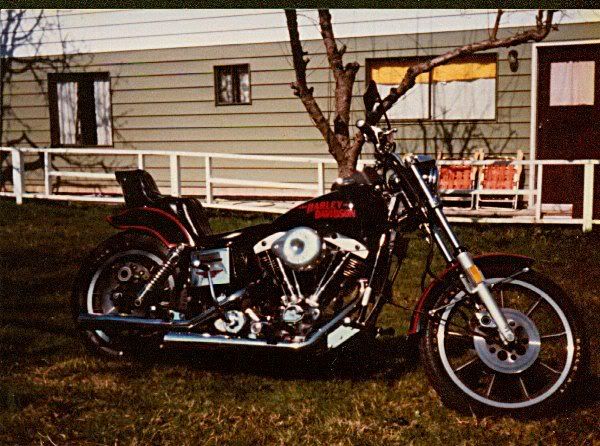
Here is my 1977 FLH.
bought it in 87 when I got out of the navy.
https://www.hdforums.com/forum/membe...t-1977-flh.jpg
After this was taken, I soon took off all the AMF crp, put on a S&S super 'b', etc.... and a solo seat.
Sorry the pic is small, my old computer crashed, it will take forever to load the printer drivers etc to get other pics scanned.
bought it in 87 when I got out of the navy.
https://www.hdforums.com/forum/membe...t-1977-flh.jpg
After this was taken, I soon took off all the AMF crp, put on a S&S super 'b', etc.... and a solo seat.
Sorry the pic is small, my old computer crashed, it will take forever to load the printer drivers etc to get other pics scanned.

Road Captain
Joined: Feb 2007
Posts: 541
Likes: 2
From: Clark County, WA
Actually, if it wasn't for Vaugn Beals and his influence to buy Harley back from AMF, there wouldn't be any Harleys period.http://www.plu.edu/~collinel/doc/harley-davidson.pdf
If it weren't for AMF, Vaugn Beals wouldn't of had anything to buy back.

Thanks for the link!!!


Outstanding HDF Member
Joined: May 2009
Posts: 2,932
Likes: 32
From: Broomfield, CO
AMF saved Harley-Davidson by introducing many modern manufacturing methods. I had a new 1973 Ironhead Sportster and rode it hard with only minor problems and put a lot of miles on this bike. I'm glad they stepped in and kept Harley in business back then so I can enjoy my Fatboy today.
Elite HDF Member
Joined: Jul 2005
Posts: 3,968
Likes: 34
From: Lockport Township, IL
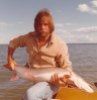
Here is the '72 xlch I purchased new in the fall of '71. I was 18 years old at the time. I rode in on a trip out west in the summer of 1972 over 9,000 miles in a 3 month period. Went up Pikes Peak and to the Grand Canyon, Las Vegas, Yellowstone, Salt Lake City, Sturgis, ..... Never had a problem with it. Harley had some serious quality issues before AMF took over. AMF put tons of money into resolving those issues and literally "bailed Harley out" from certain death. The quality improvements did not happen on the day AMF took over, but over the years under AMF, definate improvements were made, and that is what saved HD. (That and the loyalty of HD owners that were willing to purchase them even with all the technical problems.)

Extreme HDF Member
Joined: Sep 2006
Posts: 10,033
Likes: 29
I've also bought me a few AMF goodies over the years. These tanks were NOS, brand new in the box.
HD Forum Stories
The Best of Harley-Davidson for Lifelong Riders

8 Best Harley-Davidson Motorcycles Ever
Pouria Savadkouei
10 Worst Harley-Davidson Motorcycles Ever
Pouria Savadkouei
Killer Custom's Jail Break Is The Breakout That Refused to Blend In
Verdad Gallardo
Crazy Bunderbike Build Looks Amazing, But Is It Impossible to Ride?
Verdad Gallardo
Harley-Davidson Reveals Super Cool Cafe Racer Concept
Verdad Gallardo
Engraved Rebellion: Inside Bundnerbike's Glam Rock II
Verdad Gallardo
10 Motorcycles You Should Never Buy
Joe Kucinski
10 Things Harley-Davidson Needs to Fix in 2026
Verdad Gallardo
Southpaw Super Glide: A Left-Hand-Drive 1979 Harley FXE Built to Fit the Rider
Verdad Gallardo

Ultimate HDF Member
Joined: Aug 2007
Posts: 9,486
Likes: 4
From: Hico, TX (once home to Billy the Kid)
Interesting:
"...In the early 1980’ the company was not profitable in any aspect and conflict erupted between AMF and Harley management. In 1980 AMF started to look for a buyer for the Harley Davidson Company. Beals and a selected few of the managers of Harley arranged a highly leveraged buy-out from AMF and the beginning of the turnaround was a fact.
Beals and his group of managers realized the need for further change and after a visit to the Honda plant they realized that a change in quality was critical for the company to able to compete. Beals and his team used the Japanese production model as a blueprint for their new program namely the productivity triad. The triad focused on employee involvement, “Just-in-time” inventories and the statistical operator control. Now for the first time Harley involved employees from all levels in the production of their motorcycles. Harley developed the MAN program for their inventory practices;..."
"...In the early 1980’ the company was not profitable in any aspect and conflict erupted between AMF and Harley management. In 1980 AMF started to look for a buyer for the Harley Davidson Company. Beals and a selected few of the managers of Harley arranged a highly leveraged buy-out from AMF and the beginning of the turnaround was a fact.
Beals and his group of managers realized the need for further change and after a visit to the Honda plant they realized that a change in quality was critical for the company to able to compete. Beals and his team used the Japanese production model as a blueprint for their new program namely the productivity triad. The triad focused on employee involvement, “Just-in-time” inventories and the statistical operator control. Now for the first time Harley involved employees from all levels in the production of their motorcycles. Harley developed the MAN program for their inventory practices;..."