




15% Ethanol

Thread Starter
|
Intermediate
Joined: Jul 2010
Posts: 47
Likes: 0
From: Starkville, MS
 15% Ethanol
I just heard the very end of a radio news story about ethanol gas. They were saying that in the near future the amount of ethanol will be raised from 10% to 15%. I wish I had heard the entire story, but this is all I heard.
Has anyone else heard about this? I try my best to use non-ethanol fuel but it is almost impossible when I'm on a road trip. Sure hate to see this coming...
Has anyone else heard about this? I try my best to use non-ethanol fuel but it is almost impossible when I'm on a road trip. Sure hate to see this coming...

Outstanding HDF Member
Joined: Aug 2010
Posts: 3,486
Likes: 6
From: Union,Ms
I just heard the very end of a radio news story about ethanol gas. They were saying that in the near future the amount of ethanol will be raised from 10% to 15%. I wish I had heard the entire story, but this is all I heard.
Has anyone else heard about this? I try my best to use non-ethanol fuel but it is almost impossible when I'm on a road trip. Sure hate to see this coming...
Has anyone else heard about this? I try my best to use non-ethanol fuel but it is almost impossible when I'm on a road trip. Sure hate to see this coming...

Road Master
Joined: Apr 2009
Posts: 1,066
Likes: 9
From: Duluth, GA
Yes...this has been in the works since last year...and guess who is driving it? Not the EPA...it is the ethanol industry wanting to be able to produce more to keep corn farmers from going under along with some other parts of the industry. Since it actually costs more to produce a gallon of ethanol than a gallon of gas, not to mention you have to then have the ethanol hauled to a refinery where you can have it mixed with gas...you can imagine what this will do to our current fuel prices.
"David Pimentel, an agricultural scientist at Cornell University and one of the foremost critics of ethanol, has conducted numerous cost analyses on ethanol production. He's made a name for himself mostly by driving the ethanol industry raving mad. From its very beginnings, when hoe enters soil, ethanol production has not changed much since the nineteenth century. Pimentel found that one acre of U.S. corn field yields about 7,110 pounds of corn, which in turn produces 328 gallons of ethanol. Setting aside the environmental implications (which are substantial), the financial costs already begin to mount. To plant, grow, and harvest the corn takes about 140 gallons of fossil fuel and costs about $347 per acre. According to Pimentel's analysis, even before the corn is converted to ethanol, the feedstock alone costs $0.69 per gallon of ethanol.
More damning, however, is that converting corn to ethanol requires about 99,119 BTUs to make one gallon, which has 77,000 BTUs of available energy. So about 29 percent more energy is required to produce a gallon of ethanol than is stored in that gallon in the first place. "That helps explain why fossil fuels (not ethanol) are used to produce ethanol," Pimentel says. "The growers and processors can't afford to burn ethanol to make ethanol. U.S. drivers couldn't afford it, either, if it weren't for government subsidies that artificially lower the price." All told, a gallon of ethanol costs $2.24 to produce, compared to $0.63 for a gallon of gasoline."
Do a search on this...you can start here.
http://www.rep-am.com/articles/2010/...ion/515163.txt
http://healthandenergy.com/ethanol.htm
"David Pimentel, an agricultural scientist at Cornell University and one of the foremost critics of ethanol, has conducted numerous cost analyses on ethanol production. He's made a name for himself mostly by driving the ethanol industry raving mad. From its very beginnings, when hoe enters soil, ethanol production has not changed much since the nineteenth century. Pimentel found that one acre of U.S. corn field yields about 7,110 pounds of corn, which in turn produces 328 gallons of ethanol. Setting aside the environmental implications (which are substantial), the financial costs already begin to mount. To plant, grow, and harvest the corn takes about 140 gallons of fossil fuel and costs about $347 per acre. According to Pimentel's analysis, even before the corn is converted to ethanol, the feedstock alone costs $0.69 per gallon of ethanol.
More damning, however, is that converting corn to ethanol requires about 99,119 BTUs to make one gallon, which has 77,000 BTUs of available energy. So about 29 percent more energy is required to produce a gallon of ethanol than is stored in that gallon in the first place. "That helps explain why fossil fuels (not ethanol) are used to produce ethanol," Pimentel says. "The growers and processors can't afford to burn ethanol to make ethanol. U.S. drivers couldn't afford it, either, if it weren't for government subsidies that artificially lower the price." All told, a gallon of ethanol costs $2.24 to produce, compared to $0.63 for a gallon of gasoline."
Do a search on this...you can start here.
http://www.rep-am.com/articles/2010/...ion/515163.txt
http://healthandenergy.com/ethanol.htm
Last edited by SlowRain; Jan 24, 2011 at 11:10 AM.

Road Warrior


Joined: Dec 2006
Posts: 1,548
Likes: 163
From: Mt. Airy, MD
I just heard the very end of a radio news story about ethanol gas. They were saying that in the near future the amount of ethanol will be raised from 10% to 15%. I wish I had heard the entire story, but this is all I heard.
Has anyone else heard about this? I try my best to use non-ethanol fuel but it is almost impossible when I'm on a road trip. Sure hate to see this coming...
Has anyone else heard about this? I try my best to use non-ethanol fuel but it is almost impossible when I'm on a road trip. Sure hate to see this coming...

Supporter


Joined: Jan 2007
Posts: 15,788
Likes: 5,625
From: along the shore of Mishigami

The EPA has authorized the increase to 15% from 10% but it's up to the service stations (dealers) as to when to start selling the new mix. Thebig concern is what will the higher mix do to older fuel lines and carb vehicles.

Outstanding HDF Member
Joined: Sep 2005
Posts: 2,600
Likes: 7
From: Minnesota
Yes...this has been in the works since last year...and guess who is driving it? Not the EPA...it is the ethanol industry wanting to be able to produce more to keep corn farmers from going under along with some other parts of the industry. Since it actually costs more to produce a gallon of ethanol than a gallon of gas, not to mention you have to then have the ethanol hauled to a refinery where you can have it mixed with gas...you can imagine what this will do to our current fuel prices.
"David Pimentel, an agricultural scientist at Cornell University and one of the foremost critics of ethanol, has conducted numerous cost analyses on ethanol production. He's made a name for himself mostly by driving the ethanol industry raving mad. From its very beginnings, when hoe enters soil, ethanol production has not changed much since the nineteenth century. Pimentel found that one acre of U.S. corn field yields about 7,110 pounds of corn, which in turn produces 328 gallons of ethanol. Setting aside the environmental implications (which are substantial), the financial costs already begin to mount. To plant, grow, and harvest the corn takes about 140 gallons of fossil fuel and costs about $347 per acre. According to Pimentel's analysis, even before the corn is converted to ethanol, the feedstock alone costs $0.69 per gallon of ethanol.
More damning, however, is that converting corn to ethanol requires about 99,119 BTUs to make one gallon, which has 77,000 BTUs of available energy. So about 29 percent more energy is required to produce a gallon of ethanol than is stored in that gallon in the first place. "That helps explain why fossil fuels (not ethanol) are used to produce ethanol," Pimentel says. "The growers and processors can't afford to burn ethanol to make ethanol. U.S. drivers couldn't afford it, either, if it weren't for government subsidies that artificially lower the price." All told, a gallon of ethanol costs $2.24 to produce, compared to $0.63 for a gallon of gasoline."
Do a search on this...you can start here.
http://www.rep-am.com/articles/2010/...ion/515163.txt
http://healthandenergy.com/ethanol.htm
"David Pimentel, an agricultural scientist at Cornell University and one of the foremost critics of ethanol, has conducted numerous cost analyses on ethanol production. He's made a name for himself mostly by driving the ethanol industry raving mad. From its very beginnings, when hoe enters soil, ethanol production has not changed much since the nineteenth century. Pimentel found that one acre of U.S. corn field yields about 7,110 pounds of corn, which in turn produces 328 gallons of ethanol. Setting aside the environmental implications (which are substantial), the financial costs already begin to mount. To plant, grow, and harvest the corn takes about 140 gallons of fossil fuel and costs about $347 per acre. According to Pimentel's analysis, even before the corn is converted to ethanol, the feedstock alone costs $0.69 per gallon of ethanol.
More damning, however, is that converting corn to ethanol requires about 99,119 BTUs to make one gallon, which has 77,000 BTUs of available energy. So about 29 percent more energy is required to produce a gallon of ethanol than is stored in that gallon in the first place. "That helps explain why fossil fuels (not ethanol) are used to produce ethanol," Pimentel says. "The growers and processors can't afford to burn ethanol to make ethanol. U.S. drivers couldn't afford it, either, if it weren't for government subsidies that artificially lower the price." All told, a gallon of ethanol costs $2.24 to produce, compared to $0.63 for a gallon of gasoline."
Do a search on this...you can start here.
http://www.rep-am.com/articles/2010/...ion/515163.txt
http://healthandenergy.com/ethanol.htm
http://www.oregonlive.com/environmen...sis_quest.html
Rice University analysis questions U. S. ethanol subsidies
Federal taxpayers forked over $1.95 a gallon in ethanol subsidies in 2008 on top of the retail gasoline price, a new white paper from Rice University's Baker Institute for Public Policy found.
The University of Minnesota has also studied ethanol you can Google it. When you are Googling it you are likely to come across sites that think it's a good idea. Those sites are put up by the guys pocketing the $1.95 a gallon of our tax money.
You can search for pure gasoline here:
http://pure-gas.org/

Cruiser
Joined: Mar 2008
Posts: 179
Likes: 1
First off, one of the big South American countries went to straight to alcohol fule for their cars and trucks. It was a boon for the farmers and got rid of other oil companies taking their money. Our vehicles can easily be modified to run alcohol and with less pollution. It would be a boon to a new industry of making change over kits and more employment. All countries will need petrolum products but the cost of grease can't be too much. Oh, yes NASCAR is running the 15% gas this season.
Trending Topics

Advanced
Joined: Dec 2010
Posts: 70
Likes: 0
From: St Louis
Being that my race project will be tuned for e-85... Ethanol will have no direct effect on the carbs and the lines etc... e-85 only requires about 25% more fuel to burn to be comparable. although e-85 does work better with high compression much better than regular fuels.
e-85 is 85% corn fuel :P
e-85 is 85% corn fuel :P
HD Forum Stories
The Best of Harley-Davidson for Lifelong Riders

7 Surprising Harley-Davidson Products that Are Not Motorcycles
Verdad Gallardo
8 Best Harley-Davidson Motorcycles Ever
Pouria Savadkouei
10 Worst Harley-Davidson Motorcycles Ever
Pouria Savadkouei
Killer Custom's Jail Break Is The Breakout That Refused to Blend In
Verdad Gallardo
Crazy Bunderbike Build Looks Amazing, But Is It Impossible to Ride?
Verdad Gallardo
Harley-Davidson Reveals Super Cool Cafe Racer Concept
Verdad Gallardo
Engraved Rebellion: Inside Bundnerbike's Glam Rock II
Verdad Gallardo
10 Motorcycles You Should Never Buy
Joe Kucinski
10 Things Harley-Davidson Needs to Fix in 2026
Verdad Gallardo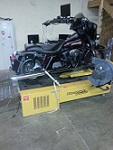
cars, bikes, etc. can be tuned to run ethonal. We have a bike tuned to run on e-85, it's a 103" making 115 HP. The problem I have with ethonol is the US imports something like 60-70% of the food we consume, so it doesn't make awhole lot of sence, to me, to turn a food source into a fuel source.

Tourer

Joined: Mar 2010
Posts: 430
Likes: 2
From: Dirty City
The EPA approved E15, but not as a replacement for E10. E15 pumps must be marked as such, including which vehicles can/can't run it. In other words, it's like Diesel--it isn't approved for motorcycle gasoline engines and must have a label letting you know as much.
Just like with Diesel, Kerosene, E85, and E10, each station is free to choose which fuels it will or will not sell, including E15. Considering that E15 is not approved for vehicles before 2001, any motorcycles, or any lawn equipment, I seriously doubt that stations will willingly pass on such a large market. At least for now.
Just like with Diesel, Kerosene, E85, and E10, each station is free to choose which fuels it will or will not sell, including E15. Considering that E15 is not approved for vehicles before 2001, any motorcycles, or any lawn equipment, I seriously doubt that stations will willingly pass on such a large market. At least for now.

Thread
Thread Starter
Forum
Replies
Last Post
Redlegvzv
General Harley Davidson Chat
27
Nov 24, 2015 05:49 AM
Wildon883R
General Harley Davidson Chat
36
Apr 26, 2015 08:19 AM
Keithhu
General Harley Davidson Chat
94
Nov 26, 2012 10:58 PM
