





Ever Had a Bike With a "Suicide" Shifter?

Stellar HDF Member


Joined: Dec 2011
Posts: 2,719
Likes: 6,008
From: Boston suburbs

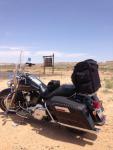
my last bike (shovel frame w/120" Merch EVO) I switched over to a LaBriola jockey shift. It took about 5 minuted to get use to it and 20 minutes of riding it to "master" it. I'm toying with doing it on my roadking now, but where I want the shifter would be right where a passenger would have their leg.
Here's a pic of the bike it's still a hand shift in this picture, couldn't find one with the jockey set up

Here's a pic of the bike it's still a hand shift in this picture, couldn't find one with the jockey set up
Last edited by tehan2; Oct 3, 2013 at 07:55 PM.

Stage I
Joined: Oct 2013
Posts: 1
Likes: 0
From: fl
I miss my rocker clutch & hand shift. Yes I also had a suicide clutch, fun but the rocker is the way to go. 1947 EL bottom FL jugs good old knockhead. You get very good with. Balance, slow racing, drink in one hand smoke in the other. One of the best rider, rode 45 flathead in the mud do donuts good times had by all.
W
W
Last edited by Chris A Williams; Oct 3, 2013 at 09:03 PM. Reason: Ad pic

Tourer
Joined: Feb 2012
Posts: 431
Likes: 1
From: South Carolina
OK, I'm a curmudgeon. And I know descriptive terms vary from area to area. That said, I'll toss this out - It ain't "suicide shift", it is "suicide clutch." My reasoning, besides being taught the terms and whys by my father who started riding in the 1930s, is this:
There are essentially two types of foot clutches; the rocker clutch and the suicide clutch. The rocker clutch is designed so that it stays where you put it, engaged, disengaged, or any point in between. The suicide clutch is always engaged (clutch coupling the engine to the transmission and the bike is moving!) unless the rider depresses the pedal, just like the standard transmission on a car/truck.
The shift lever mechanism was (generally) known as a hand shifter, sometimes called a "tank shifter" due to where it mounted on a stock bike; sometimes being mounted directly to the transmission top, aka "jockey shift", and sometimes mounted to the frame (late model stock hand shift), or wherever else a customizer decided would work for him. Bikes before the foot shift had a hand shift top on the transmission, while most bikes customized to being foot-clutched/hand-shifted used the foot shift tranny top, known as a ratchet top, and later the Maytag top, and now the various 5, 6, 7 speeds available. At any rate, the hand shift top causes the shift lever to be in one particular position for each gear, similar to a stick shift in a car. A ratchet top, whether the original style, a Maytag, or the later versions, acts on the hand lever just as it does on the foot lever - lever stays in one position until a shift is made, then spring returns to that same original position.
The suicide clutch really took off when the chopper/no front brake stuff started; I'd say it truly earned the suicide mo****r (LOL, gotta love the censors - m o n i k e r was the word I used) - pull up to a stop sign/light at the top of a hill, gotta have the left foot on the clutch pedal, need the right foot on the (only) brake pedal, so how do you stay upright?! Here's a couple techniques - If you're good, you slip the clutch to hold your position, and that allows you to put your right foot on the ground. If things don't work out, maybe you get lucky and have a car behind you so you can ease your back tire into his bumper.
Or maybe you just kill the engine, get into neutral, put the bike on the side stand, kick it over to get it running, side stand back up, and now try to be a three-legged monkey - right foot on ground, super-quickly push the clutch in, slam it into gear while revving the motor, and dump the clutch. Successful - you shoot across the intersection mostly out of control. Unsuccessful - you stall the bike, fall over, and the car behind you runs your raggedy carcass over.
I had a 1978 FLH with a 3 speed and reverse transmission, frame mounted "Police" hand shift lever. This was a factory bike, and the unverified tale was that it was the next-to-last 3 speed transmission HD installed on a bike.
I converted a 1972 XLCH to a left hand throttle, right side jockey shift, left side suicide clutch. Y'know, you can really screw up moving back and forth between left and right throttle bikes!
I installed a rocker clutch and hand shift (mounted off the top motor mount) on my 1987 FLST; I have a lotta stories about that rig because the crappy Taiwanese aftermarket rocker assembly ate cables and broke at welds. The bike now has a suicide clutch and jockey shift on a Baker transmission with an N1 shift top - neutral is at the bottom so the pattern is a straight N-1-2-3-4-5. Having the neutral at the bottom makes it easy to find, always a problem especially in older HDs with the old 3-stud clutches.
I converted my Nightster to a suicide clutch/jockey shift, too. It's back to stock 'cause THE MAMA rides it and she ain't doin' no suicide, LOL.
Once you get the hang of it, a foot clutch/hand shift isn't that hard to ride. It becomes second nature, and just gives you a feeling of accomplishment every single time you reach down and slap a gear. Keeps idiots from asking if they can ride your bike, too ...
Pic below is my Dad on an Indian 30-50 in Balboa Park during WW2 while he was stationed in San Diego.
There are essentially two types of foot clutches; the rocker clutch and the suicide clutch. The rocker clutch is designed so that it stays where you put it, engaged, disengaged, or any point in between. The suicide clutch is always engaged (clutch coupling the engine to the transmission and the bike is moving!) unless the rider depresses the pedal, just like the standard transmission on a car/truck.
The shift lever mechanism was (generally) known as a hand shifter, sometimes called a "tank shifter" due to where it mounted on a stock bike; sometimes being mounted directly to the transmission top, aka "jockey shift", and sometimes mounted to the frame (late model stock hand shift), or wherever else a customizer decided would work for him. Bikes before the foot shift had a hand shift top on the transmission, while most bikes customized to being foot-clutched/hand-shifted used the foot shift tranny top, known as a ratchet top, and later the Maytag top, and now the various 5, 6, 7 speeds available. At any rate, the hand shift top causes the shift lever to be in one particular position for each gear, similar to a stick shift in a car. A ratchet top, whether the original style, a Maytag, or the later versions, acts on the hand lever just as it does on the foot lever - lever stays in one position until a shift is made, then spring returns to that same original position.
The suicide clutch really took off when the chopper/no front brake stuff started; I'd say it truly earned the suicide mo****r (LOL, gotta love the censors - m o n i k e r was the word I used) - pull up to a stop sign/light at the top of a hill, gotta have the left foot on the clutch pedal, need the right foot on the (only) brake pedal, so how do you stay upright?! Here's a couple techniques - If you're good, you slip the clutch to hold your position, and that allows you to put your right foot on the ground. If things don't work out, maybe you get lucky and have a car behind you so you can ease your back tire into his bumper.
Or maybe you just kill the engine, get into neutral, put the bike on the side stand, kick it over to get it running, side stand back up, and now try to be a three-legged monkey - right foot on ground, super-quickly push the clutch in, slam it into gear while revving the motor, and dump the clutch. Successful - you shoot across the intersection mostly out of control. Unsuccessful - you stall the bike, fall over, and the car behind you runs your raggedy carcass over.
I had a 1978 FLH with a 3 speed and reverse transmission, frame mounted "Police" hand shift lever. This was a factory bike, and the unverified tale was that it was the next-to-last 3 speed transmission HD installed on a bike.
I converted a 1972 XLCH to a left hand throttle, right side jockey shift, left side suicide clutch. Y'know, you can really screw up moving back and forth between left and right throttle bikes!
I installed a rocker clutch and hand shift (mounted off the top motor mount) on my 1987 FLST; I have a lotta stories about that rig because the crappy Taiwanese aftermarket rocker assembly ate cables and broke at welds. The bike now has a suicide clutch and jockey shift on a Baker transmission with an N1 shift top - neutral is at the bottom so the pattern is a straight N-1-2-3-4-5. Having the neutral at the bottom makes it easy to find, always a problem especially in older HDs with the old 3-stud clutches.
I converted my Nightster to a suicide clutch/jockey shift, too. It's back to stock 'cause THE MAMA rides it and she ain't doin' no suicide, LOL.
Once you get the hang of it, a foot clutch/hand shift isn't that hard to ride. It becomes second nature, and just gives you a feeling of accomplishment every single time you reach down and slap a gear. Keeps idiots from asking if they can ride your bike, too ...
Pic below is my Dad on an Indian 30-50 in Balboa Park during WW2 while he was stationed in San Diego.

One these days I'd still like to give it a shot....
Seasoned HDF Member
Joined: Oct 2009
Posts: 7,456
Likes: 4,910
From: North Dakota
Nope, won't laugh. Had one just like that, about the same time frame. My first set of wheels with a motor.

Road Warrior
Joined: Dec 2007
Posts: 1,666
Likes: 3
From: Styxville
Get over it. Just about all motorcycles up to the mid 1930s, and Harleys up to the 1950s, had hand shift.
It is no more dangerous than taking your hand off the steering wheel of a car to use the stick shift.
I learned to ride on a Harley 45 with hand shift, got my license on it in about 1973.
I still ride that old bike regularly with its hand shift and the front brake lever on the left handlebar so you cant brake and downshift at the same time.
Works just fine. And mostly I ride it on roads very much like the Dragon in the USA. (263 corners and 2400 ft of elevation in 12 miles) and quite often in town traffic.
My buddy on his 1952 BMW with foot-shift can't keep up with me on the twisties.


I think it is mostly a matter of what you are used to. With the Harely torque, you are not up and down the gears as much as on other bikes so you can get away with the hand shift easier.
+1 on suicide clutch = spring loaded pedal like a car.
But the guys converting thier new bikes to hand shift like to call it "suicide shift" and make out they are doing something dangerous. Which they aren't.
But the original Indian, left throttle, righthand gear shift and clutch pedal rocked back to engage? I dunno if I could ride one a them things.
It is no more dangerous than taking your hand off the steering wheel of a car to use the stick shift.
I learned to ride on a Harley 45 with hand shift, got my license on it in about 1973.
I still ride that old bike regularly with its hand shift and the front brake lever on the left handlebar so you cant brake and downshift at the same time.
Works just fine. And mostly I ride it on roads very much like the Dragon in the USA. (263 corners and 2400 ft of elevation in 12 miles) and quite often in town traffic.
My buddy on his 1952 BMW with foot-shift can't keep up with me on the twisties.


I think it is mostly a matter of what you are used to. With the Harely torque, you are not up and down the gears as much as on other bikes so you can get away with the hand shift easier.
+1 on suicide clutch = spring loaded pedal like a car.
But the guys converting thier new bikes to hand shift like to call it "suicide shift" and make out they are doing something dangerous. Which they aren't.
But the original Indian, left throttle, righthand gear shift and clutch pedal rocked back to engage? I dunno if I could ride one a them things.
Last edited by Hopper; Oct 4, 2013 at 12:20 AM.
Road Captain
Joined: Dec 2008
Posts: 564
Likes: 3
From: Orange County, CA
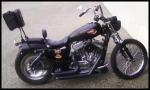
Years ago I set my bike up with a tank shift & foot clutch after doing a number on my left elbow, then followed that up in 2009 with moving the throttle to the left after I accidentally sliced up one of the major tendons in my dominant right hand. I still can't hold a pencil correctly or grip anything like I used to. 
In any event, I commute on my bike every day in So Cal traffic, split lanes in stopped traffic (legal in our state), ride on hills, etc. Really, you just get used to it. My "litmus test" was to ride from So Cal to San Francisco via Hwy 1 (Pacific Coast Highway), then I spent about 90 minutes riding in (steep!) downtown San Francisco retracing the various streets that were used in the filming of "Bullitt". I did a "Lap of America" trip with my kid (see my sig) in 2011 on the same bike but replaced the tank shifter with my spare La Briola lever, and during the trip my kid would upshift the bike for me by kicking the jockey lever forward with his left boot. I didn't even have to "cue" him to do it; he became so well versed at recognizing the RPM and my riding style he could anticipate when I was going to push the clutch pedal. In fact, when were were heading east through Indiana a couple driving a new Surburban pulled up alongside us on the interstate and filmed us doing this "two man" shift routine; I wish I had gotten their email address to get a copy. Later on in PA we pulled into the CVO factory in York, and the gaggle of fellow HD riders thought we were nuts to have ridden 2 up almost 3,000 miles on the jockey shifted Sporty I'm riding here:
In any event, I commute on my bike every day in So Cal traffic, split lanes in stopped traffic (legal in our state), ride on hills, etc. Really, you just get used to it. My "litmus test" was to ride from So Cal to San Francisco via Hwy 1 (Pacific Coast Highway), then I spent about 90 minutes riding in (steep!) downtown San Francisco retracing the various streets that were used in the filming of "Bullitt". I did a "Lap of America" trip with my kid (see my sig) in 2011 on the same bike but replaced the tank shifter with my spare La Briola lever, and during the trip my kid would upshift the bike for me by kicking the jockey lever forward with his left boot. I didn't even have to "cue" him to do it; he became so well versed at recognizing the RPM and my riding style he could anticipate when I was going to push the clutch pedal. In fact, when were were heading east through Indiana a couple driving a new Surburban pulled up alongside us on the interstate and filmed us doing this "two man" shift routine; I wish I had gotten their email address to get a copy. Later on in PA we pulled into the CVO factory in York, and the gaggle of fellow HD riders thought we were nuts to have ridden 2 up almost 3,000 miles on the jockey shifted Sporty I'm riding here:
Ultimate HDF Member
Joined: May 2010
Posts: 7,882
Likes: 5
From: So California
No, I've never owned a hand shifter.
Wouldn't mine owning an old factory bike that came with one, but I've never saw the need to add one to a modern bike.
Wouldn't mine owning an old factory bike that came with one, but I've never saw the need to add one to a modern bike.
HD Forum Stories
The Best of Harley-Davidson for Lifelong Riders

8 Best Harley-Davidson Motorcycles Ever
Pouria Savadkouei
10 Worst Harley-Davidson Motorcycles Ever
Pouria Savadkouei
Killer Custom's Jail Break Is The Breakout That Refused to Blend In
Verdad Gallardo
Crazy Bunderbike Build Looks Amazing, But Is It Impossible to Ride?
Verdad Gallardo
Harley-Davidson Reveals Super Cool Cafe Racer Concept
Verdad Gallardo
Engraved Rebellion: Inside Bundnerbike's Glam Rock II
Verdad Gallardo
10 Motorcycles You Should Never Buy
Joe Kucinski
10 Things Harley-Davidson Needs to Fix in 2026
Verdad Gallardo
Southpaw Super Glide: A Left-Hand-Drive 1979 Harley FXE Built to Fit the Rider
Verdad Gallardo
Outstanding HDF Member
Joined: Jun 2007
Posts: 3,306
Likes: 5
From: Bellville, Tx
You beat me to it!
Although pretty useless for the most part, the stock front drum would hold on most hills long enough to let you shift weight and push the foot clutch forward.