When you click on links to various merchants on this site and make a purchase, this can result in this site earning a commission. Affiliate programs and affiliations include, but are not limited to, the eBay Partner Network.
Ignition/Tuner/ECM/Fuel InjectionNeed advice on ignition issues? Questions about a tuner? Have questions about a EFI calibration or Fuel Injection? Tips on Engine Diagnostics, how to get codes, and what they mean. Find your answers here.
I wouldn't trust any knock detection with powervision. It doesn't work right. Never has.
Not the only thing that doesn't work properly with powervision either. The crank tooth setting doesn't work either. That's why it's unavailable except to certain dyno tuners.
When I got my stock improved map from FM the ve tables were quite different what I got after some auto tunes. Do some auto tunes before you get into the timing. Just remember to save the FM tune unchanged as a reference/starting point. From what I have seen there are 2 different signatures with the pv. One is a flat top where the ecm pulls timing, but doesn’t consider it a knock, and the traditional knock/ping signature. If you go to the Dynojet website, they have an area that tells you what channels to run on the PV to get accurate knock counts. Run some data logs,Then view the logs with mega log, or my tune or another app. You could also try Dynojet power core(free) but I haven’t had much luck with that. I’m no expert, lol, but I’ve dialed in my 20 triglide as good as I can on the street. I still have some timing issues, mostly due to the oil buildup on the pistons and heads that have increased the compression. It was checked by the dealer but the mothership didn’t want to do anything, out of warranty now anyways, lol. One thing that has been taught to me by others on here is that when the ecm logs a knock/ping it has happened before it is recorded, so look at the cells ahead of the actual event, as well as the surrounding cells. Happy tuning.
VEs are kinda dialed in now (using autotune basic and some common sense). It is shocking how the VE is a lot higher on the front cylinder on the M8 until you hit crazy high RPMs, then the rear catches up.
The VEs are also based on TPS like in an old sportster... wonder why they gave up on the 'map-based'.
VE front has almost the same 'shape' as the VEs on a 1200 sportster (it goes 'up then down' with the RPM), but the rear is almost 'flat'. in base tune and also in autotune readings. interesting engine.
lotsa rain today, tomorrow I will test it for knock again, with that adaptive table zeroed.
yeah... I think I got it figured out, but still think its weird.
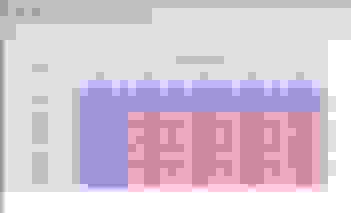
those were not actual 'knock events', they are actually caused by some 'adaptive retard' thing that those M8 ECUs seem to have built in. it should be controlled by this table :
which oddly there are two of them (with different values) on TTS software, which I assume front and rear, but in powervision there is only one. by filling positive values in those zeroes to the left-top I managed to have 'knock retard' even at idle in the front cyl (just 0.5 degrees), which is... retarded
apparently the right name for this table is 'adaptive knock retard limits' and it applies over a hidden table that remembers where knocks happened (and boy, they DID happen with the stock tune and shitty gas I have been running for the past months), and it is easy to see why 'retards' would kick in at 50kpa - until 48kpa the 'allowance' for the 'learned table' to interfere is zero, then it opens the floodgates.
in theory the other 'invisible' table should start 'reducing' over time if the base timing is correct. it is actually a clever idea, to introduce a retard if you get a batch of inferior gas, etc, then go back to normal over time. my problem is that I run bad gas all the time and my 'learned' table is probably full of retardment.
so, new plan... zero out all of this table and deal with the ACTUAL knock events that show up, then put it back on (perhaps a bit different limits, we'll see).
Well sounds like you have read the TTS Manual that explained all this to you! The tables are both there in Mastertune (not hidden) because there are two of them NOT one as you say Powervision shows in the M8 platform. The ECM learns knock just like it learns fuel. It's up to the tuning system to learn how to use it correctly, and it seems that Powervision hasn't got it figure out on the M8's to-date and it's been over 5 years now. Just wait until you have to deal with a '21 model year as it's once again very different than the earlier M8 models!
Originally Posted by strych9
Powervision, nor any other tuner, detects knock.
Mastertune works just fine with the ECM and Knock control, from what others have said that is NOT the case with PowerVision. The simple truth is the ECM detect Knock via the knock sensors on a M8 engine. That information is stored and used by the ECM and it's up to the tuning product how to use what the ECM is telling you.
well now that you mentioned I read the manual and it indeed explains how it works. the version I have only mentions one table (like in my TTS calibration for a TC103).
what I still don't quite follow is that the TC already had such a functionality, but I've never seen anything like this show in the logs - just the regular 'hit the throttle->knock->retard->advance back to normal'.
anyway, the manual also instructs to zero out all the table when trying to build spark tables so it does not interfere - which makes total sense now.
well now that you mentioned I read the manual and it indeed explains how it works. the version I have only mentions one table (like in my TTS calibration for a TC103).
what I still don't quite follow is that the TC already had such a functionality, but I've never seen anything like this show in the logs - just the regular 'hit the throttle->knock->retard->advance back to normal'.
anyway, the manual also instructs to zero out all the table when trying to build spark tables so it does not interfere - which makes total sense now.
It only gets trickier when you work with a '21 model year and it's going to continue to change as HD continues to change and follow what the car industry has already been doing for years! The interplay of the Torque system and the engine running can no longer be "just turn it off"! You have to tune both of them together if you want something that truly works as it's designed too. The truth is it really started on the 2019, 2020 Trikes first, but now is across the entire Touring platform for 2021 and It's going to stay that way into the future.
so bike is running really well now, and the low speed low rpm manners are much improved. the VE's are generally 'rich' and the adaptive thing takes over to correct them down when it gets steady, which I like.
heat is also much improved, even with the cat still in place.
some 'married' knock events still happen even with the adaptive table zeroed... will sit this one out to see what happens over time.
not bad for a 7th map... normally I keep going until 20+ before I stop tweaking.
only mileage remains to be seen, but does not look bad so far (need to do some extendend highway courses to evaluate that).
I had the impression that 'm8 has a good factory tune' as it was not terrible like a 1200 sportster or a 103 (thats like a furnace from hell), but it can indeed be greatly improved with tuning and patience!
thanks for all the responses, still curious about some things tough
- why does the 've x tps tables' start at tps=3 and not zero? I can see my tps go down to 3 in the logs, but when bike is cold it is usually 5 (even when 'twistgrip %' is zero)
- why does this thing apply knock retard to both cylinders at the same time, consistently... thats just weird!
- this bike is a 2019, but it has a lot of 'torque model tables' exposed... torque ETC table A, B, max throttle, adder, throttle limit... do they actually work on a non-RDRS (2019) bike?
- why does the 've x tps tables' start at tps=3 and not zero? I can see my tps go down to 3 in the logs, but when bike is cold it is usually 5 (even when 'twistgrip %' is zero)
- why does this thing apply knock retard to both cylinders at the same time, consistently... thats just weird!
- this bike is a 2019, but it has a lot of 'torque model tables' exposed... torque ETC table A, B, max throttle, adder, throttle limit... do they actually work on a non-RDRS (2019) bike?
cheers!
- The tps typically runs about 4% to keep the engine at idle so there is no need for anything lower
- It only applies it as it's detected, so if it shows both cylinders correctly then that is what it does
- Yes, they are all used plus a bunch more that you cannot see.
Well sounds like you have read the TTS Manual that explained all this to you! The tables are both there in Mastertune (not hidden) because there are two of them NOT one as you say Powervision shows in the M8 platform. The ECM learns knock just like it learns fuel. It's up to the tuning system to learn how to use it correctly, and it seems that Powervision hasn't got it figure out on the M8's to-date and it's been over 5 years now. Just wait until you have to deal with a '21 model year as it's once again very different than the earlier M8 models!
Mastertune works just fine with the ECM and Knock control, from what others have said that is NOT the case with PowerVision. The simple truth is the ECM detect Knock via the knock sensors on a M8 engine. That information is stored and used by the ECM and it's up to the tuning product how to use what the ECM is telling you.
I wouldn't trust any knock detection with powervision. It doesn't work right. Never has.
Not the only thing that doesn't work properly with powervision either. The crank tooth setting doesn't work either. That's why it's unavailable except to certain dyno tuners.
Curious...
you say that the crank tooth setting doesn't work, and was why it was available only to Shops with a license to use the advanced config.
Are you saying the crank tooth didn't work? or did you mean that Joe Public just couldn't change it?
The latest release of WinPV now reveals the IVO/IVC by default.
7 Surprising Harley-Davidson Products that Are Not Motorcycles
Slideshow: The bar-and-shield logo shows up on far more than motorcycles, some of the company's most unexpected products have nothing to do with riding.
Slideshow: From the troubled AMF years to modern misfires, these bikes earned reputations for reliability issues, questionable engineering, or disappointing performance.
Crazy Bunderbike Build Looks Amazing, But Is It Impossible to Ride?
Slideshow: The Swiss custom shop has taken a Harley Softail and stretched it into something so long and low that it looks closer to a rolling sculpture than a conventional motorcycle.
Engraved Rebellion: Inside Bundnerbike's Glam Rock II
Slideshow: A standard cruiser becomes an intricate metal canvas in the hands of a Swiss custom house known for pushing Harley-Davidson platforms far beyond their factory brief.